Narracja dotycząca sztucznej inteligencji uległa zmianie. Na początku 2026 roku przeszliśmy już przez początkowy szum związany z "czym może być AI?" i osiedliśmy w rzeczywistości użyteczności. Po ogłoszeniach CES 2026 jest jasne, że rynek nie szuka już tylko obietnic; szuka torów, które napędzają gospodarkę AI.
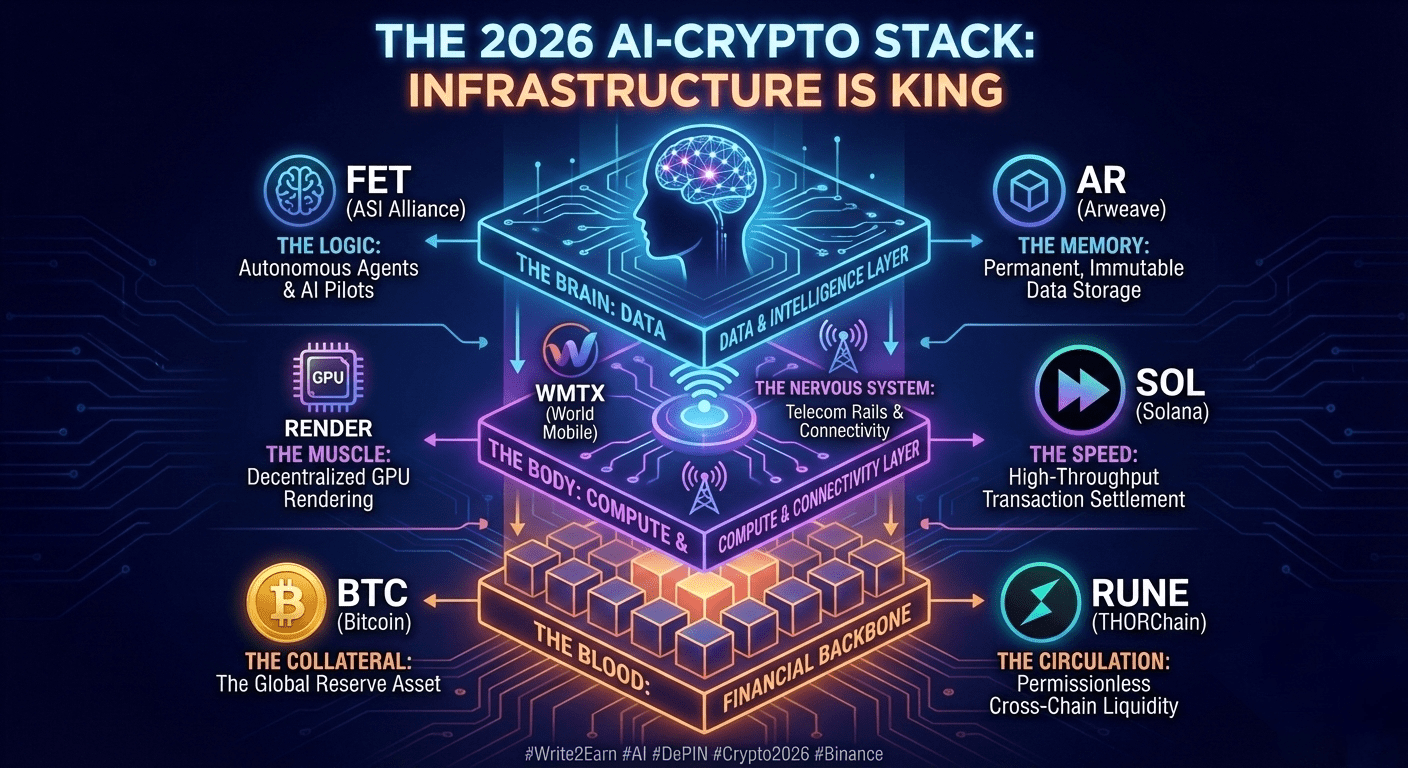
Jeśli goniłeś za izolowanymi tokenami AI, nie biorąc pod uwagę DePIN (Zdecentralizowane Sieci Infrastruktury Fizycznej), na których się opierają, budujesz na piasku. Moja podstawowa teza na 2026 rok koncentruje się na posiadaniu całego "stosu AI." Oto jak moja teczka $BTC, $FET, $AR , $RENDER, $SOL, $RUNE i $WMTX jest ustawiona na ten rok.
1. "Ciało": Warstwa Obliczeniowa i Łączności
Modele AI są żarłocznymi konsumentami zasobów. Potrzebują ogromnej mocy obliczeniowej i globalnej łączności, aby działać.
$RENDER (Mięśnie): Render z powodzeniem przekształcił się z prostej sieci renderującej w zdecentralizowaną potęgę GPU. Z wdrożeniem NVIDIA H200 klasy enterprise w Q1 2026, $RENDER jest teraz główną zdecentralizowaną alternatywą dla scentralizowanych dostawców chmury.
$WMTX (System Nerwowy): Inteligencja jest bezużyteczna bez połączenia. Gdy World Mobile przechodzi przez swoją publiczną transformację Mainnet w Q1 2026, zapewnia tor telekomunikacyjny, który pozwala agentom AI działać w niedoinwestowanych regionach. Uruchomienie aukcji Hex Guardian przekształciło infrastrukturę telekomunikacyjną w aktywo będące własnością społeczności.
$SOL (Szybkość): Aby autonomiczne agenty mogły natychmiast rozliczać mikrotransakcje, potrzebujesz łańcucha o wysokiej przepustowości. Solana pozostaje niekwestionowaną warstwą do tego wolumenu, pełniąc rolę szybkiej warstwy rozliczeniowej dla gospodarki AI.
2. "Mózg": Warstwa Danych i Inteligencji
Inteligencja wymaga logiki do działania i stałej pamięci do uczenia się.
$FET (Logika): Jako wiodący token Sojuszu Sztucznej Superinteligencji (ASI), Fetch.ai jest "mózgiem." Niedawne ogłoszenie partnerstwa z Visa dotyczące "Handlu Agentów" potwierdza, że 2026 rok to czas, kiedy agenci AI przechodzą z eksperymentalnych w niezbędne, zarządzając płatnościami i logistyką w świecie rzeczywistym.
$AR (Pamięć): Modele AI są tak dobre, jak ich dane. Arweave zapewnia stałe, niezmienne przechowywanie potrzebne do zapewnienia, że zestawy danych do szkolenia AI i "pamięci agentów" pozostają odporne na manipulacje. W świecie deepfake'ów, $AR jest źródłem prawdy.
3. "Krew": Finansowy Kręgosłup
Aby gospodarka napędzana AI mogła funkcjonować, wartość musi krążyć swobodnie i bezpiecznie w sieciach.
$BTC (Zabezpieczenie): Gdy agenci AI zaczynają autonomicznie zarządzać bilansami, potrzebują rezerwy "Złotego Standardu". Bitcoin pozostaje ostatecznym zabezpieczeniem dla gospodarki maszynowej.
$RUNE (Cyrkulacja): Aby AI było naprawdę zdecentralizowane, nie może być izolowane. THORChain ($RUNE) zapewnia bezzezwolenową płynność międzyłańcuchową, która pozwala agentom AI wymieniać natywne aktywa między Bitcoinem, Solaną a Ethereum bez scentralizowanych pośredników.
Wnioski: Gra synergii
Prawdziwa alfa w 2026 roku nie polega tylko na trzymaniu jednej "monety AI" — chodzi o zrozumienie synergii. Inteligencja $FET potrzebuje obliczeń $RENDER, łączności $WMTX i przechowywania $AR.
Czy trzymasz "Mózg" czy tylko goniąc hype? Porozmawiajmy o swoich wyborach AI na rok 2026 w komentarzach.
(Zastrzeżenie: To nie jest porada finansowa. Posiadam pozycje w wymienionych aktywach. Zawsze prowadź własne badania.)