

Crypto talk these days is mostly about price swings, hype, and whatever token happens to be trending. I’ve traded through enough bull and bear cycles to know how fast people jump from one coin to the next. Still, every once in a while, a project pops up that’s not chasing the latest hype cycle.@Plasma is one of those rare projects. It’s not a casino for gambling on prices it’s built for payments that just need to work, every time.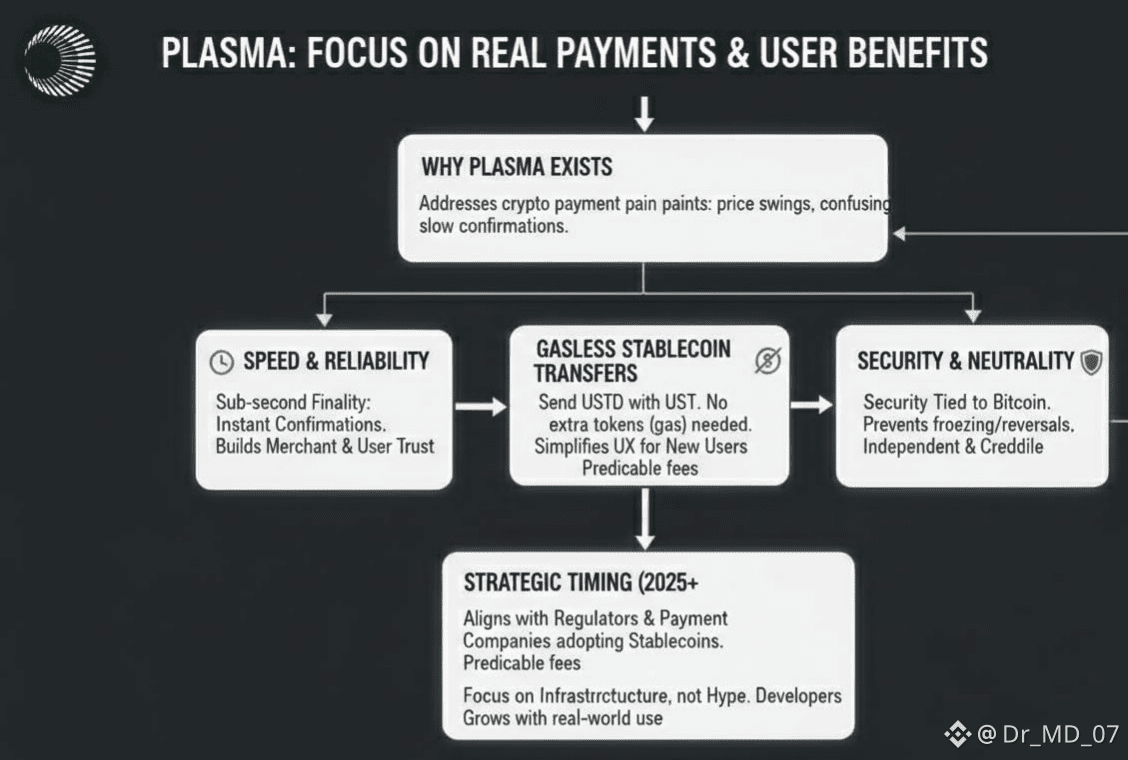
So, why did PLASMA go this route? Well, look at where crypto payments stand as we head into 2026. Stablecoins are moving trillions of dollars every year now. USDT and USDC have become lifelines in emerging markets, handling everything from cross border transfers to day to day purchases. But here’s the thing: most blockchains still treat payments as an afterthought. Random fees, slow confirmations, and a confusing mess of gas, wallets, and network traffic average people just trying to send money get stuck in the weeds.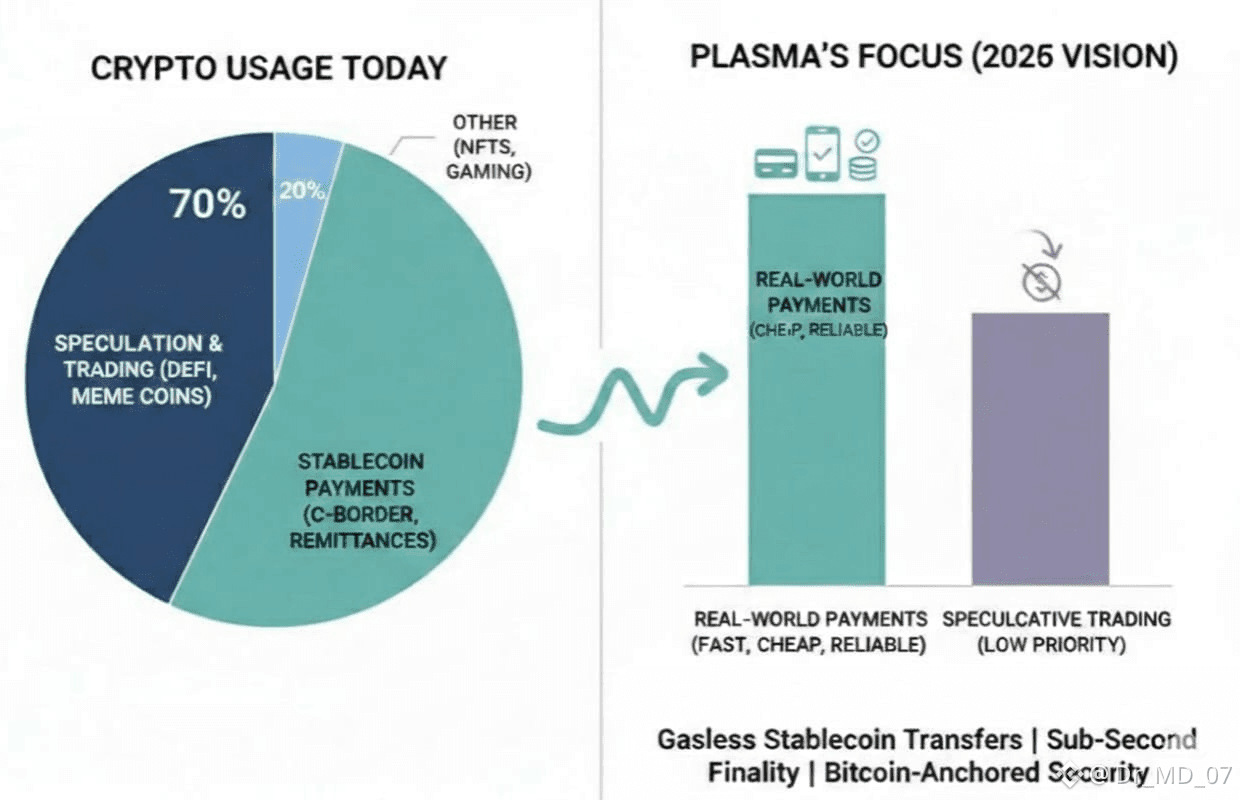
PLASMA flips that whole setup. It assumes users don’t care about technical details like block times or consensus models. They want payments to be fast, cheap, and reliable, period. That’s why PLASMA was built from scratch as a Layer 1 chain for stablecoin payments. It’s not trying to optimize for fancy DeFi moves or high-speed trading. Instead, it just wants transfers to go through quickly, with fees that don’t bounce around or catch people off guard.
One of the smartest choices? Gasless stablecoin transfers. Gas fees are what you pay to send a transaction, and on most chains, you have to buy some other token just to move your stablecoins. PLASMA ditches that for certain transfers. If you have USDT, you can send USDT no extra tokens needed. For anyone new to crypto, that’s a huge relief. It takes out one more headache.
There’s also the matter of speed. PLASMA’s consensus is built for sub second finality basically instant confirmations. In payments, speed isn’t just a brag. It’s about trust. Merchants don’t want to wait and wonder if a payment went through. When transactions settle fast, people can actually rely on crypto like they do with any normal payment app.
Security here isn’t just about ticking a box. PLASMA locks its security to Bitcoin, which means it borrows some of Bitcoin’s well-earned credibility. In global payments, that extra layer of neutrality matters. People need to know their money won’t get frozen or reversed without warning. Using Bitcoin’s backbone isn’t about marketing it’s about making sure payments stay safe and independent.
Timing wise, PLASMA is landing right when regulators and big payment companies are starting to take stablecoins seriously. They’re looking for solutions that feel familiar and don’t throw weird surprises at users. PLASMA’s focus on stablecoins and predictable fees lines up with that. No meme coin madness swinging prices and fees all over the place. Just simple, clear costs in the coins people actually use.
From a trader’s perspective, I’ll admit I find it interesting that PLASMA doesn’t chase speculative volume. There aren’t a bunch of rewards or incentives to pull in quick traders. Sure, that means it won’t always be the loudest project during a hype cycle. But it builds real, lasting trust. Networks that only exist for speculation usually crash when the market turns. Payment networks, on the other hand, just keep growing as more people actually use them.
The latest PLASMA updates in early 2026 keep pushing in the same direction: better infrastructure, not empty promises. They’re making it easier for developers to build on PLASMA by supporting familiar tools, but with the bonus of faster settlement. Real adoption depends on developers as much as users, and a stable, reliable platform is what builders want.
What really sets PLASMA apart is how it embraces being “boring.” Honestly, payments should be boring. They should work the same every time, no drama. When I send money, I don’t want to worry about network issues or token prices. PLASMA seems to get that. That’s why more people are starting to pay attention not just speculators, but anyone who actually wants crypto to work as money.
In a space obsessed with speculation, PLASMA’s low-key approach almost feels out of place. But that’s its biggest advantage. By focusing on real-world payments, stablecoins, and making life easier for users and developers, it’s actually building what crypto was supposed to be in the first place: real infrastructure, not just another gamble.


