

Dusk Network is positioned as blockchain infrastructure designed specifically for regulated financial markets, a claim supported by its official documentation, public roadmap, and announced partnerships. Unlike permissionless systems optimized for open asset flow, Dusk explicitly targets environments where legal enforceability, jurisdictional compliance, and institutional accountability are mandatory rather than optional. In regulated finance, tokenization of instruments such as bonds and equities embeds legal obligations directly into the asset lifecycle, including transfer restrictions, investor eligibility rules, residency requirements, sanctions compliance, and issuer‑defined constraints. These requirements persist beyond issuance and become most critical during secondary market activity, where many tokenization initiatives experience operational and legal friction that limits scalability and adoption.
A core challenge in this space is the disconnect between cryptographic validity and legal permissibility. A transaction can be mathematically correct while remaining legally invalid under off‑chain rules. Publicly available regulatory analysis and institutional pilot outcomes consistently show that systems treating compliance as an external enforcement layer struggle to preserve consistency once assets circulate across participants and jurisdictions. Dusk’s architectural direction addresses this limitation by embedding regulatory logic into asset behavior itself, allowing compliance conditions to persist automatically across transfers. This approach reduces reliance on manual oversight or post‑hoc enforcement and reflects an understanding that, in regulated markets, legal continuity must be inherent to the asset rather than imposed around it.
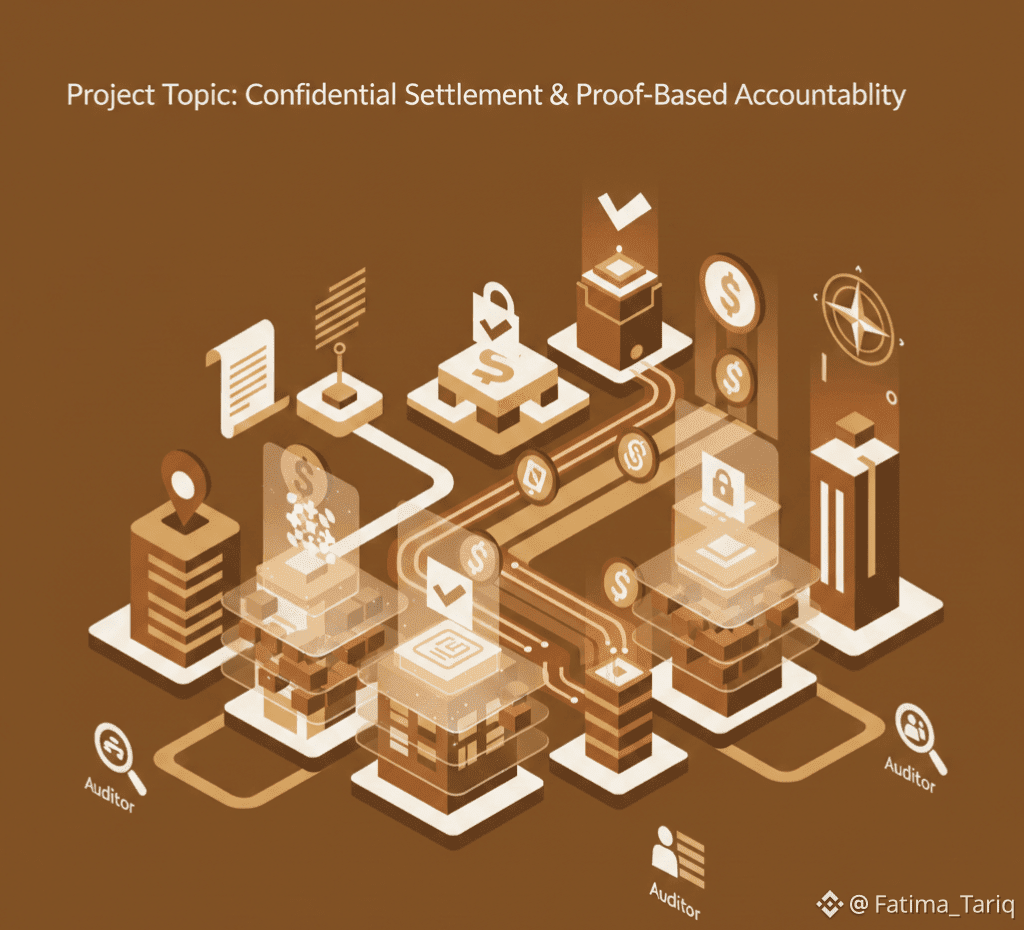
Institutional markets also impose two demands that are frequently in tension: confidentiality and auditability. Institutions require confidentiality to protect trading strategies, counterparty exposure, and balance‑sheet information, particularly during periods of market volatility or stress. Simultaneously, regulators and auditors require verifiable proof of settlement, compliance, and transactional integrity. Dusk’s design emphasizes proof‑based validation rather than full public disclosure, enabling transactions to be validated without exposing sensitive operational data to the broader market. This mirrors established financial practice, where accountability is selective and contextual, and where excessive transparency can distort behavior, increase front‑running risk, and weaken overall market resilience.
Dusk’s institutional orientation is further reinforced by verifiable partnerships and regulatory alignment. In March 2024, the network announced an agreement with NPEX focused on the issuance and trading of regulated financial instruments. This positioning was strengthened in April 2025 through collaboration with 21X, the first entity licensed under the European DLT Trading and Settlement System framework. Public regulatory disclosures confirm that 21X was authorized by BaFin in December 2024 and became operational in May 2025. These developments mark a transition from experimental blockchain deployments toward live, regulated infrastructure and indicate that Dusk’s intended users are licensed venues, issuers, and professional market participants rather than speculative retail audiences.
Operational maturity is a decisive criterion in regulated environments, where settlement ambiguity and system instability are unacceptable. Dusk launched its main network on 20 December 2024 and produced its first immutable block on 7 January 2025. In regulated contexts, such milestones signal the shift from conceptual promise to operational accountability, where systems are evaluated on uptime, determinism, and reliability under scrutiny. Dusk documentation emphasizes deterministic settlement finality once blocks are ratified, reducing the likelihood of reversals or reorganization events that could expose participants to legal, financial, or reputational risk.
Data integrity and interoperability add another layer of institutional complexity. Regulated markets depend heavily on off‑chain reference data, corporate action schedules, and standardized reporting. Discrepancies between data sources can lead to reconciliation failures and disputes. In November 2025, Dusk and NPEX announced the adoption of Chainlink interoperability and data standards, acknowledging that on‑chain correctness alone is insufficient without reliable and verifiable external inputs. Standardized data flows reduce operational friction and help align on‑chain settlement with existing financial market infrastructure.
Network incentives further reflect a long‑term infrastructure mindset. Dusk operates with a maximum supply of one billion DUSK tokens, split between an initial issuance and a gradual emission schedule designed to reward long‑term network participation. Public market data from mid‑January 2026 places circulating supply in the high‑400‑million range. This extended emission model aligns with the slow adoption cycles typical of regulated finance, where infrastructure must remain stable and funded across long horizons rather than short speculative cycles driven by narrative momentum
Viewed collectively, Dusk Network’s trajectory suggests a deliberate prioritization of environments where consequences are tangible and accountability is unavoidable. By embedding regulatory constraints into asset behavior, balancing confidentiality with auditability, aligning with licensed venues, prioritizing deterministic settlement, and designing incentives around longevity rather than immediacy, Dusk positions itself as infrastructure for markets where trust is earned through predictability and restraint. In regulated finance, success is rarely measured by visibility or attention; instead, it is measured by the absence of disruption, the reduction of ambiguity, and the ability of systems to perform reliably when scrutiny is highest.
#Dusk @Dusk $DUSK #LearnWithFatima #BinanceSquareTalks #BinanceSquareFamily #creatorpad
