When I first got serious about crypto, the promise of decentralized money always seemed tied up with two big ideals: privacy and freedom. But as the technology matured, it became painfully clear that “full transparency” on most blockchains was a double-edged sword. Anyone with your wallet address can view your entire transaction history, and if that wallet ever gets linked to your identity, your entire financial life becomes public. That’s not how everyday money should work. Dusk Network was built precisely to address that fundamental tension how to make blockchain transactions private, yet still compliant with real-world rules.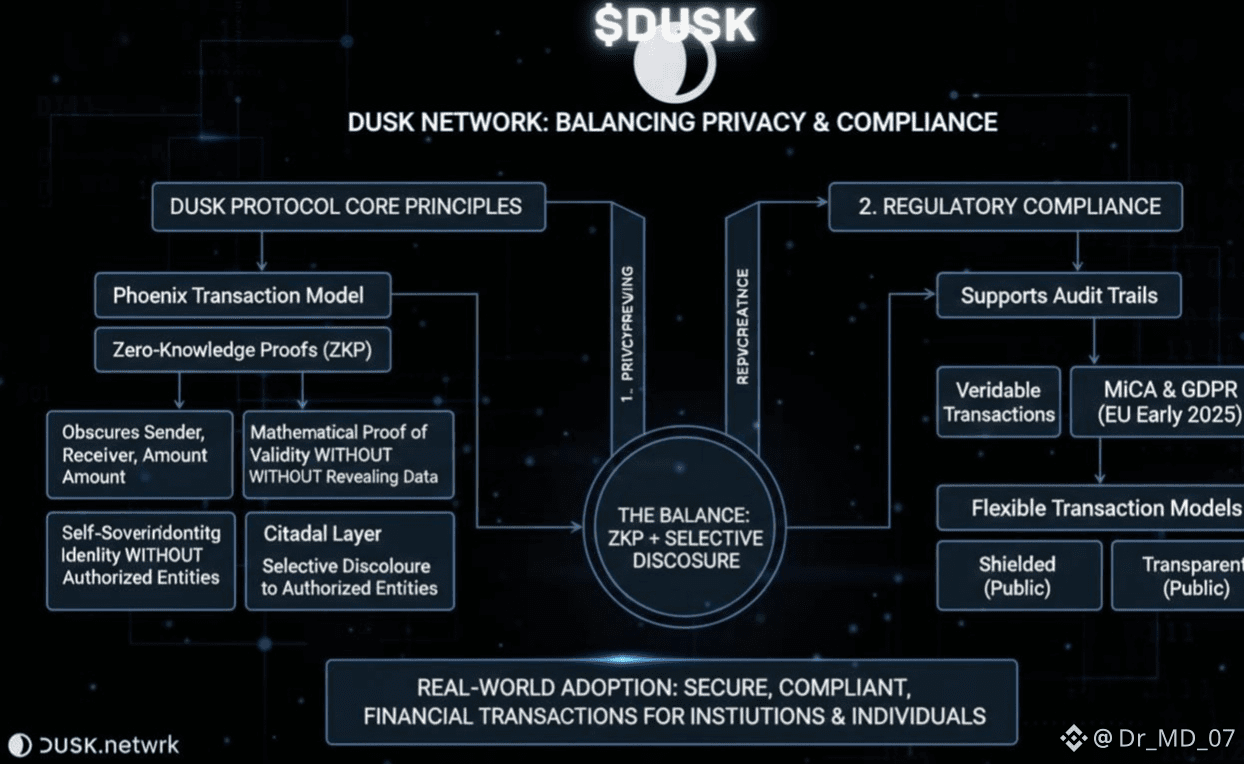
At its core, Dusk is a layer-1 blockchain designed to let users make private transfers that hide personal financial data but remain verifiable when regulations demand it. Rather than chasing speculation or headline-grabbing tokenomics, the project was conceived around the simple idea that privacy isn’t just a “nice-to-have”; it’s essential for mainstream use of blockchain in finance. When you pay for a coffee, use payroll, settle a trade, or transfer assets between institutions, you don’t want anyone to be able to inspect everything you own or spend. Dusk understands that nuance and engineers privacy at the protocol level.
What makes Dusk genuinely interesting and unlike classic privacy coins is how it balances confidentiality with compliance. Traditional privacy tokens attempt to obscure everything about a transaction from everyone, which inevitably raises red flags with regulators and institutions. Dusk takes a different path: it uses advanced cryptography called zero-knowledge proofs (ZKPs). ZKPs let you prove that a transaction is valid for instance, that you have the funds and the right to send them without revealing the actual details like the amount or the wallet addresses involved. That’s how Dusk protects your financial privacy without compromising the integrity of the network.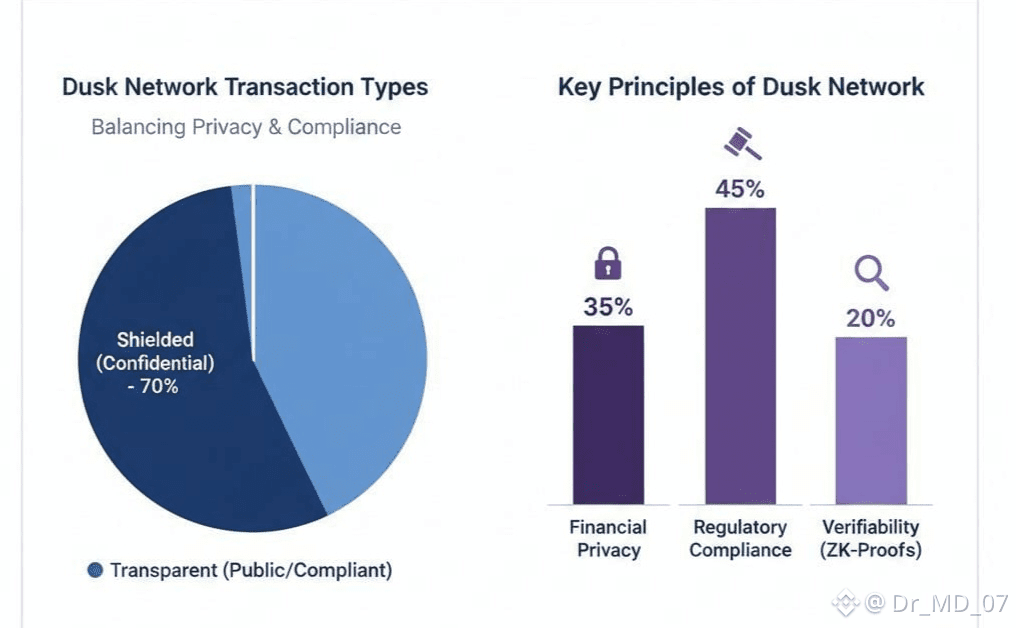
To someone who has watched crypto evolve, that’s a nuanced but important shift. Privacy here isn’t about hiding everything forever; it’s about selective disclosure. If a regulated party, an auditor, or a compliance authority needs to see certain details for legal reasons, the protocol supports mechanisms to reveal specific information to authorized entities without exposing everything to the world. That’s not speculation or hype; that’s a practical design for real transactions in regulated financial markets.
In practical terms, how does Dusk make this happen? The network uses two types of transaction models. One is shielded designed for confidentiality where transaction details are obscured using cryptographic proofs. The other is transparent and fully public, much like traditional blockchains but still compliant with reporting requirements. The choice between private and public transactions gives users and businesses flexibility: you maintain privacy where it matters, and you satisfy compliance where it’s necessary.
Under the hood, the Phoenix transaction model obscures sender, receiver, and amount details using the power of zero-knowledge proofs, while still ensuring that a transaction is legitimate. These proofs are fascinating; they let you mathematically confirm that something is true like the validity of a transfer without revealing the underlying data. Imagine proving you are eligible to vote without revealing your name or where you live that’s the same kind of privacy logic applied here.
The identity layer on Dusk, called Citadel, further strengthens privacy protection by enabling self-sovereign identity. This means users can prove certain attributes about themselves like meeting regulatory criteria without giving away unnecessary personal information. In a world increasingly concerned about digital privacy and data leaks, this feels both timely and important.
From a professional perspective, these design decisions make Dusk extremely relevant right now. In early 2026, regulatory frameworks like MiCA in Europe are pushing for transparency and compliance, but they also recognize the need to protect individual data under laws like GDPR. Dusk’s architecture allows it to satisfy both demands a rare balance in blockchain technology. Many projects promise privacy but end up being too opaque for regulated use cases; others are transparent enough for compliance but expose too much data to suit everyday financial transactions. Dusk sits between these extremes with intentional design.
My own view as someone who has watched markets mature is that real adoption happens not through hype, but through systems that integrate with existing financial expectations. People don’t want to jump through hoops just to send money. They want simplicity, speed, and safety. Dusk’s focus on privacy that’s verifiable and compliant is a step toward financial tech that doesn’t force users to choose between transparency and confidentiality. It’s not about being secretive; it’s about protecting information in sensible, secure ways while still playing by the rules.
By combining privacy preserving tech with compliance mechanisms, Dusk is building infrastructure that can support real-world transactions payments, regulated asset transfers, confidential settlements without exposing sensitive financial histories to widespread scrutiny. That’s a nuanced but powerful shift in how we think about blockchain privacy. And while many projects chase speculative interest, Dusk is building toward something that could underpin actual financial operations. That focus practical, thoughtful, and grounded in real needs is why its approach resonates with traders, developers, and institutional participants looking beyond volatile price charts into meaningful use cases.