

Modern blockchains are highly effective at proving state changes, ownership, and settlement, but they are fundamentally inefficient at storing large volumes of real‑world data. Applications that move beyond simple token transfers quickly require images, videos, documents, datasets, audit files, and metadata that give on‑chain assets practical meaning. When this data is stored on centralized cloud infrastructure, decentralization assumptions weaken; when it is stored directly on‑chain, costs and performance constraints become prohibitive. This structural limitation has made data storage a critical bottleneck for Web3 adoption.
Walrus is designed as a response to this problem rather than as a generic “storage token.” Its core thesis is that decentralized storage must become programmable, cost‑efficient, and operationally reliable at scale to be usable by serious applications. Without these qualities, decentralized storage remains a niche tool used primarily for ideological reasons rather than a default infrastructure choice for builders.
Introduced by Mysten Labs in 2024, Walrus is a decentralized storage and data availability protocol focused on large, unstructured binary files, referred to as “blobs.” Instead of creating a standalone blockchain, Walrus uses the Sui blockchain as its control plane. Sui coordinates blob lifecycle management, incentives, verification, and receipts, while the Walrus network specializes in storing and serving data. This architectural separation allows Walrus to concentrate on storage performance without duplicating governance and coordination logic.
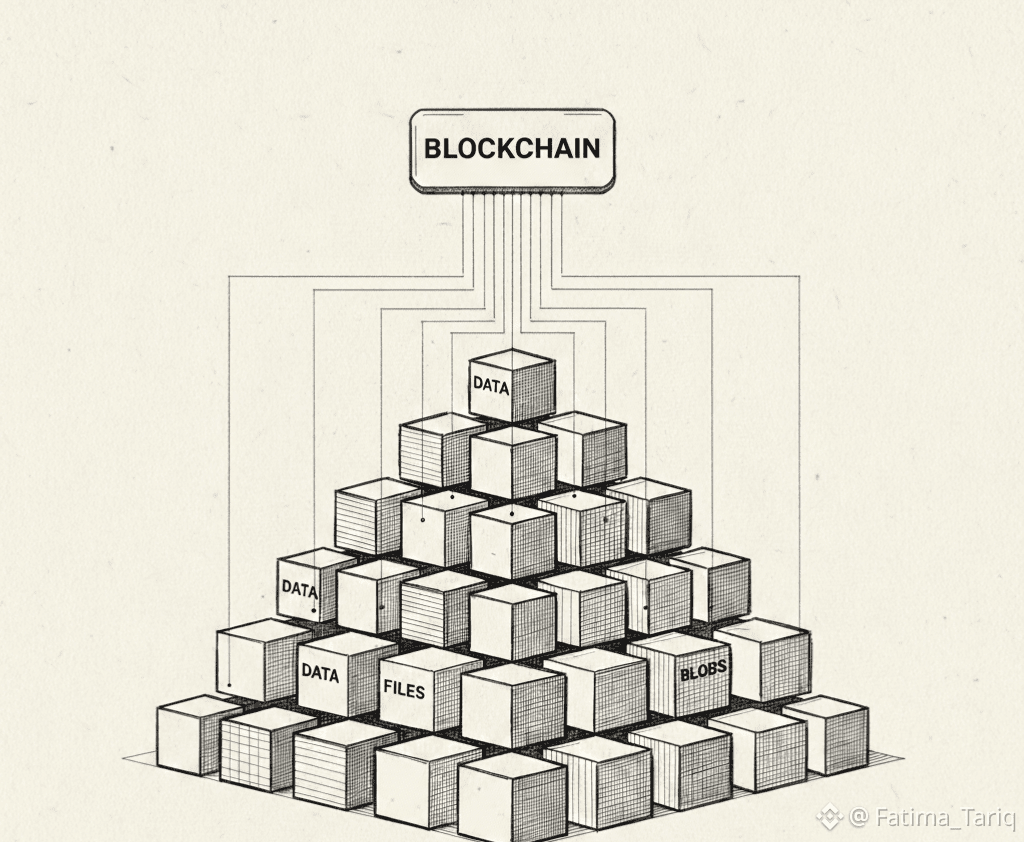
The project moved from theory to execution with the public launch of its mainnet on March 27, 2025. This milestone marked the transition from experimental claims to live infrastructure operating under real network conditions. From an infrastructure perspective, this shift is critical, as decentralized systems are ultimately judged by uptime, retrieval reliability, and predictable cost behavior rather than whitepaper promises.
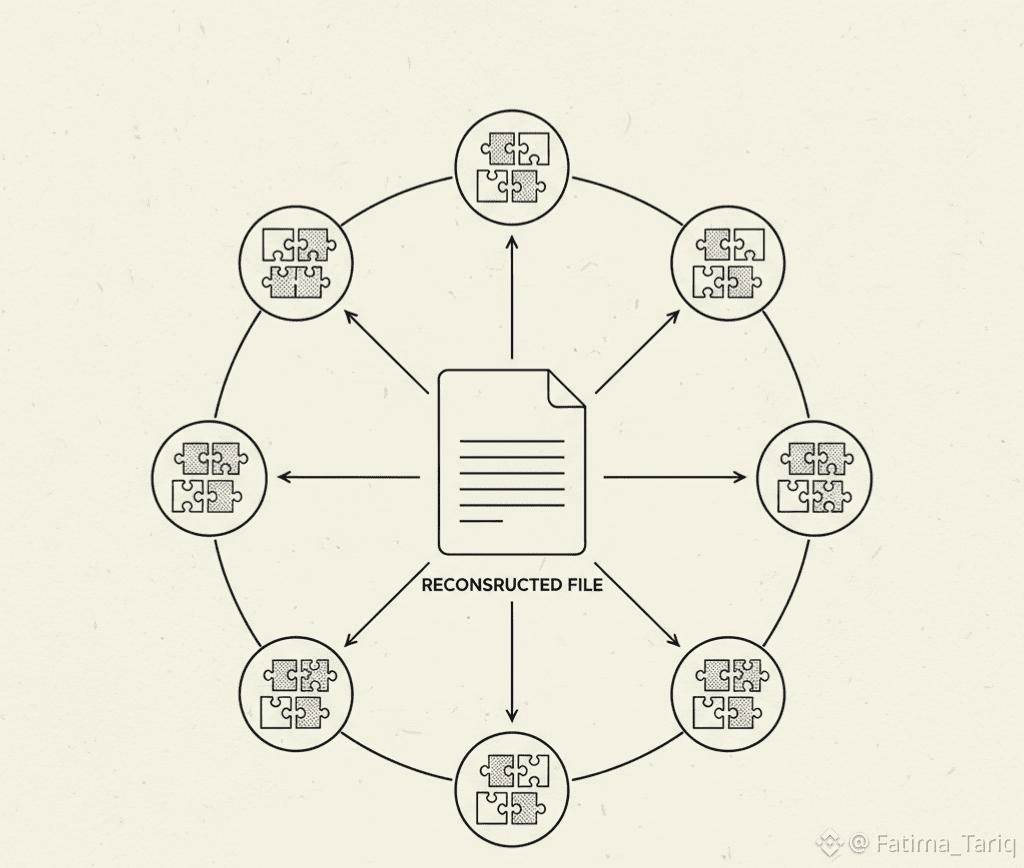
At the technical core of Walrus is a two‑dimensional erasure‑coding scheme known as RedStuff. Traditional decentralized storage systems often rely on full replication, storing complete copies of files across many nodes to ensure availability. While effective, this approach is costly. Walrus instead encodes data into fragments that are distributed across storage nodes, allowing the original data to be reconstructed as long as a sufficient subset of fragments remains available. This design aims to preserve durability while significantly reducing overhead.
Walrus documentation and research describe storage overhead in the range of approximately five times the original blob size, reflecting encoded fragment storage rather than full replication. This cost profile is materially important because decentralized storage adoption depends on economic viability. Builders may accept moderate premiums for censorship resistance and permanence, but excessive cost multipliers prevent mainstream usage.
Another distinguishing feature is Walrus’s emphasis on programmability. Rather than treating storage as a passive “upload and retrieve” service, Walrus integrates storage actions with on‑chain coordination. Blob availability, lifecycle events, and verification can be referenced by applications through the Sui control layer. This approach shifts storage from a static resource into a programmable component that applications can reason about and depend on.
From an investor perspective, Walrus’s relevance lies in structural demand rather than narrative appeal. Storage is not a discretionary feature for Web3 applications; it is a necessity. Tokenized real‑world assets, decentralized media platforms, AI training workflows, DePIN networks, and consumer‑facing crypto applications all require reliable data availability. Unlike speculative sectors, storage demand grows organically as data accumulates.
Walrus also benefits strategically from complementing an existing ecosystem rather than competing with it. By using Sui as its control plane, Walrus can integrate with a live developer base, established tooling, and existing liquidity. This reduces adoption friction compared to storage networks that require developers to migrate to entirely new stacks.
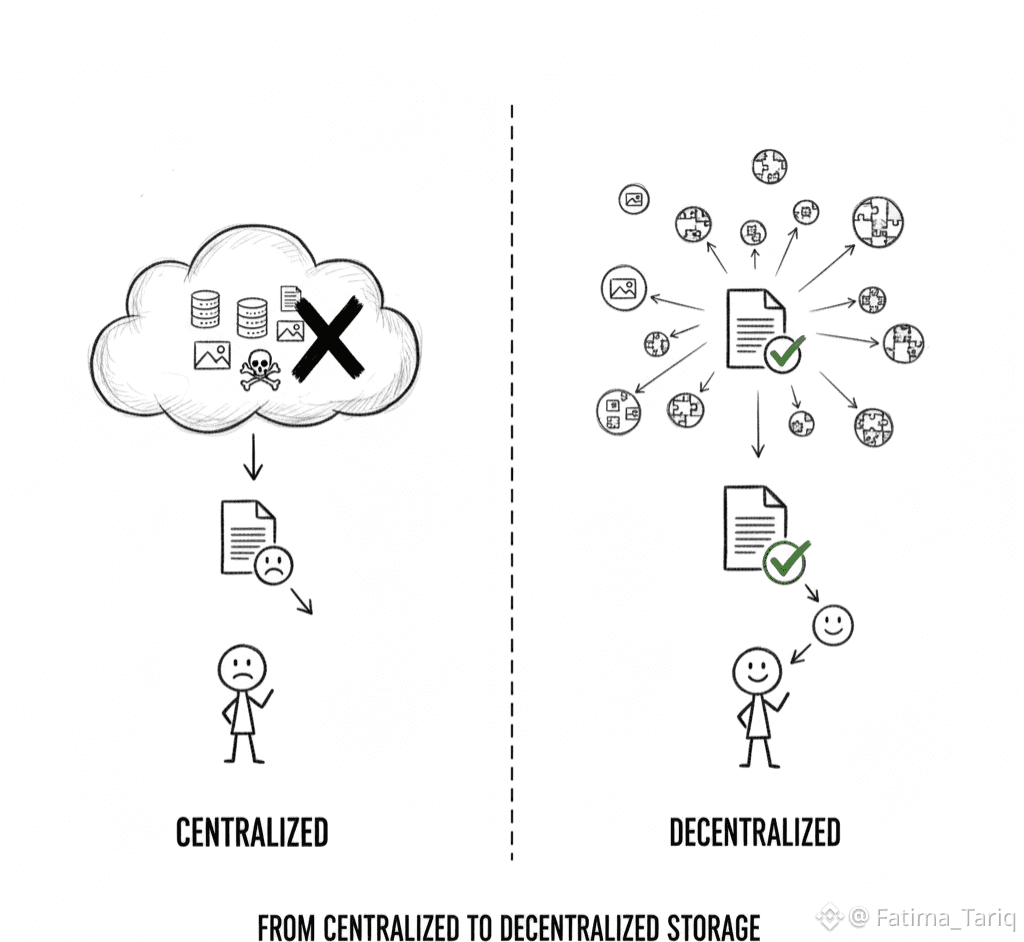
The neutral conclusion is that Walrus is neither guaranteed to dominate decentralized storage nor merely another experiment. It represents a focused attempt to address known weaknesses in decentralized storage economics, reliability, and programmability while anchoring itself to a functioning ecosystem. Its long‑term impact will be measured by quiet adoption: applications storing data, retrieving it reliably, and building on top of it without fanfare. If that happens, Walrus’s success will look less like hype and more like infrastructure doing its job.
#Walrus #LearnWithFatima $WAL @Walrus 🦭/acc #BinanceSquareTalks #BinanceSquareFamily #creatorpad