

Introduction:
In early 2026, conversations around crypto are no longer limited to price action or speculation. The focus is slowly shifting toward real use cases, especially around data. Data is now one of the most valuable digital resources in the world, yet it is still controlled by a small number of centralized platforms. This is where Walrus and its native token WAL step in. Walrus is gaining attention for offering a new way to store, share, and earn from data without relying on big companies or closed systems. As a Binance Square creator, I see Walrus as part of a broader trend where infrastructure matters more than hype. This article explores why Walrus is trending, what progress it has made, and why its approach to data feels timely in today’s market.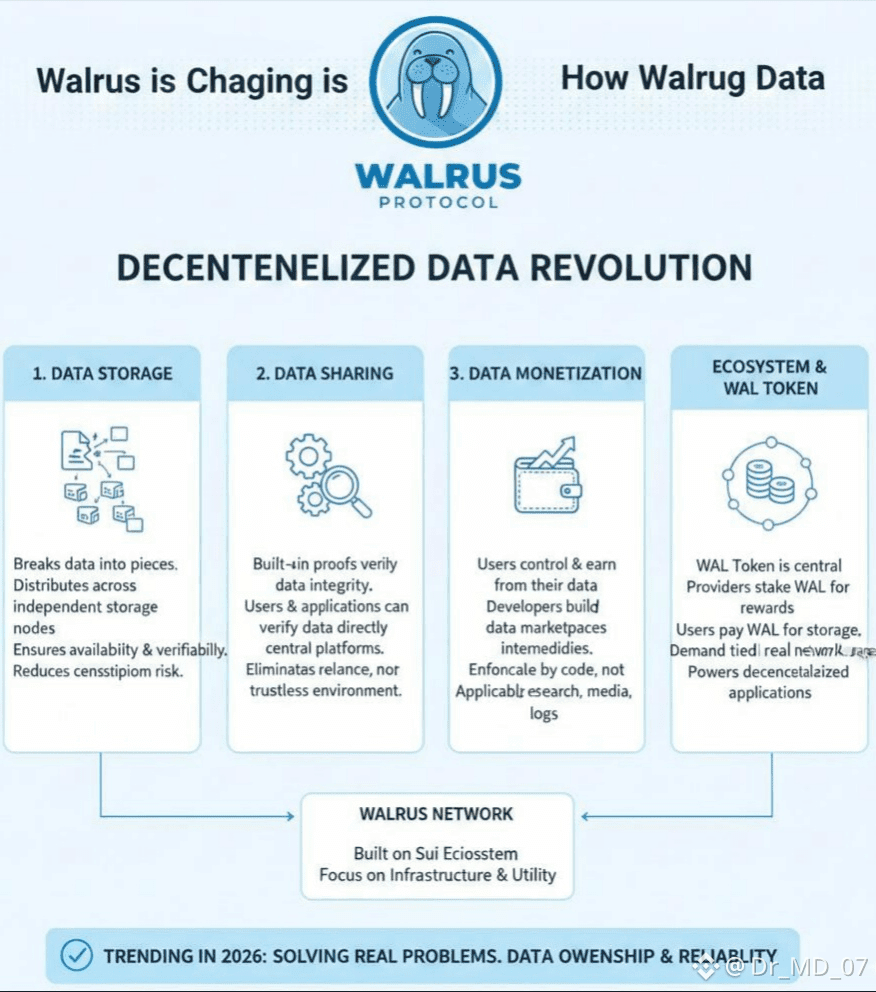
Why Data Storage Is a Growing Problem:
Most people do not think much about where their data lives. Photos, files, app data, and even blockchain information are usually stored on servers owned by large companies. While this feels convenient, it comes with risks. Data can be censored, deleted, altered, or become unavailable if a service goes down. In recent years, outages, data leaks, and rising storage costs have made users more aware of these weaknesses. In crypto and Web3, this problem is even bigger because decentralized apps still depend on centralized storage behind the scenes. Walrus is built to address this gap by offering a storage network that does not rely on a single company or server.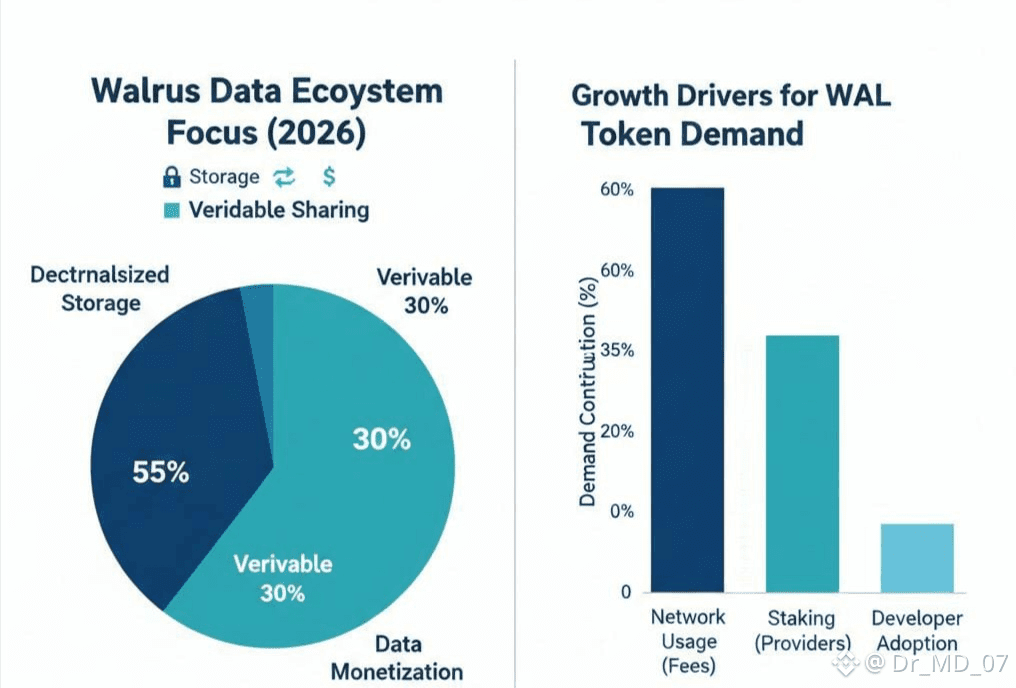
Understanding Walrus in Simple Terms:
Walrus is a decentralized data storage protocol designed to keep information available and verifiable over time. Instead of storing a file in one place, Walrus breaks data into pieces and spreads them across many independent storage nodes. These nodes are run by different operators, which reduces the risk of data loss or control by one party. Walrus is closely connected to the Sui ecosystem, using blockchain events to track when data is uploaded, verified, and kept available. In simple words, Walrus makes sure data stays readable, honest, and accessible, even if some parts of the network go offline.
How Walrus Changes Data Sharing:
Sharing data today often means trusting a platform to handle it correctly. Walrus changes this dynamic by letting users and applications verify data themselves. When data is stored on Walrus, it comes with built in proofs that show it was stored correctly and has not been altered. This is important for developers, researchers, and content creators who need confidence in the data they use. For example, an app can check that a file is still available without asking a central service. This creates a more open environment where trust comes from the system itself, not from promises made by a company.
The Role of WAL Token in the Ecosystem:
The WAL token plays a central role in keeping the Walrus network running. Storage providers stake WAL to participate in the network and earn rewards for storing data honestly. Users pay fees in WAL to store their data for a chosen period. This creates a balanced system where good behavior is rewarded and bad behavior is discouraged. What stands out to me is that WAL is not just a speculative asset. It has a clear purpose tied directly to network usage. As more data moves onto Walrus, demand for WAL grows naturally through real activity, not just market excitement.
Data Monetization Without Middlemen:
One of the most interesting aspects of Walrus is how it supports data monetization. Today, platforms often profit from user data while creators see little benefit. Walrus opens the door for users to control and monetize their own data. Developers can build marketplaces where data is shared or sold with clear rules enforced by code. This could apply to research data, digital media, or application logs. The key idea is simple. If you create valuable data, you should have the option to earn from it directly. Walrus provides the storage layer that makes this possible without relying on a central authority.
Why Walrus Is Trending in 2026:
Walrus has gained attention recently due to its steady development and growing relevance. As more projects focus on real infrastructure, decentralized storage is becoming a core requirement. The rise of onchain applications, AI related data needs, and long term archival use cases all point toward stronger demand for reliable storage. Walrus events and updates over recent months have shown progress in network activity and ecosystem interest. From my perspective, the timing matters. Markets are more selective now. Projects that solve real problems are standing out more than those built only around narratives.
Personal Perspective on Walrus Growth:
As someone who follows infrastructure projects closely, I appreciate Walrus for its practical approach. It does not try to appeal to everyone at once. Instead, it focuses on doing one thing well. Keeping data available and trustworthy. This kind of focus is often overlooked during bull cycles but becomes valuable over time. Walrus feels like a project built for builders, not just traders. That does not mean price is irrelevant, but long term value usually comes from consistent usage. If decentralized apps continue to grow, storage protocols like Walrus will likely become more visible.
Conclusion:
Walrus represents a meaningful shift in how data can be stored, shared, and monetized in a decentralized world. By removing single points of control and giving users verifiable access to their data, it addresses a problem that affects both crypto and traditional digital systems. The WAL token ties economic incentives directly to network health, which strengthens the model. In a market that is slowly maturing, Walrus stands out for focusing on utility over noise. While it is still early, the direction is clear. Data ownership and reliability are becoming priorities, and Walrus is positioning itself as a key player in that future.

