

Walrus is getting closer to launching its Mainnet, and the way it handles testing is changing. If you’re building on Walrus, here’s what you need to know about the Testnet’s future.
First off, the current Walrus Testnet is about to be wiped clean and restarted. Don’t worry this isn’t a red flag or a sign something’s wrong. The team is resetting things on purpose to make sure the Testnet lines up with the upcoming Mainnet release. And this won’t be a one-time thing. The plan is to reset the Testnet regularly, maybe every few months. Why? It lets the Walrus team roll out big updates, refactor code, and test new features without getting bogged down by old data or outdated setups.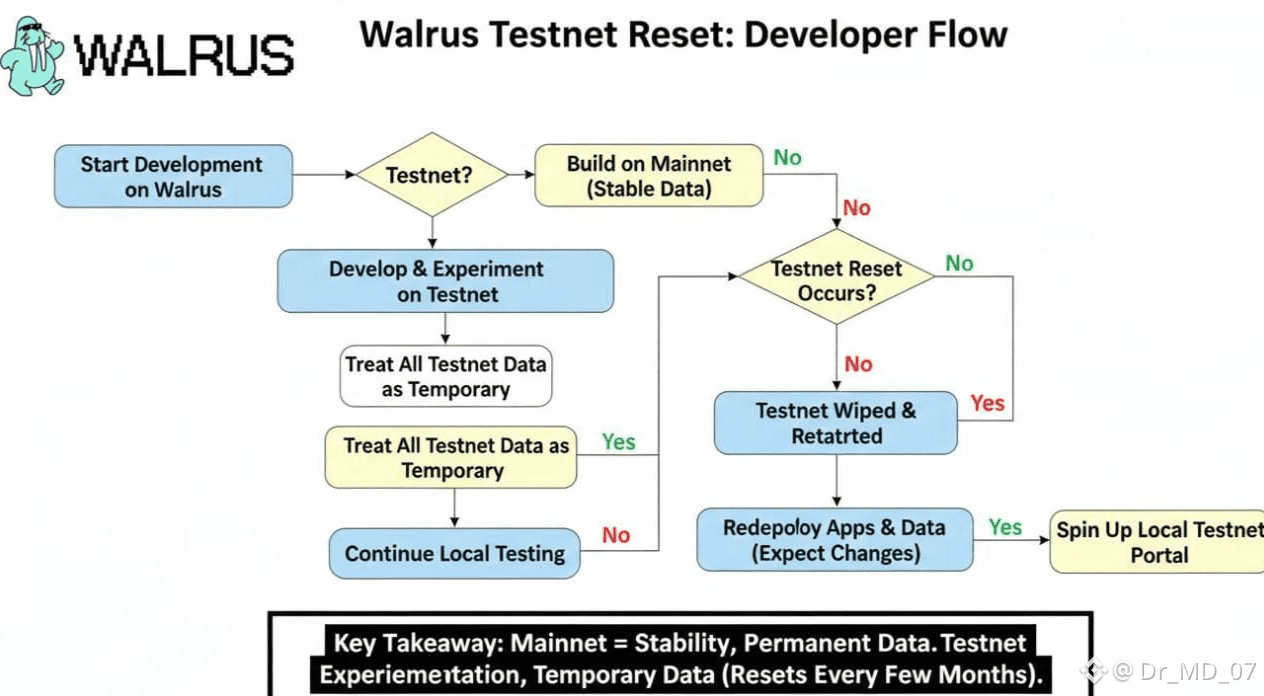
It helps to know how Walrus thinks about its networks. Mainnet is built for stability. If your app needs to store data that should stick around and behave predictably, Mainnet is where you want to be. You can trust that data there won’t just disappear or change out of the blue.
Testnet is a different story. It’s the sandbox, meant for experiments. This is where new features, protocol tweaks, and performance improvements land first. Regular resets keep Testnet nimble and focused on testing, not on holding onto data forever.
So, if you’re developing on Testnet, treat everything as temporary. Expect wipes. Never assume data will last. Build your apps with the idea that the whole environment can reset at any time. This pushes you to write clear deployment scripts, make setups reproducible, and plan for migrations from the start.
There’s one more change: Walrus won’t run a public portal for Walrus Sites on Testnet anymore. It’s not about technical limitations it’s about avoiding the cost and hassle of running free web hosting and dealing with incidents. By dropping the public Testnet portal, Walrus can focus on making the protocol better and keeping Mainnet top-notch.
But you’re not out of luck. You can still spin up a local portal that connects to Testnet. You’ll be able to test your sites, handle data, and work through integrations just fine just without leaning on a public portal. Sure, it takes a bit more setup on your end, but it gives you more control and a better feel for how Walrus really works.
Stepping back, these choices show Walrus is growing up as a project. Lots of early networks try to keep Testnets running forever, which just leads to a mess confusing boundaries, bloated systems, and trouble telling testing from production. Walrus is setting clear lines: Mainnet is for real, stable usage. Testnet is for fast iteration and breaking things.
This approach is good for everyone. Developers know exactly where to build and test. The network stays clean and easy to manage. And users can actually trust Mainnet to keep their data safe it’s not doubling as a testing playground.
In the long run, frequent Testnet resets help Walrus move fast and deliver better features without risking what matters. If you get on board with this and adjust your workflow, you’ll find Walrus is a solid, professional place to build reliable decentralized storage apps.
At the end of the day, Walrus is drawing a firm line: permanent data belongs on production-grade systems, not in experimental territory.

