

The NFT space has gone through several phases already. At first, most NFTs were little more than static images with metadata hosted on centralized servers. Then came richer metadata, on-chain traits, and dynamic elements. Now, a more meaningful shift is emerging, where NFTs are no longer just tokens pointing to content, but gateways to complete, personalized digital spaces. This is where the combination of Sui and Walrus Sites becomes especially interesting.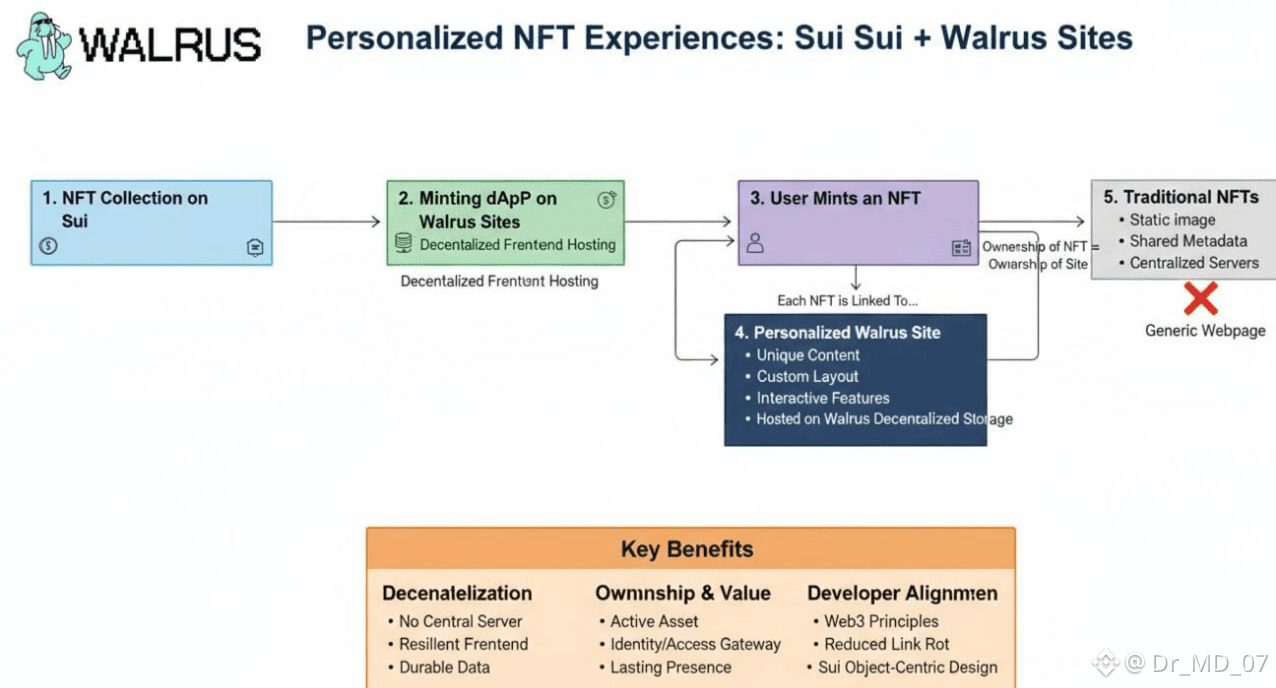
In this model, a simple NFT collection is built on Sui, but the experience around it is what truly stands out. The frontend dApp used to mint the NFTs is hosted on Walrus Sites. This means the interface users interact with is stored and served through Walrus’s decentralized storage layer, rather than relying on traditional web hosting. From the first interaction, users are already engaging with infrastructure designed for permanence and resilience.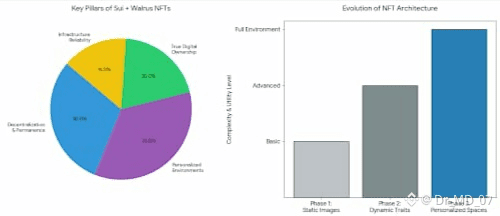
What makes this setup more powerful is the idea that each NFT is linked to its own personalized Walrus Site. Instead of every token pointing to the same generic webpage or shared metadata endpoint, each NFT has a specific site associated with it. That site can be unique in content, layout, or function, and it is tied directly to the NFT itself. Ownership of the token effectively becomes ownership of a dedicated digital space.
This changes how we think about NFTs. They stop being passive assets and start becoming active representations of identity, access, or participation. A personalized Walrus Site could host media, documentation, credentials, or interactive features that evolve over time. Because Walrus focuses on decentralized and durable data storage, this content is not dependent on a single company or server staying online.
From a developer perspective, this approach also feels more aligned with real Web3 principles. Hosting the minting dApp on Walrus Sites reduces reliance on centralized infrastructure and lowers the risk of broken links or vanished frontends. The NFT and its associated site live in the same decentralized ecosystem, creating a tighter and more trustworthy connection between the token and its content.
Sui plays an important role here as well. Its object-centric design and performance characteristics make it well suited for NFTs that go beyond simple collectibles. When combined with Walrus Sites, developers can build experiences where NFTs are entry points to personalized environments, rather than endpoints themselves. This pairing supports experimentation without sacrificing reliability.
Another important aspect is user perception. For collectors or users, knowing that their NFT points to a site that is not easily altered or removed adds confidence. It reinforces the idea that what they own has lasting value and presence. Instead of worrying about a project’s website disappearing, the NFT itself becomes the anchor for its content.
From my perspective, this is one of the more practical and honest uses of NFTs I have seen recently. It does not rely on hype or abstract promises. It focuses on infrastructure, ownership, and permanence, which are the foundations that Web3 was supposed to improve in the first place. Personalized Walrus Sites attached to individual NFTs feel like a natural evolution, not a gimmick.
I also see this model as flexible. It can start simple, with basic personalized pages, and grow into richer experiences as tools improve. Developers are not locked into a rigid structure, and users benefit from clearer ownership over both tokens and content. That balance is difficult to achieve, but Walrus makes it more realistic.
Conclusion :
By combining Sui NFTs with Walrus Sites, this approach transforms NFTs into durable, personalized digital spaces rather than static assets. Hosting both the minting dApp and NFT specific content on Walrus strengthens decentralization, reliability, and user trust. In my view, this model represents a meaningful step forward for NFTs, one that prioritizes long term value, real ownership, and practical Web3 infrastructure over short lived trends.

