
Dusk Foundation tightens when coordination collapses into silence instead of conflict.
Not a fork.
Not a dispute.
Just the moment where nothing moves because nobody is allowed to move first.
A transaction is ready to pass through a shared execution path. Several parties involved. Each one individually eligible. No disagreement on substance. On most chains this is where motion fills the gap—someone submits, others respond, sequencing itself becomes reassurance. Even hesitation looks like progress because there’s something to point at.
On Dusk, there’s nothing to point at.
Privacy removes the ambient cues teams quietly lean on. No public ordering to read. No early trace to treat as intent. If the next state transition depends on a condition that must be satisfied jointly, and that condition isn’t fully true yet, the protocol doesn’t leak a half-signal to keep people calm.
It waits.
That waiting is the failure surface.
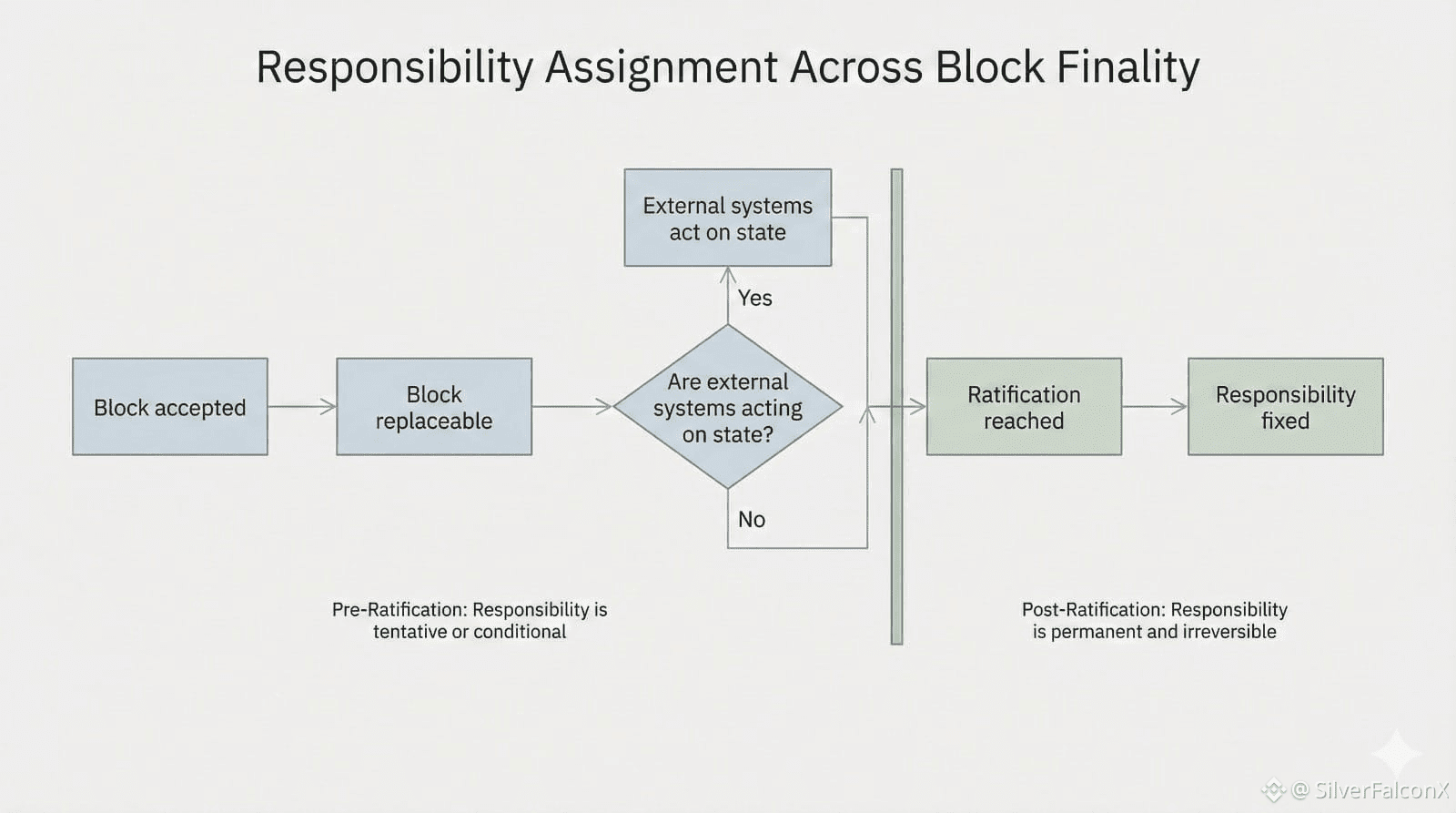
Everyone assumes someone else will act once things are “basically aligned.” But alignment isn’t inferred. Only state that can be proven at execution counts. Until that state exists, nothing advances. The chain isn’t blocked. It’s simply not participating in guesswork.
Capital sits longer than anyone planned for. Timelines stretch without an incident to blame. Calls drift sideways because the protocol offers no hint about who should resolve the deadlock. The familiar instinct is to loosen something—widen access, relax a boundary, let one party move and clean it up later.
Dusk doesn’t have that lever.
Sequencing mistakes aren’t absorbed downstream om Dusk. If coordination wasn’t resolved before execution, execution doesn’t pretend it was. There’s no social layer stepping in to smooth the moment. No later reconciliation that makes the ordering problem disappear.
What breaks here isn’t throughput. It’s the assumption that leadership will emerge automatically.
In visible systems, the first mover becomes the coordinator by default. Others follow because they can see the move and react to it. Privacy removes that shortcut. Leadership has to be explicit. Responsibility has to be assigned before the chain is involved. If it isn’t, execution stalls without explaining itself.
Deals miss windows quietly. Participants blame latency, conservatism, tooling—anything except the fact that nobody owned the decision to move first. From the protocol’s perspective, nothing failed. No condition was satisfied. So nothing happened.
That’s the posture.
On Dusk, coordination is a prerequisite, not a side effect. If it doesn’t exist upstream, the chain won’t invent it for you. And it won’t surface enough signal to let you pretend it did.
