Plasma XPL did not begin as a brand or a token. It started as a technical question that many developers were quietly asking as Ethereum matured. As more users, applications, and capital flowed into Ethereum, the limits of block space became visible. Fees rose, transaction times became unpredictable, and simple actions started to feel expensive. I’m seeing that Plasma XPL was born from this moment, when it became clear that scaling was no longer theoretical but deeply practical.
They’re not the first to notice this problem. Years of research around Layer 2 systems, sidechains, rollups, and Plasma-style constructions already existed. What made this project different was its focus on user experience rather than raw throughput numbers. If blockchains were ever going to feel normal to everyday users, something had to change at the execution layer. That belief quietly shaped the earliest conversations around Plasma XPL.
Early Design Thinking and Technical Direction
In its earliest design phase, Plasma XPL leaned heavily on ideas that had already been stress-tested in the wider crypto ecosystem. Ethereum provided the execution standard through EVM compatibility. Bitcoin influenced the project’s thinking around settlement finality and trust minimization. Instead of choosing one philosophy, Plasma XPL tried to sit between them.
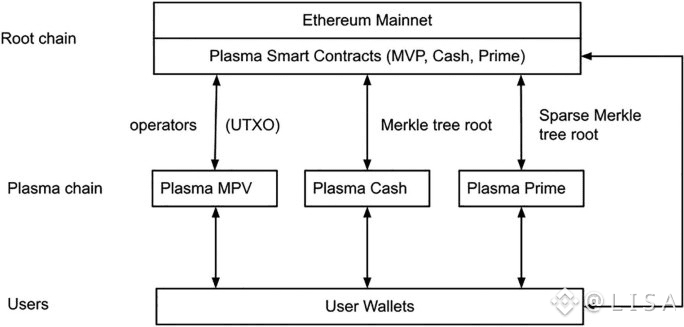
They’re building around the idea that Ethereum should remain a secure base layer, while faster execution happens elsewhere. This is where Plasma-style architecture re-enters the conversation. Rather than pushing every transaction onto Ethereum, Plasma XPL explored how transactions could be processed efficiently off-chain while still inheriting security guarantees. I’m noticing that from the start, the team avoided framing this as competition. It was always about complementing Ethereum, not replacing it.
Building Around Stablecoins and Gas Abstraction
One of the defining ideas that emerged early was stablecoin-native design. On Ethereum, users must hold ETH to pay gas, even if they only want to move stablecoins. Plasma XPL questioned this assumption. If most users interact primarily with assets like USDT or USDC, why should ETH be a constant requirement?
This led to the idea of native paymasters and gas abstraction. Instead of users worrying about gas tokens, the protocol itself could manage fees behind the scenes. I’m seeing how this design choice shifts complexity away from the user and back into infrastructure, where it arguably belongs. They’re not eliminating costs, but they are changing how those costs are experienced.
This concept also ties into broader trends across the ecosystem. Account abstraction, smart wallets, and sponsored transactions are all attempts to make blockchain feel less technical. Plasma XPL’s approach aligns closely with this movement, but integrates it directly at the protocol level rather than layering it on later.
Consensus Choices and Network Structure
Consensus design is one of the most difficult decisions for any blockchain project. Plasma XPL opted for a fast-finality approach inspired by modern Byzantine fault tolerant systems rather than proof-of-work or simple proof-of-stake models. This choice reflects a focus on predictable confirmation times and lower latency.
They’re prioritizing execution speed while still anchoring trust in a decentralized validator set. I’m noticing that this design aligns well with use cases like payments, on-chain coordination, and application backends, where waiting minutes for finality can break user experience. If it becomes widely adopted, this structure could support applications that simply cannot tolerate Ethereum mainnet delays.
Early Development and Internal Testing
As development moved from theory to implementation, the project entered a quieter phase. Early code focused on basic execution, validator coordination, and bridge mechanics. This is where assumptions meet reality. Edge cases appear. Performance bottlenecks emerge. Design decisions made on paper must now survive real-world conditions.
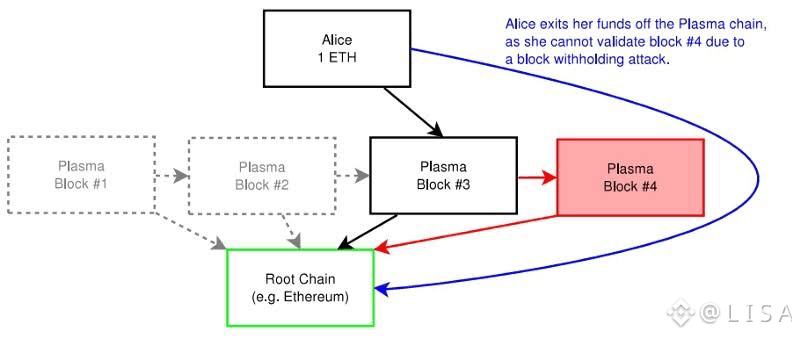
They’re testing not just for speed, but for failure scenarios. What happens if validators disagree. What happens if a bridge stalls. How users exit safely if something goes wrong. I’m seeing that much of Plasma XPL’s early progress was incremental rather than flashy. Stability mattered more than announcements.
Bridging Bitcoin and Ethereum Worlds
One of the more ambitious aspects of Plasma XPL is its focus on Bitcoin interoperability. While Ethereum dominates smart contracts, Bitcoin remains the largest store of value in crypto. Bridging BTC into programmable environments has always been risky, often relying on custodians or complex trust assumptions.
Plasma XPL explored trust-minimized approaches to BTC integration, aiming to allow Bitcoin liquidity to interact with Ethereum-style applications without relying entirely on centralized bridges. This is a difficult problem, and progress across the industry has been slow. I’m noticing that Plasma XPL treats this as a long-term objective rather than a marketing claim.
If successful, this direction could position the network as a meeting point between BTC liquidity and EVM-based execution, something many projects have attempted with mixed results.
Community Formation and Early Adoption
As the network matured, developers and early users began to take notice. Community growth was gradual. Plasma XPL did not explode into public consciousness overnight. Instead, it attracted technically curious users interested in infrastructure rather than speculation.
They’re discussing design choices openly, responding to feedback, and iterating in public. I’m seeing that this approach builds a different kind of trust. Instead of promising future dominance, the project demonstrates steady progress. This has resonated with developers looking for reliable execution environments rather than hype-driven ecosystems.
Token Role and Economic Design
The XPL token was introduced as part of the network’s incentive structure. Its primary role centers around validator participation, transaction processing, and protocol alignment rather than purely speculative utility. Designing token economics after observing years of market cycles allowed Plasma XPL to avoid some earlier mistakes seen across crypto.
They’re cautious about inflation, distribution, and long-term sustainability. I’m noticing an emphasis on utility before narrative. If the network grows, demand for XPL should come from usage rather than attention. That framing does not guarantee success, but it aligns incentives more closely with actual network health.
Market Conditions and External Cycles
No project develops in isolation. Plasma XPL has navigated both bullish optimism and bearish skepticism across the broader crypto market. During quieter periods, development continued. During louder periods, expectations increased.
I’m seeing a consistent effort to avoid tying progress to price movements. Updates focus on infrastructure improvements, tooling, and network stability rather than short-term metrics. This approach reduces noise but requires patience from the community. They’re betting that long-term relevance matters more than short-term excitement.
Current State of the Network
Today, Plasma XPL exists as a functional execution environment with a clear design philosophy. It supports EVM-compatible applications, abstracts gas complexity, and continues refining its bridge and consensus mechanisms. Stablecoin transfers and user experience remain central themes.
Developers can deploy familiar Ethereum tooling while benefiting from faster execution and different fee dynamics. I’m noticing that this positioning makes Plasma XPL particularly attractive for applications that care about predictability and simplicity rather than maximal decentralization at all costs.
How Plasma XPL Fits Into the Broader Ecosystem
The blockchain landscape has shifted toward modular design. Execution, settlement, and data availability are increasingly separated. Plasma XPL fits naturally into this modular future. It does not attempt to do everything, but instead focuses on execution and usability.
If Ethereum continues to serve as a global settlement layer, networks like Plasma XPL may become the place where users actually interact day to day. We’re seeing this pattern emerge across the ecosystem, with Layer 2s and app-specific chains gaining relevance.
Looking Several Years Ahead
Projecting forward is always uncertain, but certain trajectories are visible. If Plasma XPL continues developing along its current path, its future likely depends on adoption by real applications rather than narratives. Payments, DeFi infrastructure, and on-chain services that value speed and cost predictability could define its growth.
Challenges will remain. Competition is intense. Standards evolve. Regulatory environments shift. I’m seeing that Plasma XPL’s strongest asset may be its focus on fundamentals. Instead of chasing every trend, it builds slowly toward a coherent vision.
A Quiet Ending and an Open Path Forward
Plasma XPL’s story is not one of sudden disruption. It is a story of deliberate construction. From early questions about Ethereum’s limits, through careful architectural choices, to a present focused on usability and execution, the project reflects a belief that infrastructure matters most when it disappears into the background.
If it becomes widely used, users may not even know its name. They’ll just notice that transactions feel simpler, cheaper, and more reliable. We’re seeing that kind of future slowly take shape across crypto. Plasma XPL is one attempt to build toward it, patiently, layer by layer, leaving the final chapter unwritten and open to time.