
Introduction
In the tokenomics of Plasma something unique has happend. As we know One of the quiet failures of many blockchain networks begins at launch. Long before real users arrive, before applications generate value, and before institutions even pay attention, inflation quietly starts flowing. Tokens are minted, rewards are distributed, and early holders are diluted in an economy that has yet to justify its existence. Plasma takes a fundamentally different path. By deliberately delaying inflation until the network is operationally and economically ready, Plasma introduces what can be called clean early economics—a design choice that may prove essential for the next generation of financial blockchains.
The Hidden Cost of Early Inflation
So, In most Proof-of-Stake systems, inflation begins the moment the chain goes live. The logic is simple: validators need to be paid. But this approach often creates a mismatch between security costs and actual usage. Inflation becomes a tax on early holders, even though the network is not yet delivering meaningful utility. It is similar to a central bank printing money before an economy has started producing goods. The result is predictable: dilution without value creation.
Plasma challenges this norm by refusing to inflate prematurely. Validator rewards do not activate at launch. They only begin once two critical conditions are met: external validators are live, and stake delegation is enabled. Until then, the supply remains economically static.
How Plasma’s Architecture Enables Delayed Inflation
This design is not just philosophical, it is architectural. Plasma is built as a stablecoin-optimized blockchain where early activity does not rely on a large, permissionless validator set from day one. Instead, the network can operate securely in its initial phase without needing inflation-funded incentives.
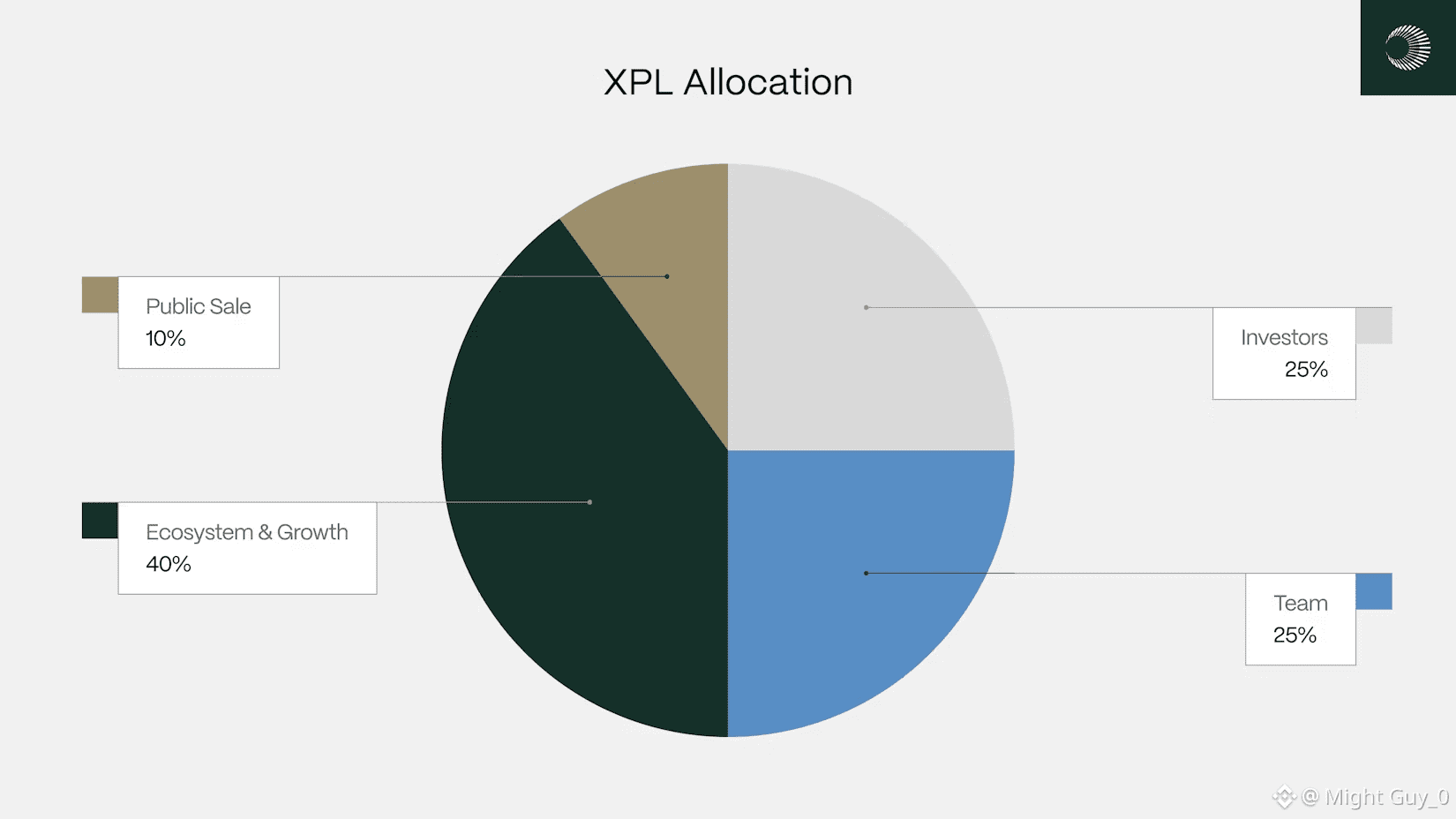
Once the system matures and opens to external validators, inflation activates as a security budget, not as a growth crutch. Stake delegation then allows token holders to participate in consensus indirectly, distributing rewards only to those actively securing the network. Importantly, locked team and investor tokens are excluded from rewards, ensuring emissions are tied to contribution, not early ownership.
This mirrors real-world infrastructure rollout. A payments network does not hire thousands of operators before transactions exist. It scales security costs in proportion to usage. Plasma applies this same discipline onchain.
Why This Matters in Today’s Crypto Landscape
As blockchain increasingly intersects with traditional finance, token economics are being scrutinized through a more institutional lens. Banks, payment processors, and capital market participants care deeply about dilution, predictability, and monetary discipline. A network that inflates from day one looks speculative. A network that inflates only when needed looks engineered.
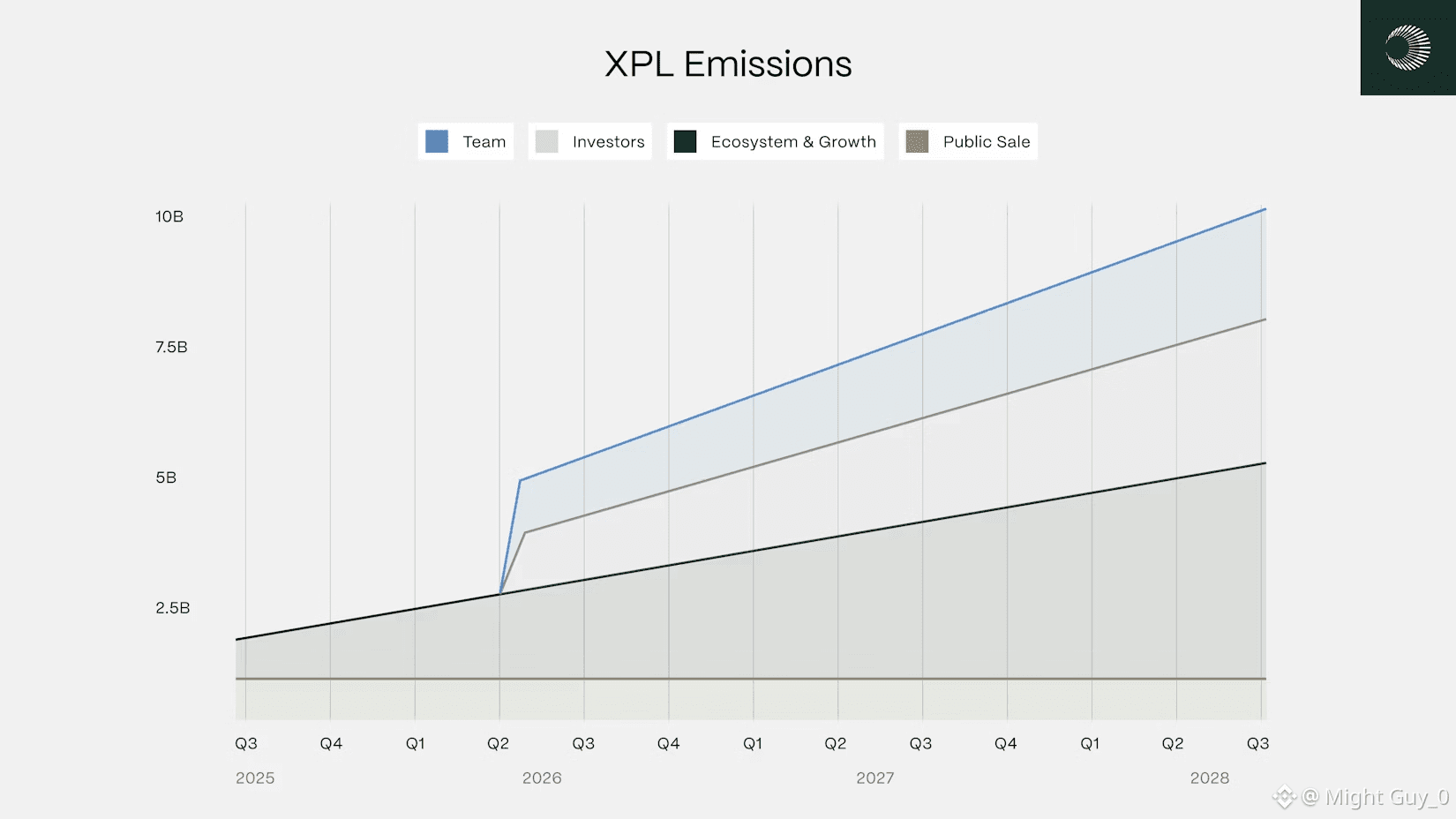
Delayed inflation also protects early ecosystem participants. Builders, liquidity providers, and users are not quietly diluted while waiting for adoption to materialize. Value accrual begins when real economic activity begins, aligning incentives across the system.
Future Opportunities Unlocked by Clean Early Economics
This approach positions Plasma uniquely for large-scale stablecoin adoption. As transaction volume grows, validator rewards are increasingly balanced by fee burns, following an EIP-1559-style model. Over time, usage-driven burns can offset or even surpass emissions, transforming inflation from a permanent feature into a flexible tool.
For developers, this creates a more predictable environment. For institutions, it offers monetary clarity. For token holders, it means ownership is not eroded before the network proves itself.
Conclusion
Delayed inflation may sound like a small technical detail, but it represents a deeper shift in how blockchains are designed. #Plasma treats inflation as a consequence of success, not a prerequisite for launch. By aligning security costs with real adoption, it avoids the dilution traps of earlier networks and sets a new standard for infrastructure-grade token economics.
In a future where blockchains underpin global money movement, clean early economics will not be optional. @Plasma is already building for that future.

