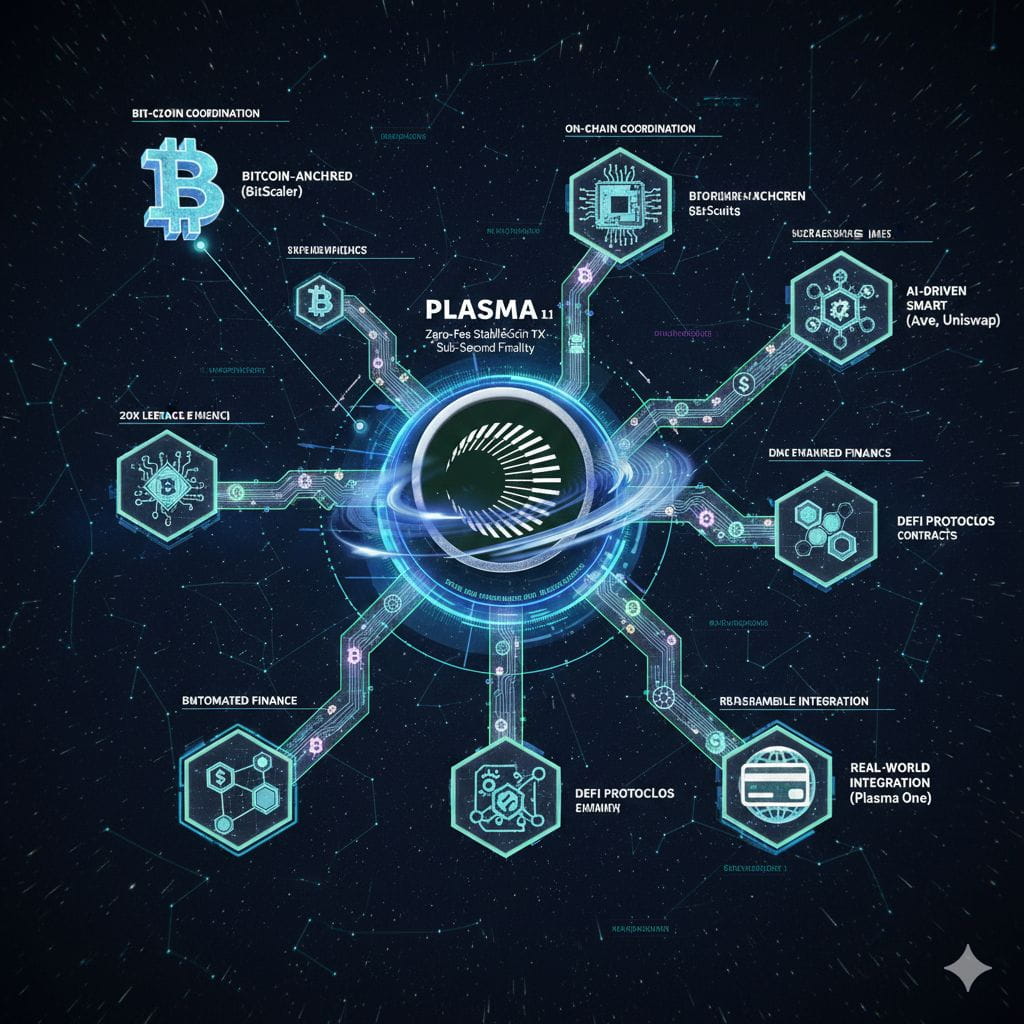
On-chain coordination and automation sound clean when written down, but in practice they’re messy. I’ve watched systems that were supposed to run themselves turn fragile the moment real conditions showed up. Timing slips. Data arrives late. One delayed step causes three others to stall. Plasma ($XPL) becomes relevant in this space because it focuses on supporting these moving parts, not pretending they move in perfect order.
Coordination on-chain is really about many small actions agreeing with each other at the right moment. Automated tasks depend on fresh state, clear signals, and predictable execution. When any of those wobble, the whole process feels off. I’ve used automation tools where you’re never quite sure if the system is ahead of events or behind them. That uncertainty doesn’t come from bad logic. It comes from infrastructure that can’t keep up with constant change. Plasma’s role sits underneath this layer, helping systems stay in sync as actions trigger other actions.
What stands out to me is how Plasma fits into automation without trying to control it. It doesn’t decide what should happen. It supports how things happen. For coordination systems, that distinction matters. Automated workflows need reliability more than creativity. They need state updates to land when expected and processes to move forward without hesitation. Plasma focuses on helping data and execution flow smoothly so automation doesn’t feel brittle.
This topic is trending now because on-chain automation is no longer theoretical. DAOs, coordination tools, scheduled executions, and rule-based systems are being used daily. As usage grows, weak points become obvious. Missed triggers. Delayed updates. Actions that fire too late to matter. Builders are starting to talk less about what automation can do and more about whether it can be trusted. Plasma enters these conversations because it supports the infrastructure needed to keep automated systems aligned with real events.
From what I’ve observed, real progress here isn’t loud. It’s visible in fewer manual interventions. Fewer moments where someone has to step in and fix something that “should have worked.” Plasma supports that kind of progress by helping coordination systems remain responsive under continuous operation. That consistency is hard to measure, but easy to feel when it’s missing.
There’s also a human side to automation that often gets ignored. When systems misfire, people lose confidence quickly. They stop relying on rules and start double-checking everything. I’ve seen teams abandon automation not because it failed once, but because it felt unpredictable. Infrastructure that reduces that unpredictability restores trust. Plasma plays into that by supporting timely updates and smoother execution paths.
Sometimes I ask a simple question when thinking about on-chain coordination. Would I let this system run without watching it? With the right infrastructure underneath, the answer gets closer to yes. Plasma’s relevance comes from helping automation feel boring in the best way. Predictable. Calm. Uneventful.
Plasma ($XPL) in on-chain coordination and automation systems fits the current moment because the space is growing more serious. New doesn’t mean experimental anymore. Trending doesn’t mean noisy. It means practical tools being tested under real conditions. Plasma supports that shift by focusing on the quiet work of keeping automated systems aligned, responsive, and dependable as complexity increases.