
I've been tracking how Walrus epoch boundaries interact with WAL price movements and there's a pattern emerging that almost nobody's discussing. WAL dropped to $0.1352 today down 3.91% with volume at just 5.73 million tokens. RSI sits at 30.68, oversold territory. Standard bearish setup. Except the timing of where we are in the current epoch changes everything about what that price action actually means.
Most people trade Walrus like any other token. Chart goes down, sentiment turns negative, everyone assumes the worst. But Walrus isn't structured like most tokens.
Storage pricing gets locked at epoch boundaries. Every two weeks, node operators vote on costs, the protocol settles on the 66.67th percentile, and that becomes the fixed rate for the entire next epoch. Once set, it doesn't move regardless of what happens to WAL price during those two weeks.
We're currently deep into an epoch that started when WAL was trading significantly higher than $0.1352. The storage costs were calculated in WAL terms based on fiat targets from days ago. Token crashed since then, but the epoch pricing didn't adjust.
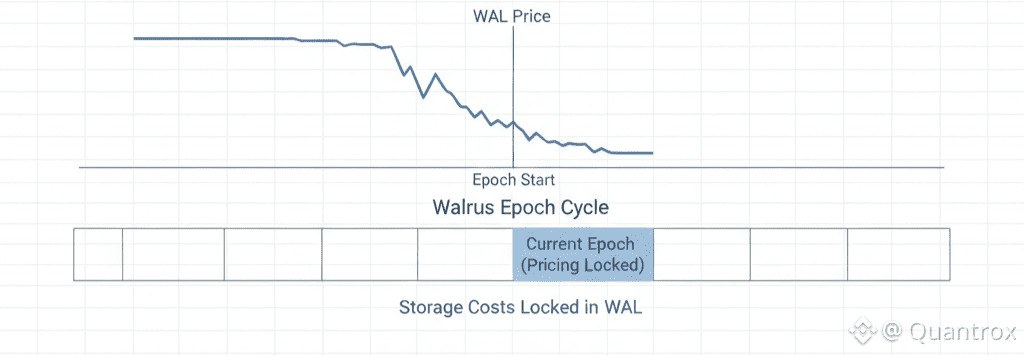
Here's what that creates. Anyone buying Walrus storage capacity right now is paying the WAL amount set when the token was worth more. But they're acquiring that WAL at today's depressed prices. They're getting a discount that nobody planned for and most people haven't noticed.
That's not speculation. That's just math. Storage costs X amount of WAL per terabyte per epoch. That number was locked in before the recent selloff. WAL is now cheaper. Same storage, less fiat cost. Simple.
The interesting part is what happens at the next epoch boundary. Operators will vote again. They target fiat stability, so if WAL stayed at $0.1352, they'd likely vote for higher WAL amounts to compensate. Storage would cost more tokens but aim for similar dollar value.
But here's where timing gets critical. We're maybe 3-5 days from the next epoch flip based on Walrus's two-week cycle. If you're a project that needs storage and you're paying attention, you buy capacity now at current epoch rates with cheap WAL, then lock in for weeks or months before pricing adjusts.
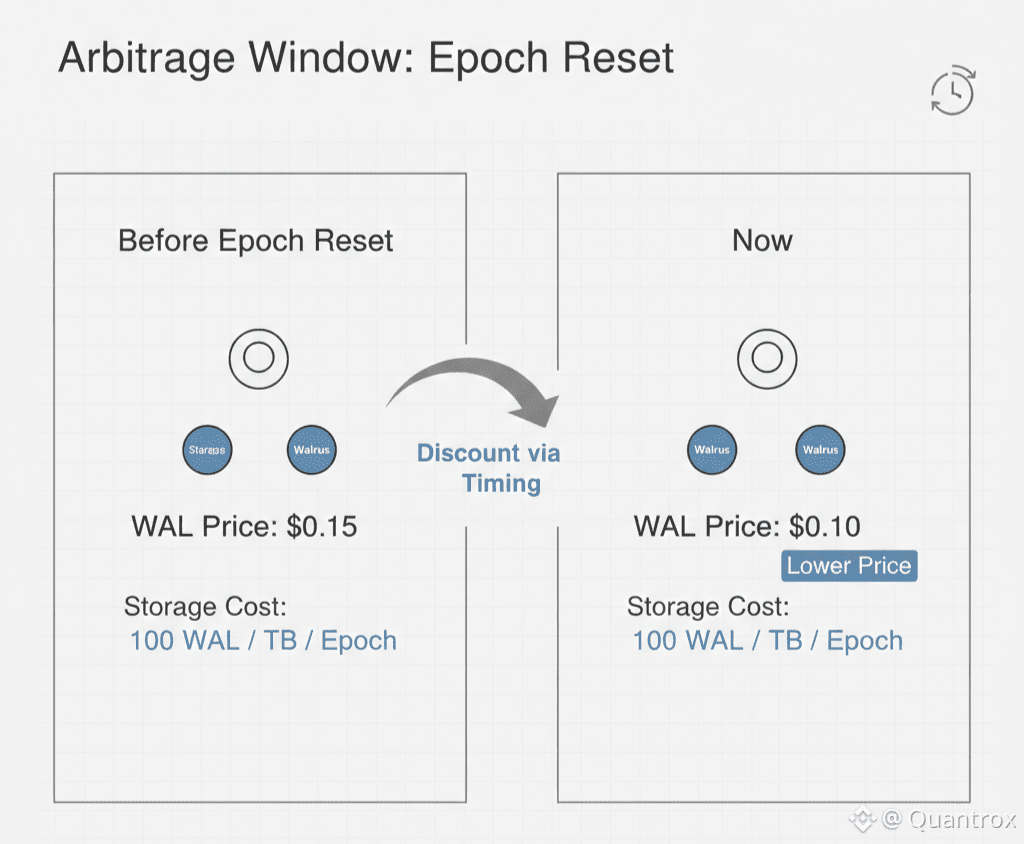
I don't know if anyone's actually doing this. But the opportunity is sitting there, obvious to anyone who understands epoch mechanics and is watching the calendar instead of just the chart.
Walrus burns WAL through various mechanisms including storage fees and slashing. When storage activity happens at epoch-locked rates while the token is down, more tokens flow through burn addresses relative to the fiat value captured. The protocol is destroying more WAL per dollar of storage revenue this week than it was last week.
That's deflationary pressure that happens invisibly because the price chart looks bearish and everyone assumes nothing good is happening. Meanwhile the tokenomics are actually improving for long-term holders if storage usage continues.
The RSI at 30.68 signals oversold conditions. Normally that means bounce incoming. But with Walrus, oversold during an epoch window before a pricing reset creates a different dynamic. It's not just about technical rebound. It's about fundamental timing of when costs get repriced.
If WAL bounces before the next epoch boundary, the discount window closes. Storage costs stay locked in current epoch terms, but the token is more expensive to acquire. The opportunity evaporates. If it stays down through the epoch flip, operators vote for higher WAL amounts and storage gets more expensive in token terms going forward.
Either way, there's maybe a 3-5 day window where conditions are optimal for anyone who needs Walrus capacity. They probably don't know this. Most projects buying storage aren't tracking epoch calendars and token price movements simultaneously. They just pay whatever the protocol asks when they need capacity.
But someone paying attention could be accumulating WAL at $0.1352, waiting for the epoch boundary, buying storage at the old rate, and effectively front-running the repricing that has to happen if the token stays down.
The volume of 5.73 million WAL in 24 hours is thin. Less than half a million dollars changing hands. That thinness makes this harder to execute at scale. You can't buy massive WAL positions without moving the market. But for projects that need moderate storage amounts, the window is real.
Walrus node operators are probably aware of this dynamic. They voted for current epoch pricing when WAL was higher. They're earning revenue in a token that's now worth less in fiat terms. That's hitting their margins. They'll adjust at the next vote. But until then, they're stuck with the rate they already committed to.
That commitment is what creates the opportunity. Walrus couldn't function if pricing changed constantly with every token move. The epoch structure provides stability. But stability during volatility creates arbitrage windows for people who understand the timing.
I keep thinking about what happens if multiple projects figure this out simultaneously. Rush to buy storage before repricing. That would spike WAL demand right before the epoch boundary. Token moves up. Pricing gets set at higher levels. The arbitrage closes. Maybe that's how it's supposed to work. Natural market discovery through timing-aware participants.
Or maybe nobody cares and storage just gets purchased whenever projects need it, epoch timing be damned. Hard to know without seeing actual usage patterns.
What I do know is that Walrus trading at $0.1352 with RSI at 30.68 three days before an epoch boundary is a different situation than the same price action three days after an epoch reset. The chart looks identical. The implications are completely different.
Most traders don't think about infrastructure timing. They see red candles and assume everything is bad. Meanwhile Walrus has built-in cycles that create specific windows where bearish price action might actually be optimal for certain participants.
Whether anyone capitalizes on that is another question entirely. For now, the clock is ticking toward the next epoch boundary and WAL keeps grinding lower while the opportunity window stays open for anyone watching both the calendar and the chart.
Time will tell if this was an edge that got exploited or just an observation that went nowhere. Either way, epoch timing matters more than most Walrus traders realize.

