
Alright everyone, let me speak to you directly for a bit, because Walrus is one of those projects that deserves a proper sit down conversation. Not a quick thread. Not a few buzzwords. A real look at what is happening right now and why it matters if you care about where Web3 is actually going.
For a long time, we have been pretending that decentralized applications are fully decentralized. The truth is, most of them are not. The logic might live on chain, but the data almost always lives somewhere else. Centralized servers, traditional cloud providers, single points of failure. That contradiction has been accepted for far too long. Walrus exists to challenge that and it is finally doing so in a serious way.
Walrus is not trying to compete with consumer apps or chase trends. It is building infrastructure. Real infrastructure. The kind that does not look exciting until you realize everything else depends on it. At its core, Walrus is a decentralized data availability and storage network designed to handle large scale data while remaining verifiable, resilient, and programmable.
One of the most important recent developments is that Walrus is no longer experimental. The network is live and operating with real participants. Storage providers are running nodes. Data is being uploaded, retrieved, and referenced by applications. This shift from testing to production is where many projects slow down or fail. Walrus crossed that threshold and kept pushing forward.
What really sets Walrus apart is how it treats data as a first class citizen. Data is not just something you upload and forget. It is represented in a way that allows applications to interact with it through smart logic. Large data objects are stored in a decentralized manner, while references and ownership information live on chain. This allows applications to verify availability and integrity without dragging massive files into execution environments.
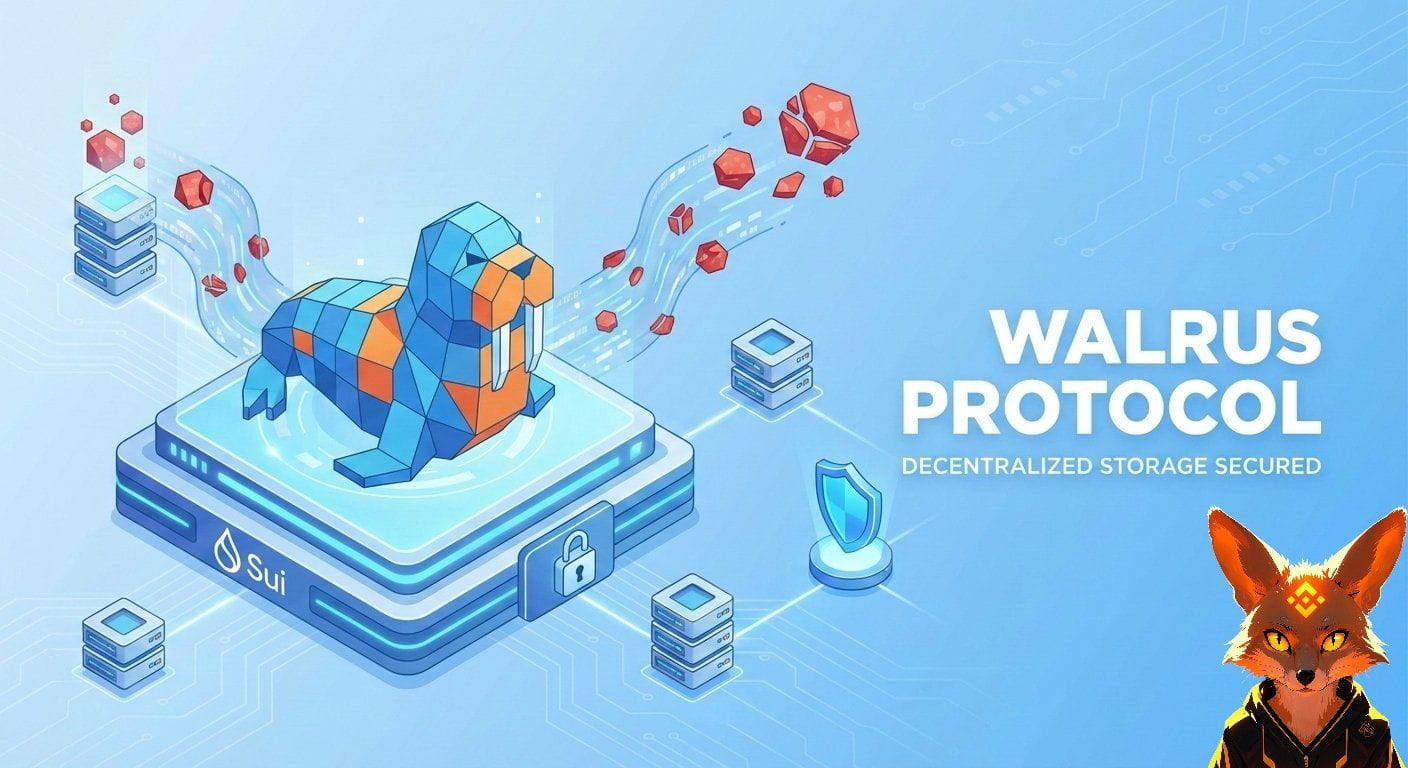
This design unlocks use cases that were previously unrealistic. Decentralized websites that do not rely on centralized hosting. Games that store assets in a permissionless data layer. Social platforms where user generated content does not disappear when a company shuts down. Data sets for research or artificial intelligence that can be shared and verified without trusting a single entity.
Recent upgrades have focused heavily on performance. Data encoding and retrieval have been optimized to reduce latency and improve reliability. Network communication between nodes has been refined so the system remains responsive even under load. These are the kinds of improvements that do not get hyped but make the difference between a network people test and a network people trust.
Node operators have also seen meaningful improvements. Running a storage node is becoming more approachable with better tooling, clearer monitoring, and more predictable resource usage. This matters because decentralization only works when participation is accessible. If only a handful of players can operate the network, the whole model breaks down.
From a builder perspective, Walrus is becoming easier to work with. Developer tools have improved, making it simpler to upload data, manage storage objects, and integrate with applications. The goal is clear. Make decentralized storage feel practical, not academic. Builders should be focused on what they are creating, not wrestling with infrastructure.
The WAL token is deeply embedded into this system. It is used to pay for storage and data availability. It secures the network through staking and delegation. It enables governance, giving the community influence over how the protocol evolves. This is not a token searching for utility. Its utility is already here and growing as usage increases.
One thing that deserves attention is how incentives are structured. Storage providers are rewarded based on reliability and availability, not just capacity. This encourages high quality participation. Users pay based on actual usage, which keeps costs transparent. Economic systems like this usually reflect deep thought about long term network health rather than short term growth metrics.
Interoperability has become another key focus. Walrus is not positioning itself as a closed ecosystem. It is being built as a data layer that can serve multiple networks. Recent integrations allow applications on different chains to reference data stored on Walrus. In a world where no single chain dominates, this kind of flexibility is essential.
Another strong point is resilience. Walrus is designed with failure in mind. Nodes going offline is not treated as an exception. It is expected. Data is encoded and distributed in a way that allows recovery even when parts of the network fail. This mindset is critical for infrastructure that aims to operate at global scale.
We are also starting to see organic experimentation. Teams are using Walrus to host front ends, store media, manage user content, and test new data driven application models. These are not marketing demos. They are early attempts to see what is possible when data is truly decentralized.
Community involvement continues to grow. More people are running nodes, joining governance discussions, and contributing feedback. This kind of engagement does not come from hype. It comes from people seeing value and wanting to help shape the future of the network.
One particularly interesting aspect of Walrus is how it handles data ownership. Stored data can be owned, transferred, and controlled through on chain logic. This opens up new possibilities for creators, organizations, and collaborative projects. Ownership becomes enforceable by code rather than social agreement.
Behind the scenes, infrastructure efficiency continues to improve. Storage utilization has been optimized to reduce waste while maintaining security guarantees. Network latency has been reduced. These improvements compound over time, making the network more attractive as adoption grows.
What excites me most is how Walrus fits into the bigger picture. Decentralized finance, decentralized identity, decentralized governance all depend on data. If that data lives in centralized systems, the promise of decentralization is incomplete. Walrus addresses this gap directly and seriously.
This is not a project trying to be everything. It is not launching consumer products or chasing attention. It is building a foundation and letting others build on top. That focus is a strength. It keeps the architecture clean and the mission clear.
Governance will only become more important as the network grows. Recent mechanisms allow WAL holders to participate meaningfully in shaping the future of the protocol. This ensures the network can adapt without becoming rigid or centralized.
There are challenges ahead. Adoption always takes time. Education takes time. Competition will increase. But Walrus has something many projects lack. A clear problem, a working solution, and steady progress.
For those of us who care about the deeper layers of this space, Walrus feels like one of those projects that will make sense in hindsight. Data was always the missing piece. Now it is finally being treated as infrastructure, not an afterthought.
This is not about short term narratives. It is about building something that can support the next decade of decentralized applications. Walrus is doing that quietly, methodically, and with purpose.
Keep watching. Keep experimenting. Because this is how real progress happens.

