
The internet is evolving fast, but storage systems are still stuck in old models. Centralized servers control most of the world’s data, and this creates risks that many users don’t notice until something goes wrong. Walrus is designed to solve these problems by offering a decentralized and smarter way to store data for modern applications.
Walrus does not treat storage as just a place to dump files. It treats storage as an important part of the digital economy. Data is stored in a way that is verifiable, reliable, and cost-effective. Instead of trusting a single provider, users rely on a network of independent nodes working together.
A key reason Walrus stands out is how it handles large data. Many decentralized networks struggle when files become big. Walrus is built with scalability in mind, making it suitable for AI models, blockchain history, and large media files. This opens doors for developers who need serious storage without sacrificing decentralization.
The connection with the Sui blockchain gives Walrus an extra layer of trust. Storage actions are recorded on-chain, which means users can check that their data exists and is properly maintained. Payments and access rules are transparent, removing guesswork and hidden conditions.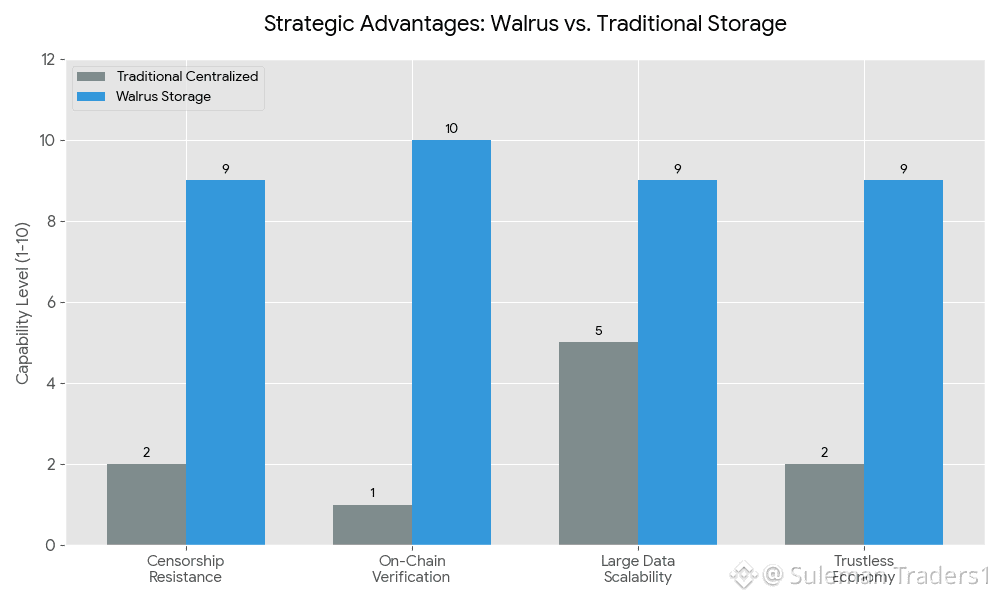
Walrus also supports real applications, not just theory. Developers can integrate Walrus using simple tools like APIs, SDKs, and command-line interfaces. This makes it easy for teams to adopt Walrus without learning complex new systems. Simplicity is a big reason why new technology succeeds.
Another interesting part of Walrus is how it supports decentralized websites. Static websites can be stored on Walrus and accessed without relying on traditional hosting companies. This reduces censorship risk and improves uptime. Anyone can publish content in a more open way.
For everyday users, Walrus may feel invisible, but its impact is huge. Lower costs, better availability, and stronger guarantees benefit everyone, even if they don’t understand the technical details. For builders and investors, Walrus represents infrastructure that the next generation of web applications will depend on.
Walrus is not trying to replace everything overnight. It is building solid foundations that can grow over time. As more projects need decentralized and efficient storage, Walrus is positioning itself as a practical and realistic solution for the future.

