
A Quiet Frustration That Started Everything
Every meaningful project usually begins with frustration, and Vanar Chain is no different. Long before there was a name, a token, or a public roadmap, there was a shared feeling that something about blockchain just was not working the way it should. I’m thinking back to that early stage, where the promise of Web3 felt exciting, yet the reality felt clunky. Transactions were slow, fees were unpredictable, and user experience often came last. They’re problems anyone who touched blockchain gaming or virtual worlds could feel immediately.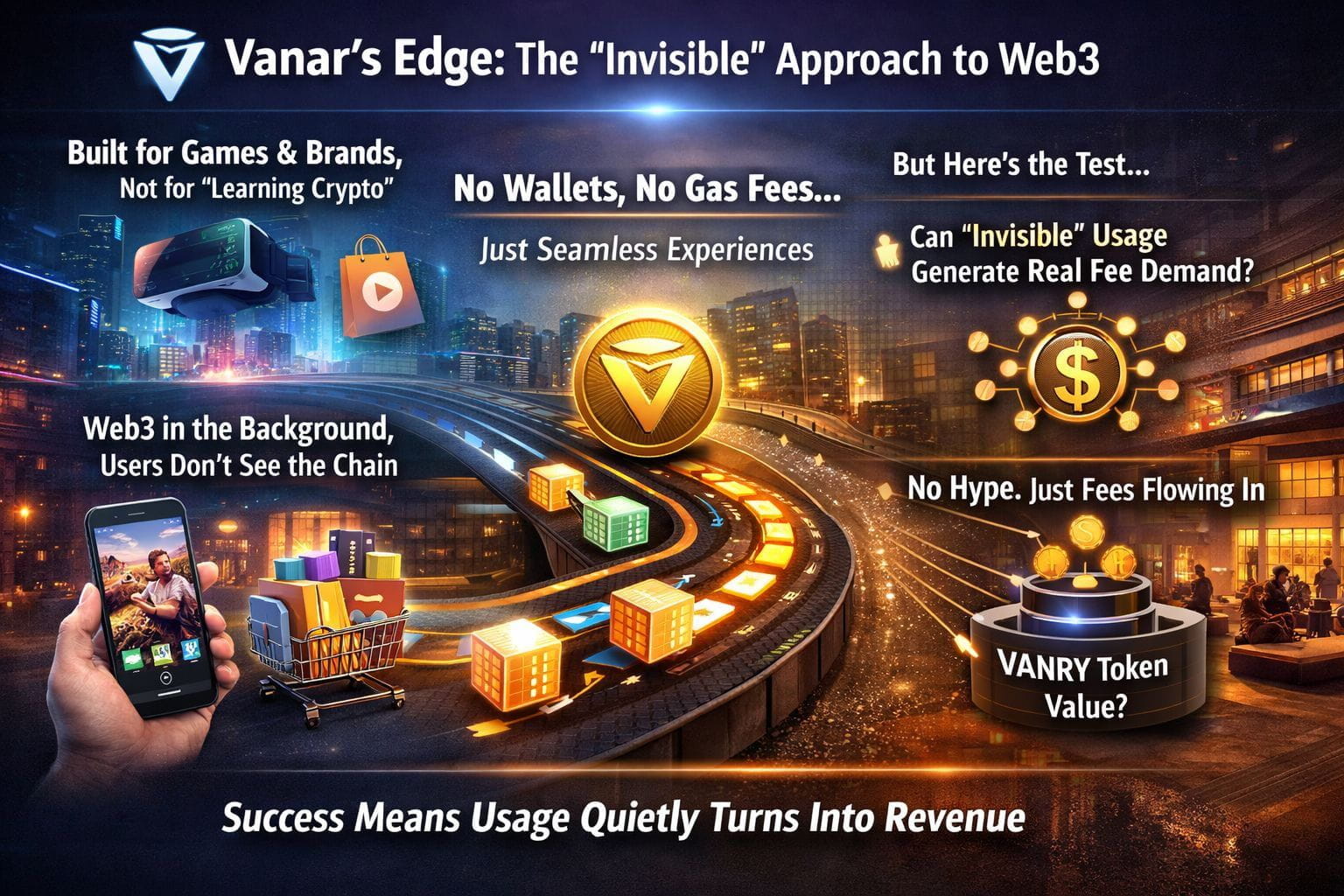
The people behind Vanar were not chasing hype. They were asking a deeper question. Why does technology that claims to be the future still feel so heavy for everyday users. If it becomes impossible to forget that you are using blockchain, then the magic of immersion disappears. That simple idea quietly became the foundation of Vanar Chain.
Seeing the Gap Between Vision and Reality
At the time, blockchain was mostly built around finance. I’m seeing how DeFi, NFTs, and trading dominated attention, while real-time experiences struggled to fit into existing networks. Games lagged. Virtual worlds felt disconnected. Developers spent more time solving technical problems than building meaningful experiences.
They’re looking at this gap and realizing that immersive environments need different rules. If it becomes normal for a game to pause because a transaction is settling, players lose trust. We’re seeing how Vanar Chain was shaped by the belief that blockchain should support creativity, not interrupt it.
From an Idea to a Direction
Vanar did not begin by trying to be everything. I’m noticing that the early direction was focused and intentional. They’re building for immersive digital environments, especially gaming, virtual spaces, and interactive worlds. This focus allowed them to design from the ground up rather than adapt old systems.
If it becomes clear what a chain is for, every technical decision becomes easier. We’re seeing how Vanar Chain’s architecture was guided by experience first, not speculation.
Designing Blockchain That Gets Out of the Way
One of the most important design principles behind Vanar Chain is invisibility. I’m seeing how the team wants blockchain to fade into the background. Users should not need to understand wallets, gas fees, or confirmations just to enjoy an experience.
They’re optimizing for speed, consistency, and low cost because these elements shape how real-time environments feel. If it becomes reliable enough, developers can stop thinking about limitations and start thinking about stories, worlds, and interactions. We’re seeing blockchain treated as infrastructure, not a feature.
Early Development and Quiet Building
During the early development phase, Vanar Chain did not shout for attention. I’m noticing a pattern of quiet building. They’re investing in core infrastructure, developer tools, and internal testing rather than chasing headlines.
This phase is often overlooked, but it defines whether a project survives long term. If it becomes stable early, everything built on top becomes stronger. We’re seeing Vanar focus on foundations before expansion.
Tools for Builders, Not Just Users
Vanar Chain understands that builders shape ecosystems. I’m seeing how They’re creating SDKs, APIs, and development frameworks that lower the barrier to entry. Not every game studio or creative team is deeply technical in blockchain, and Vanar seems to accept that reality rather than fight it.
If it becomes easier to build, adoption follows naturally. We’re seeing a chain that respects developers’ time and creative energy.
The Role of the $VANRY Token
At the center of the ecosystem is the VANRY token. I’m noticing that its purpose feels practical rather than flashy. They’re using it to power transactions, secure the network, and align incentives across participants.
If it becomes widely used, $VANRY acts as connective tissue. We’re seeing it support activity rather than dominate the narrative. This approach suggests a long-term mindset where value comes from usage, not short-term excitement.
Gaming as a Natural Home
Gaming is where Vanar Chain’s philosophy becomes most visible. I’m seeing how blockchain games demand constant interaction, fast feedback, and stable performance. Traditional chains were not built for this.
They’re optimizing Vanar for frequent, small actions rather than occasional large transactions. If it becomes a preferred backend for games, players may never think about blockchain at all. We’re seeing ownership and persistence become natural parts of play, not technical hurdles.
Beyond Games and Into Living Worlds
Vanar Chain does not stop at gaming. I’m seeing its relevance extend into virtual events, AI-driven simulations, and digital environments where people gather and interact. These spaces require continuous activity and reliable infrastructure.
If it becomes the foundation for these environments, we’re seeing blockchain evolve into something more human. Not just a ledger, but a living system that supports expression, identity, and connection.
Community as a Living Element
The role of community is deeply woven into Vanar’s story. I’m seeing how @vanar engages builders and users as collaborators rather than spectators. They’re shaping a culture where feedback matters and participation feels meaningful.
If it becomes a truly community-shaped network, we’re seeing governance turn into a shared responsibility rather than a formality. Decisions reflect real usage and real needs.
Market Presence Without Obsession
As the project gained visibility, market presence became inevitable. I’m seeing a careful approach here. They’re aware of exchange exposure, including platforms like Binance, but they do not appear dependent on any single listing for validation.
If it becomes widely accessible, liquidity helps growth, but Vanar’s story does not revolve around price alone. We’re seeing a project that understands attention is temporary, while utility lasts.
Scaling With Intention
Scaling is where many projects struggle. I’m seeing how Vanar Chain approaches this thoughtfully. They’re not rushing expansion at the cost of stability. Instead, scalability appears to be part of the original design.
If it becomes capable of supporting massive virtual worlds, we’re seeing infrastructure that grows alongside demand rather than collapsing under it.
The Role of AI and Autonomous Systems
AI is becoming part of the conversation. I’m noticing how Vanar Chain positions itself to support AI-driven interactions and agents. These systems need reliable, fast environments to operate effectively.
If it becomes common for AI entities to exist and transact on-chain, we’re seeing a new kind of digital economy emerge. One where humans and machines coexist in shared environments.
Looking Years Into the Future
Projecting forward, Vanar Chain’s future feels less about dominance and more about relevance. I’m seeing a path where it becomes invisible infrastructure that powers experiences people care about.
They’re not trying to replace the entire blockchain ecosystem. They’re carving out a space where immersion matters most. If it becomes successful, we’re seeing a chain that earns trust quietly through performance.
What Vanar Represents in the Bigger Picture
Vanar Chain reflects a broader shift in Web3. I’m seeing a move away from noise toward substance. They’re building for creators, players, and communities rather than short-term speculation.
If it becomes a reference point for immersive blockchains, we’re seeing proof that Web3 can grow up and become more human.
A Closing Thought
As I reflect on Vanar Chain, it feels less like a product and more like a long-term experiment in making technology feel natural. They’re not promising perfection. They’re building patiently, layer by layer.
If it becomes what it aims to be, we’re seeing digital worlds that feel alive, responsive, and owned by the people inside them. The future Vanar points toward is not loud or rushed, but steady, thoughtful, and deeply human.
Follow @Vanarchain , keep an eye on $VANRY , and watch how #Vanar continues to evolve.
