

The first time I heard someone complain about “decentralized storage,” it wasn’t in a crypto forum or trader chat. It was a friend running a small design studio. Their business lived in a cloud drive. One day, an automated system flagged their account, and for almost a week, they couldn’t access client files. No meaningful warnings, no fast human support, no real backup. They weren’t thinking about blockchains—they were thinking about rent.That problem is the emotional fuel behind Walrus. The protocol isn’t trying to be flashy or revolutionary. Its purpose is practical: make storing and retrieving large files reliable, permissionless, and economically sustainable. Walrus is a decentralized storage protocol for the AI era, where large, unstructured datasets constantly move across systems.Walrus stores “blobs”—big files that don’t fit neatly on-chain: videos, audio, datasets, website assets, game files, archives. Traditional blockchains are expensive and inefficient for this. Walrus targets a gap: high availability, long retention, predictable economics for large unstructured data without centralized providers.Built on the Sui ecosystem and developed in association with Mysten Labs, Walrus is native to an ecosystem rather than an external tool. For developers, that means smoother integration.
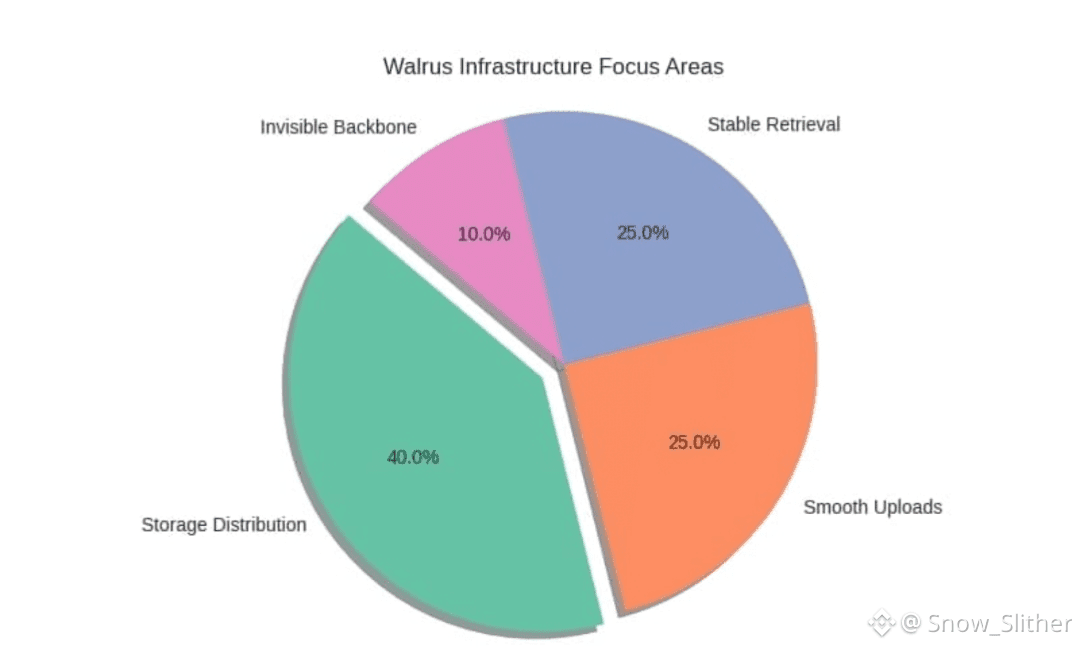
For investors, it signals potential for adoption, ecosystem alignment, and liquidity.Walrus also makes storage programmable. Developers can attach logic to stored data, enabling richer applications where content can be managed, monetized, and governed. Storage becomes infrastructure apps can reason about—not just a passive warehouse.From an investor perspective, reliability over long horizons is key. Storage nodes reconfigure across epochs to maintain availability. For real products, long-term reliability is everything.Incentives are central. The WAL token powers staking, rewards, pricing, and governance. Properly aligned, tokenomics reinforce network durability. Misaligned, incentives attract mercenary participants and create fragility.Walrus moved quickly from idea to execution. Public testnets with community nodes demonstrated prototype incentives, leading to a mainnet launch on March 27, 2025, for broad use cases: AI datasets, rich media, websites, blockchain history. Funding also matters: $140 million raised led by Standard Crypto. Strong backing supports growth but doesn’t guarantee adoption.For traders, the key is to treat Walrus as infrastructure.
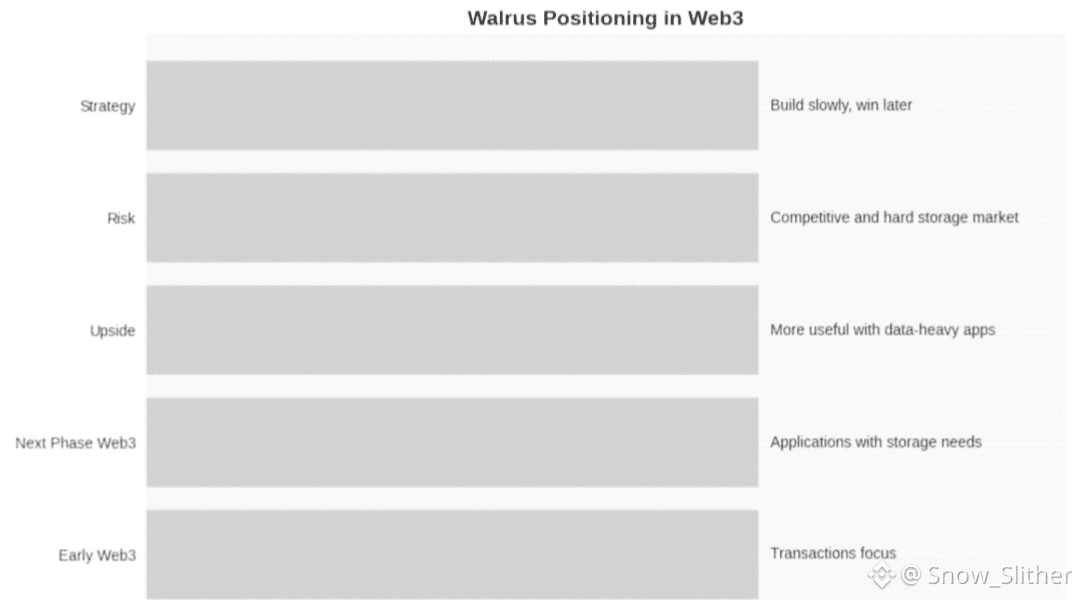
Infrastructure wins slowly—becoming boring, dependable, and hard to replace. The small design studio story illustrates the point: reliability, not features, matters.Walrus distributes storage across decentralized nodes using cryptography and incentives to maintain high availability. The goal is to make data storable, provable, tradable, and governable without trusting a single company.Risks exist: adoption depends on developers and applications, tokenomics can distort behavior, and ecosystem concentration links Walrus’ fate to Sui.The ultimate question: will Walrus become the default place developers store and manage large unstructured data, especially for AI and media? If yes, it could quietly become essential infrastructure. If not, it risks remaining well-funded but underutilized.A simple test: would someone building a real business trust Walrus with critical files for years? The protocol is designed to earn that trust through reliability, long-term availability, and programmable storage. For investors and traders, that’s the core purpose: slow, steady adoption that normalizes decentralized data storage.


