
I’ve spent a lot of time watching Web3 projects promise the future and then quietly disappear. Most of them fail for the same reason: they build for narratives, not for people. Vanar Chain feels different because it starts from a more honest place. It doesn’t assume users care about blockchains at all.
What Vanar seems to understand is that adoption happens when the technology gets out of the way. People don’t want to think about gas, wallets, or which network they’re on. They just want the app to load, respond instantly, and not break. That mindset shows up clearly in how Vanar is designed. Fast confirmations, predictable costs, and a system tuned for games, virtual worlds, and interactive experiences where hesitation kills engagement.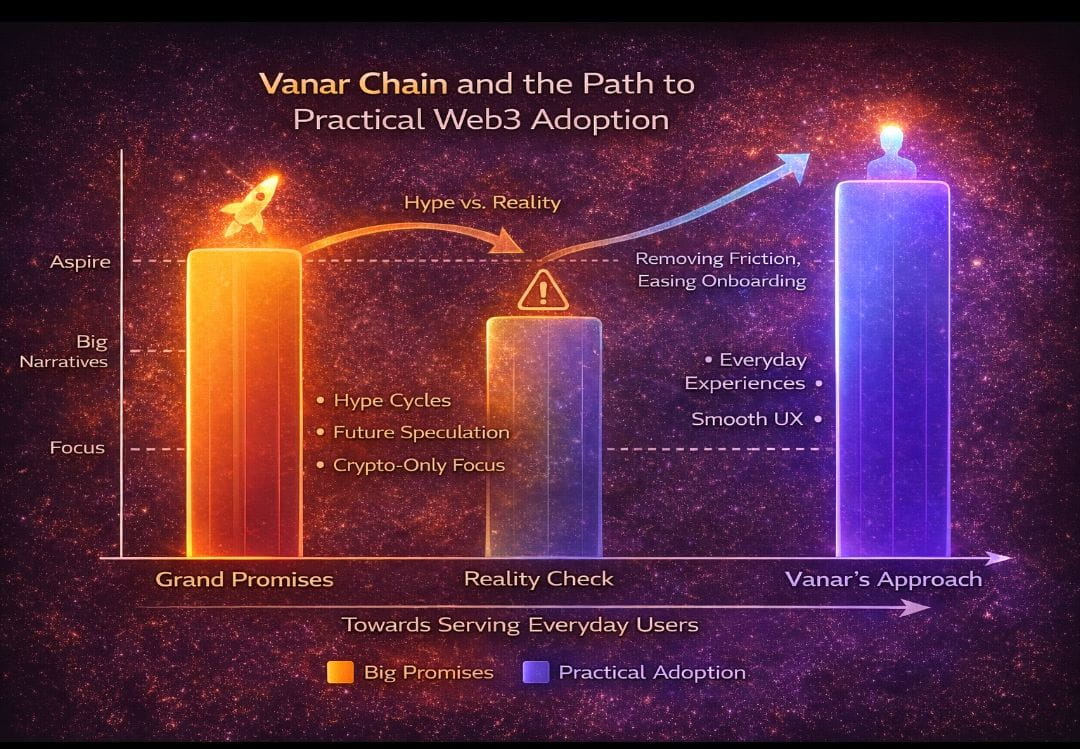
Gaming is a good example. Players won’t wait for slow confirmations or tolerate random fee spikes. Vanar optimizes for consistency rather than flashy benchmarks. That makes it easier for developers to ship products that feel normal, not experimental. The chain fades into the background, which is exactly what mainstream users expect.
Vanar’s ecosystem also reflects this thinking. Virtua and the VGN gaming network aren’t abstract demos; they’re attempts to put blockchain inside experiences people already understand. Ownership becomes a feature, not a burden. The same reasoning applies to brand integrations and AI technologies, where blockchain facilitates communication rather than requiring attention. None of this ensures success. Adoption still depends on real users showing up and staying. But Vanar’s approach feels grounded. It’s not trying to win the hype cycle. It’s trying to be useful after the noise fades. And in Web3, that’s a much rarer bet than it should be. @Vanarchain $VANRY #vanar
