
When people actually use crypto, they don’t think in narratives or tech stacks. They think in simple questions: did the payment go through, how long did it take, and did it cost more than expected? That’s the lens through which Plasma makes sense to me.
@undefined is not trying to outshine other chains with flashy metrics. It’s quietly focused on stablecoin behavior, because that’s where real activity already lives. Most on-chain volume today is people moving USD₮, settling trades, paying vendors, or sending money across borders. Plasma treats that reality as the starting point, not an afterthought.
What stands out is predictability. Fees don’t jump around with market mood. Finality doesn’t feel vague or delayed. A transfer reaches a point where it’s done, and everyone in the flow can rely on that. That matters far more than raw throughput when payments are involved.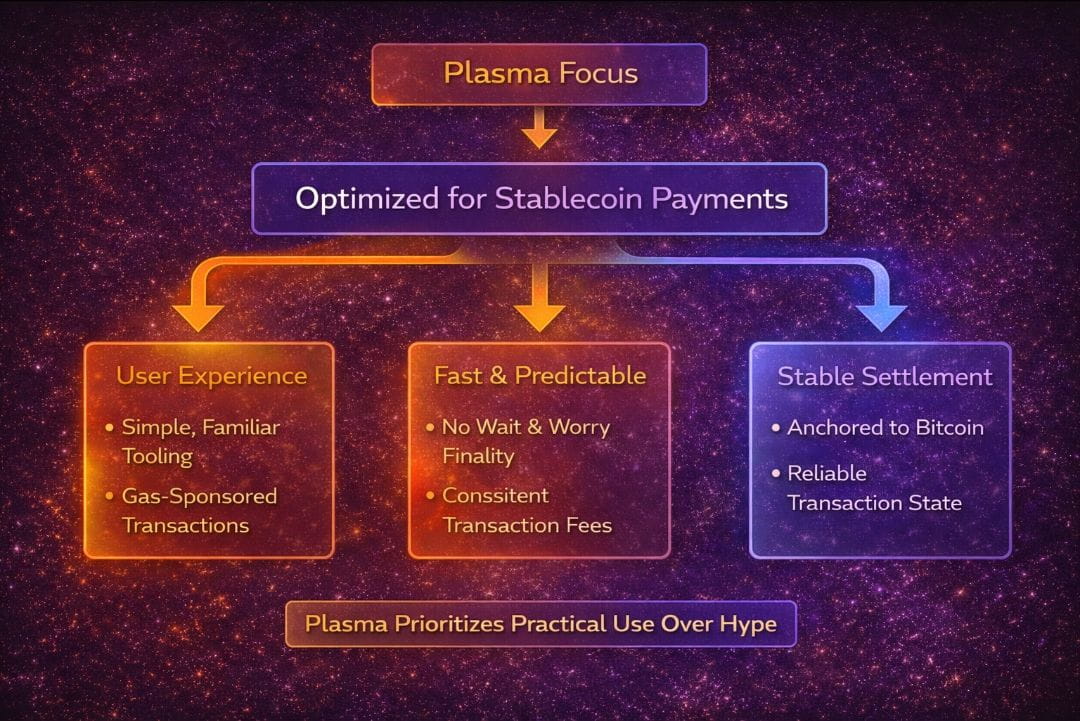
Plasma’s design also lowers friction for users. Gas-sponsored transactions mean people don’t need to juggle extra tokens just to send stablecoins. For developers, EVM compatibility keeps the tooling familiar, while Bitcoin anchoring adds a layer of settlement confidence in the background.
None of this is loud, and that’s kind of the point. Infrastructure that works doesn’t need hype. If stablecoins are going to power real financial activity, chains like Plasma are the ones worth watching.

