
Plasma is building an execution-focused infrastructure that addresses one of the most ignored problems in crypto markets: how trades actually move through the system. While most projects highlight volume or raw throughput, @Plasma focuses on execution flow, liquidity routing, and settlement efficiency. This approach targets real market behavior rather than surface-level metrics.
At the core of Plasma lies its execution layer, where routing and liquidity are treated as a continuous process. Instead of fragmented paths that cause slippage and inconsistency, Plasma aims to streamline how transactions are processed. This results in better execution quality, especially during high activity periods. $XPL plays a central role in powering this framework, aligning network usage directly with token utility.
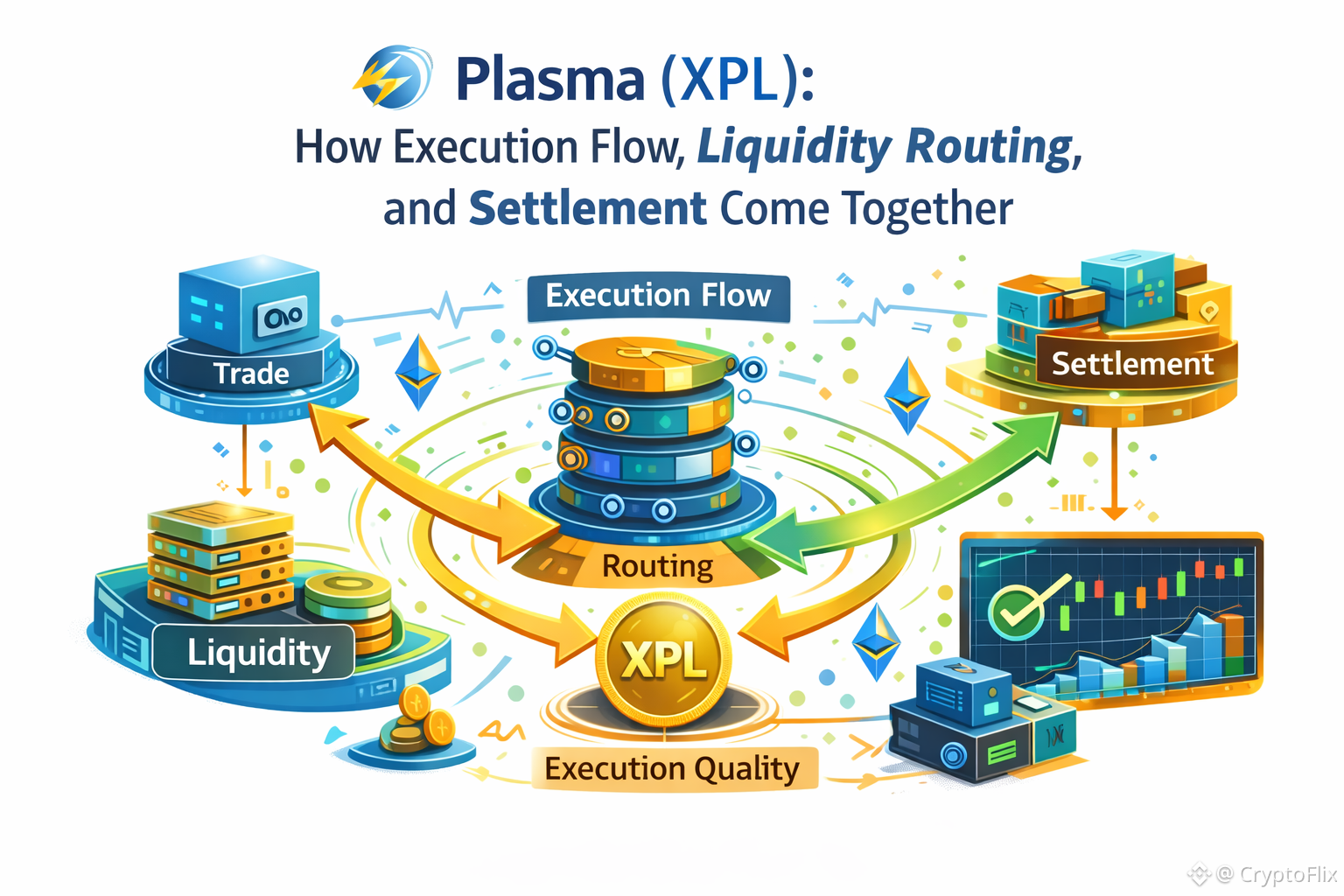
Liquidity on Plasma is designed to be functional rather than inflated. Instead of incentivizing short-term volume, the network prioritizes clean liquidity access and predictable behavior. This makes the ecosystem more attractive for serious users, applications, and automated systems that depend on reliability. Over time, this structure encourages organic demand for $XPL driven by usage, not speculation.
Settlement is another critical component. Plasma treats settlement as part of the execution flow rather than a separate step. By reducing friction between trade execution and final settlement, the network creates a smoother and more efficient experience. This design philosophy positions Plasma as practical infrastructure rather than an experimental concept.
In a market crowded with narrative-driven projects, Plasma stands out by focusing on how markets actually function. By building around execution quality, liquidity flow, and reliable settlement, @Plasma is creating long-term value. For those looking beyond hype, $XPL represents exposure to infrastructure built for real usage. #Plasma

