
When people talk about privacy blockchains, the conversation usually drifts toward extremes. Either privacy is framed as total opacity, or it’s dismissed as a niche feature with limited real-world demand. Dusk sits in an unusual middle ground, and that’s precisely what makes it interesting—though the signal is subtle enough that it’s easy to miss.
If you look closely at how Dusk is actually being used today, most on-chain activity is still public. Roughly nine out of ten transactions move through Moonlight’s transparent path rather than the shielded one. Daily transaction counts remain modest, sitting in the low hundreds. At the same time, the DUSK token has tens of thousands of holders, many of whom aren’t transacting on Dusk at all, but holding off-chain or on Ethereum.
At first glance, that looks like a mismatch. Why would a privacy-focused chain see limited shielded usage while maintaining a broad holder base? But that mismatch tells a more nuanced story about intent.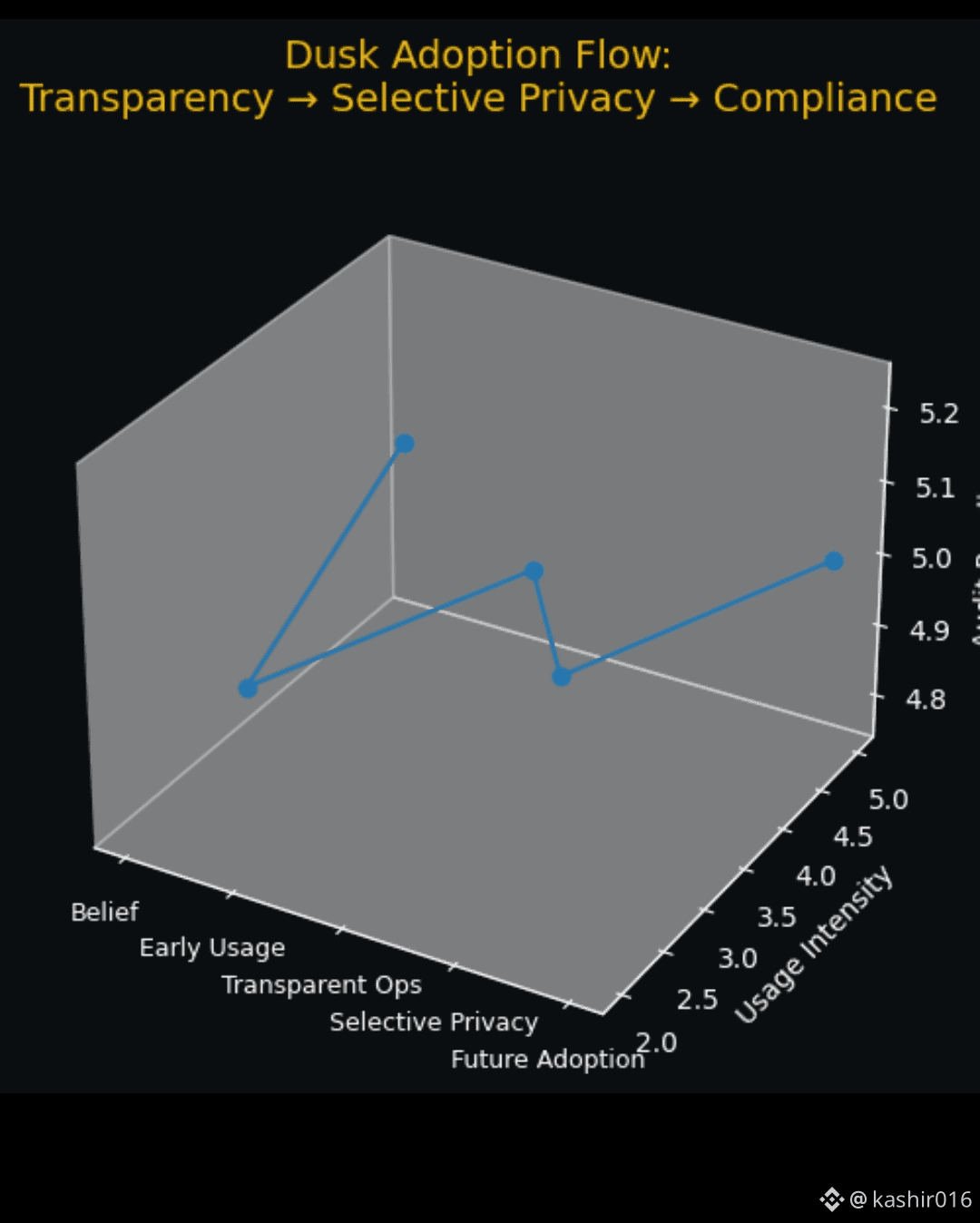
People aren’t holding DUSK because they want permanent invisibility. They’re holding it because they expect a future where privacy is used deliberately. That behavior closely resembles how regulated finance already works. Most operations happen in the open—balances, settlements, and routine transactions are visible to the parties that need them. Privacy is invoked selectively, when confidentiality is required, and always with the assumption that auditors and regulators can still inspect the underlying data if necessary.
This framing matters. Dusk is not trying to be “privacy DeFi” in the traditional sense. It isn’t built around the idea that everything should be hidden by default. Instead, it’s positioning itself as compliance-native infrastructure: a system where transparency is normal, privacy is intentional, and verification is always possible. That’s a very different design goal, and it aligns more closely with how institutions actually operate.
Because of that, the usual crypto metrics can be misleading. TVL spikes, meme-driven activity, or short-term transaction surges don’t capture what Dusk is aiming to enable. The more meaningful signal is behavioral. The real question is whether shielded usage begins to rise over time without transparent usage declining. If both increase together, it suggests that real workflows are forming—workflows where confidentiality is layered in only when needed.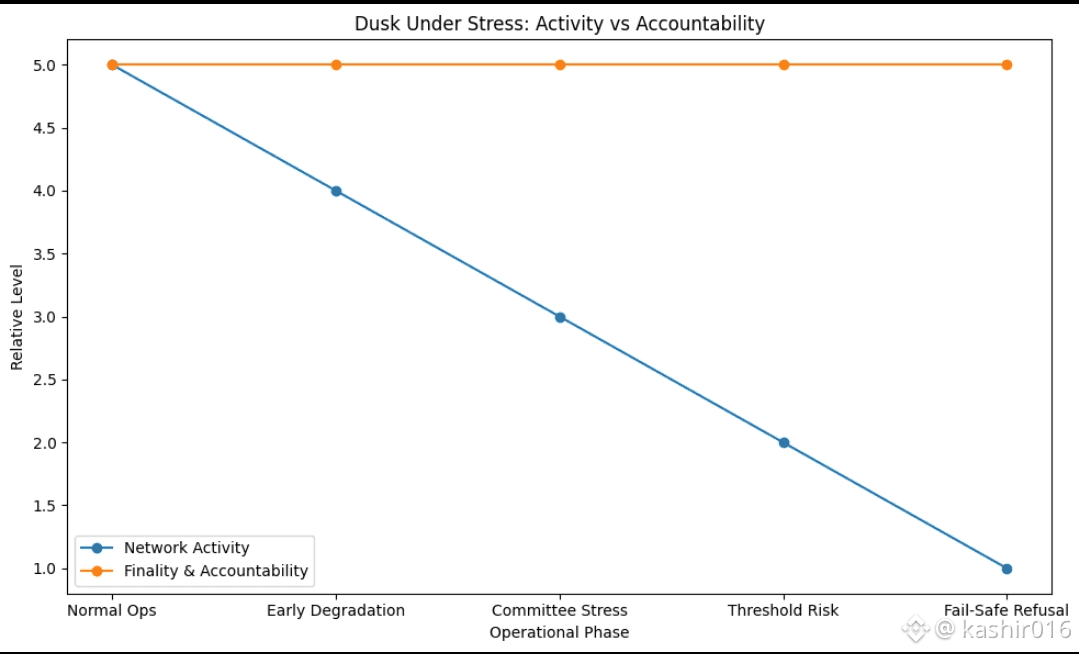
If, on the other hand, transparent usage stagnates while shielded usage remains flat, Dusk risks staying in an in-between state: a network people believe in conceptually, but don’t yet rely on operationally.
For now, the data suggests patience rather than failure. Dusk looks less like a chain chasing activity, and more like infrastructure waiting for the moment when privacy stops being ideological and starts being procedural. When that shift happens, intentional privacy—not blanket secrecy—is what regulated markets will reach for first.
