
Plasma has an unexpected side effect that doesn’t show up in benchmarks or test reports: it makes test environments lie.
I’m usually the one running QA before launch. The routine is familiar. Scripts pass. User flows behave as expected. Edge cases are documented. In staging, everything feels predictable. You know where users hesitate, where confirmations slow them down, where friction forces a pause that gives systems time to catch up. That friction quietly shapes how tests are written.
Then production goes live.
With Plasma’s gasless USDT transfers, that pause disappears. Transactions don’t ask users to think. There’s no moment of hesitation caused by fees, no wallet prompt that forces a decision, no psychological checkpoint where people slow down. Users just move forward. And when that happens, nothing technically breaks—but the assumptions embedded in the tests do.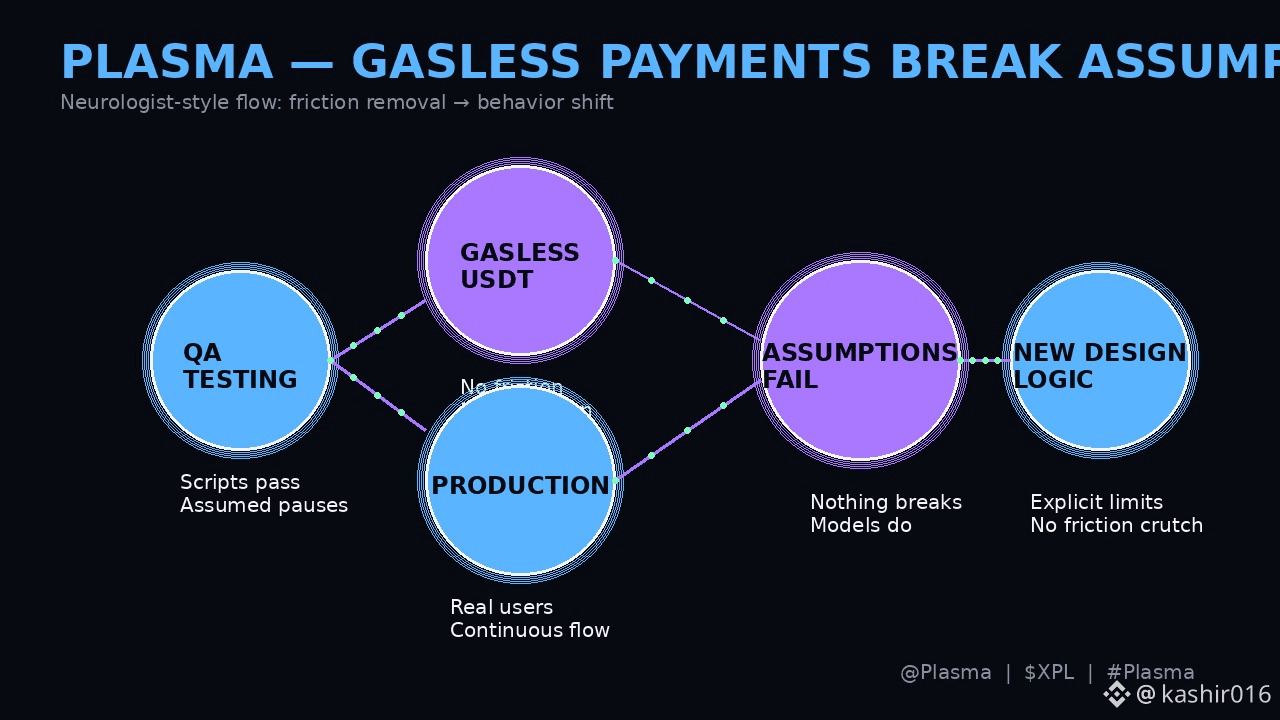
Most QA models are built around friction. They assume delays. They assume cost awareness. They assume users will space actions naturally because something in the system nudges them to. Gasless execution removes that invisible pacing mechanism. Flows that looked orderly in testing suddenly compress in real usage. Actions stack faster. Sequences overlap. What was once a controlled interaction becomes continuous motion.
That’s not a bug. It’s a design consequence.
Plasma isn’t optimizing for developer comfort or neat testing diagrams. It’s optimizing for payments that feel invisible. Stablecoin transfers that behave like infrastructure, not like events. When money moves without drawing attention to itself, users don’t treat it as something special. They treat it like sending a message or tapping a card.
For engineers and product teams, that forces a mindset shift. You can’t rely on friction to regulate behavior anymore. Rate limits, sequencing logic, and safeguards have to be explicit. Assumptions about “natural pauses” stop being reliable. QA stops being about whether flows work, and starts being about whether systems can handle uninterrupted use.
In a strange way, Plasma exposes how much of Web3 UX has been shaped by inconvenience. Fees, confirmations, and delays weren’t just technical artifacts—they were behavioral governors. Remove them, and the system has to stand on its own design.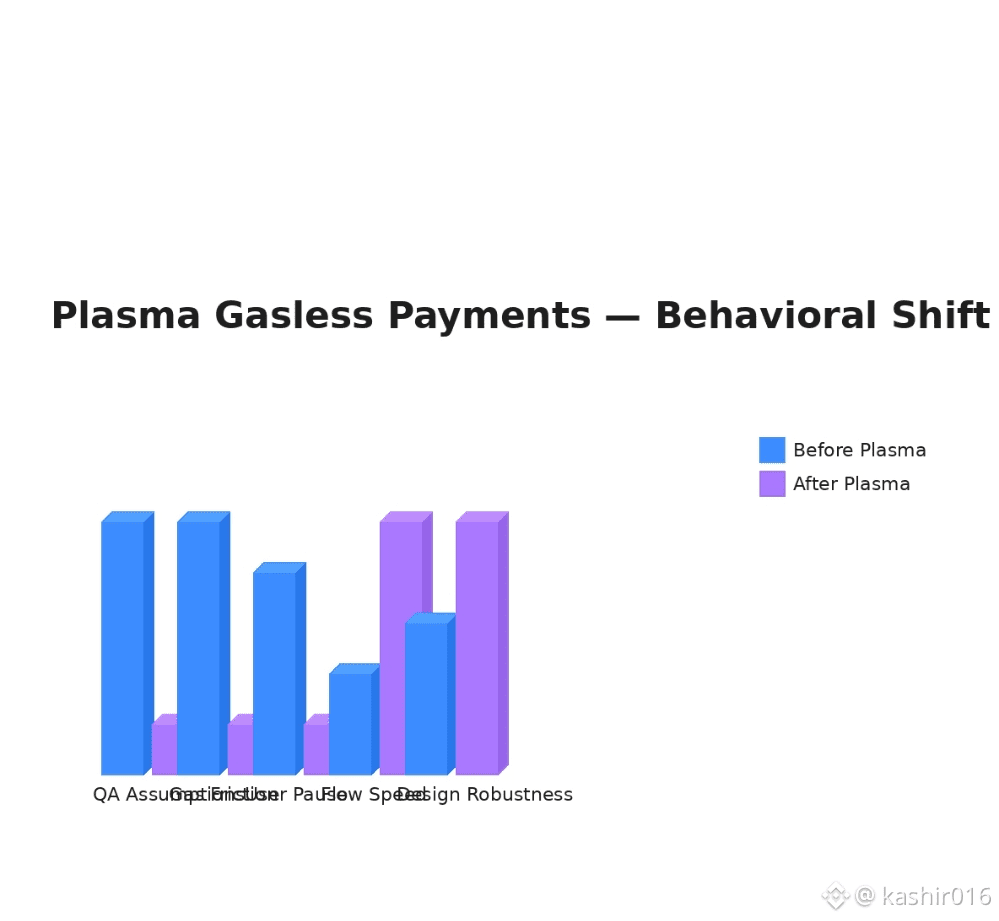
That’s why Plasma feels different in production than it does in testing. It doesn’t fail loudly. It succeeds quietly, and in doing so, it reveals how many of our tools and assumptions were built for a world where payments were never meant to feel this smooth.

