
Dusk is operating in a part of crypto that only starts to matter once conditions change. While much of the market still rotates through narratives and short term themes, dusk is focused on a quieter transition. Privacy is no longer an abstract ideal. It is becoming a functional requirement that must work inside real institutions, real regulation, and real financial systems. As crypto matures, that distinction is becoming harder to ignore.
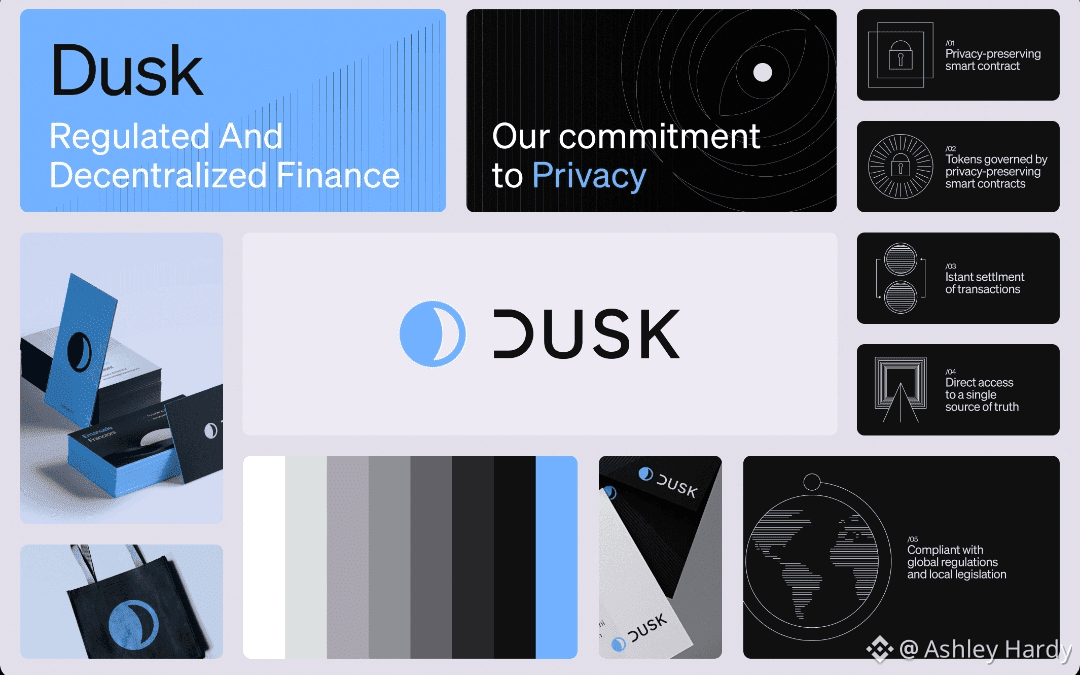
1. Regulation Has Moved From Hypothesis to Reality
The industry has passed the stage of guessing what regulation might look like. Rules are now being drafted, enforced, and priced into decision making. Systems that cannot function within this framework will struggle to move beyond limited use. Dusk treated this shift as inevitable from the beginning. By designing with regulation in mind, it avoids the friction many projects now face as clarity increases.
2. Privacy Only Scales When It Allows Verification
In regulated environments, full opacity creates resistance. Dusk approaches privacy through selective disclosure, protecting sensitive information while still enabling verification when required. This balance turns privacy into something usable rather than restrictive. As institutions explore onchain solutions, this approach moves from optional to necessary.
3. Built Around Real Financial Activity
Dusk aligns itself with regulated onchain finance instead of experimental narratives. Tokenized securities, compliant financial instruments, and institutional grade applications all demand privacy paired with accountability. These markets move cautiously, but once active, they operate at scale. Projects designed for this stage early often gain relevance without needing to reposition later.
4. Why Structure Matters to Institutions
Institutions prioritize predictability and legal clarity. Dusk provides an environment where privacy does not conflict with oversight. This lowers risk and turns exploration into realistic adoption rather than theory. That is why interest around dusk often feels deliberate instead of speculative.
5. Clear Constraints Help Developers Commit
Builders perform best when boundaries are defined. Dusk gives developers infrastructure that respects compliance without limiting innovation. This reduces uncertainty and encourages long term building. Ecosystems formed under clear rules tend to last longer because they are designed to operate under pressure.
6. A Community Oriented Toward Direction
The dusk community often emphasizes delivery, regulation, and adoption paths over short term price movement. This mindset creates resilience across cycles. Projects with communities focused on utility rather than noise tend to remain relevant as conditions evolve.
7. Structural Shifts Are Rarely Priced Early
Markets often overlook deep changes until external pressure forces attention. Compliant privacy is one of those shifts. When focus finally turns there, it tends to move quickly. Dusk fits naturally into this transition because it does not need to pivot to stay aligned with reality.
Conclusion
Dusk is not competing for headlines. It is positioning itself for a phase where privacy and regulation must coexist by design. By focusing on compliant privacy, institutional readiness, and real financial use cases, dusk is building infrastructure rather than noise. When the market fully adjusts to this environment, dusk may already be standing where serious adoption begins.
