
I’ve read a lot of staking explainers in crypto, and most of them feel like they’re written for a whitepaper appendix, not for actual humans. So instead of doing another step-by-step manual, this is just me explaining how I personally think about staking on @Walrus 🦭/acc , and why it’s something I’m comfortable holding for the long term. The first mental shift for me was realizing Walrus isn’t really a DeFi product. It’s storage infrastructure. That sounds boring, but in a good way. Walrus is built for large data blobs and uses erasure coding instead of full replication, which basically means data gets split and distributed intelligently across nodes. You still get resilience, but without wasting resources. From an economic perspective, that already makes more sense than a lot of older storage designs.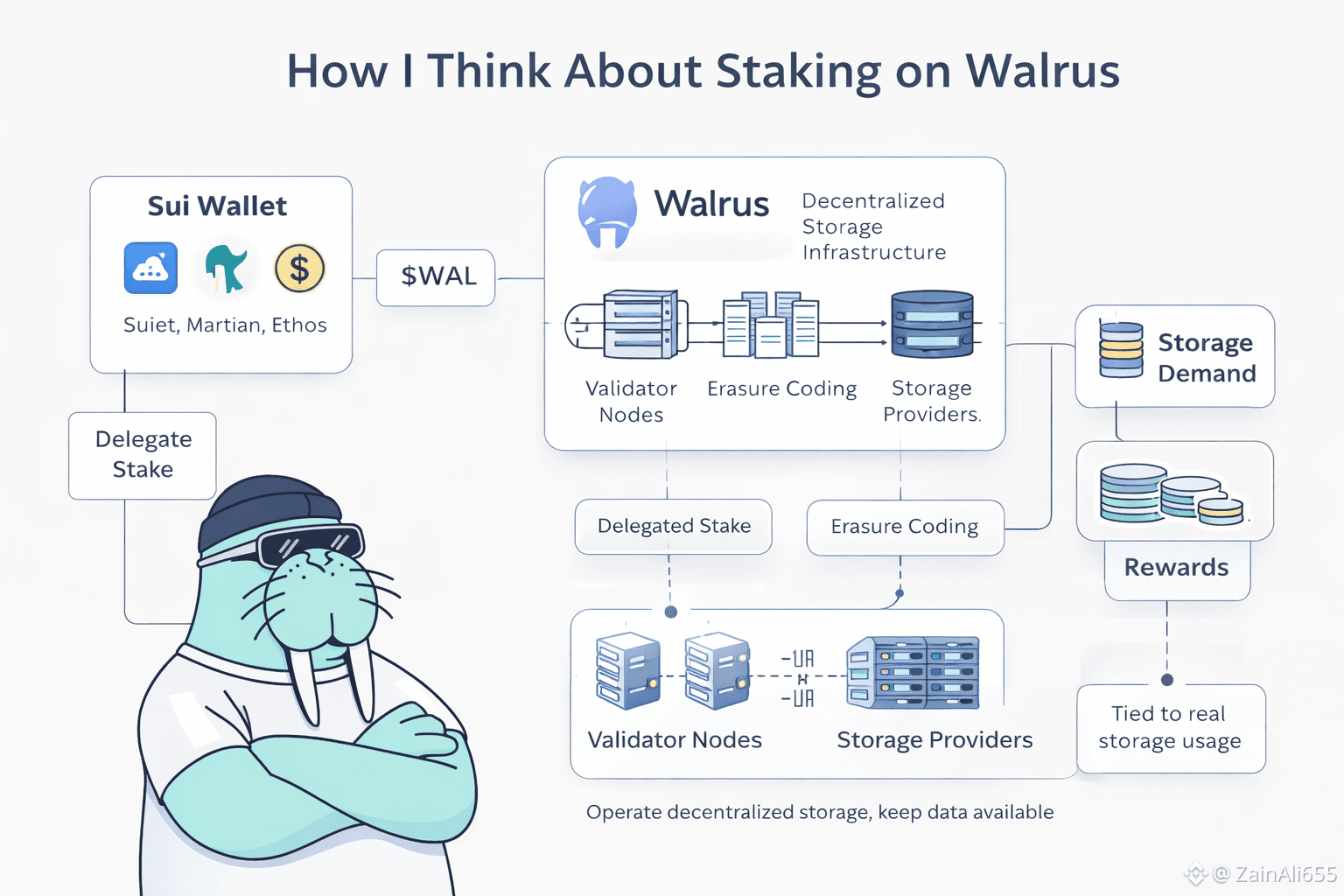
Because of that, staking $WAL doesn’t feel like “lock tokens, hope number goes up.” It feels more like backing the operators who are actually running the network. When you stake, you’re supporting storage providers that need to stay online, behave honestly, and keep data available. That framing changes everything. You’re not farming yield you’re helping secure infrastructure. Getting started is straightforward. You need a Sui wallet, some walrus, a little SUI for gas, and access to the official staking interface. No custody handoff, no KYC, no weird complexity. The tokens stay in your wallet; you’re delegating stake, not giving them away. That’s a small detail people gloss over, but it matters.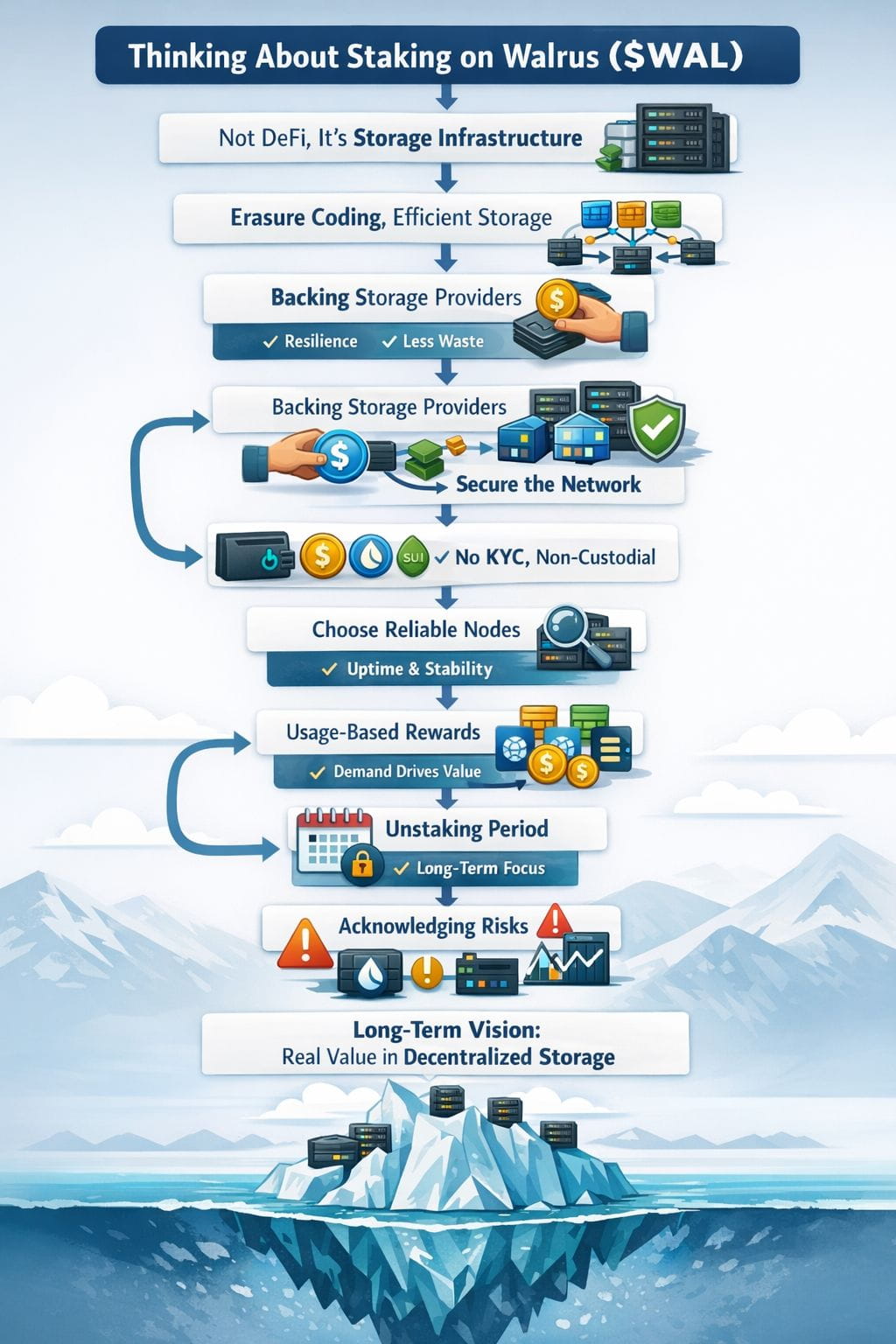
Where I slow down is choosing a node. I don’t chase whatever looks like the highest yield that day. I look for boring signals: uptime, consistency, how much stake is already delegated, and whether the operator seems like they’re building for the long run. Infrastructure rewards reliability. Flashy numbers fade fast. Rewards themselves are another reason #walrus stands out to me. Long-term, they’re meant to be tied to real storage demand. More apps storing real data means more value flowing through the network. It’s not instant gratification, but it’s a healthier loop than pure inflation-driven APRs.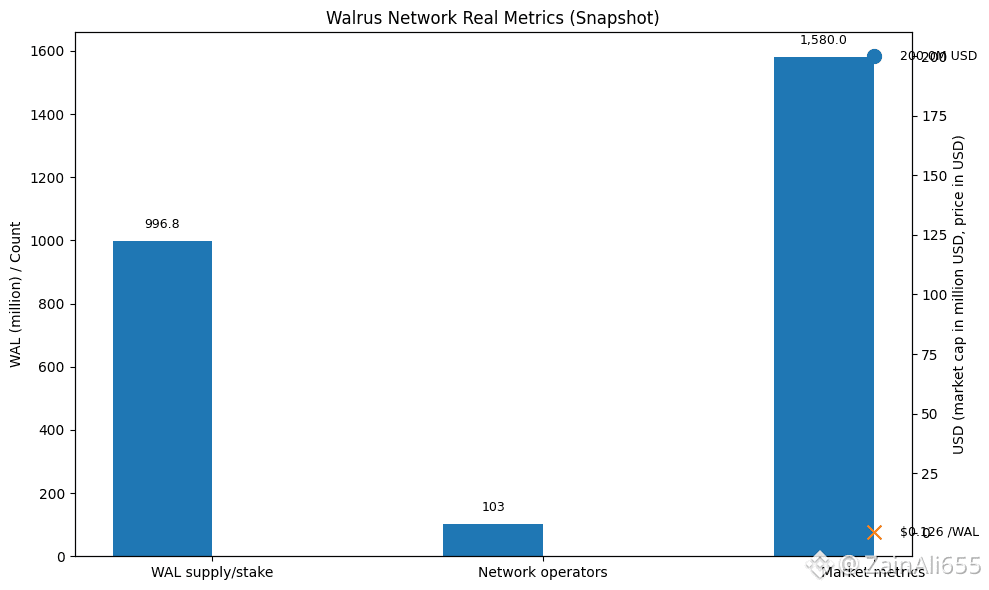
There is an unstaking period, and I actually see that as a feature, not a downside. It discourages short-term capital that doesn’t care about network health and forces stakers to think beyond a quick exit. If that’s frustrating, Walrus probably isn’t designed for your time horizon anyway. None of this is risk-free. Walrus is still early, adoption has to keep growing, node decentralization depends on stakers behaving responsibly, and walrus will move with broader market conditions. Those risks are real. But they’re structural risks, not gimmicks and I’m fine with that trade-off. I’m staking because decentralized storage that actually works at scale feels inevitable, and Walrus is building toward that quietly, without hype. Slow, practical, and a little boring. In crypto, that’s usually where the real value hides.


