
Vanar Chain quietly tries to solve a real annoyance in the AI-blockchain space. Usually AI lives off-chain, forgetting context between sessions or depending on fragile external feeds. The project flips that by building everything so intelligence can stay native to the chain itself.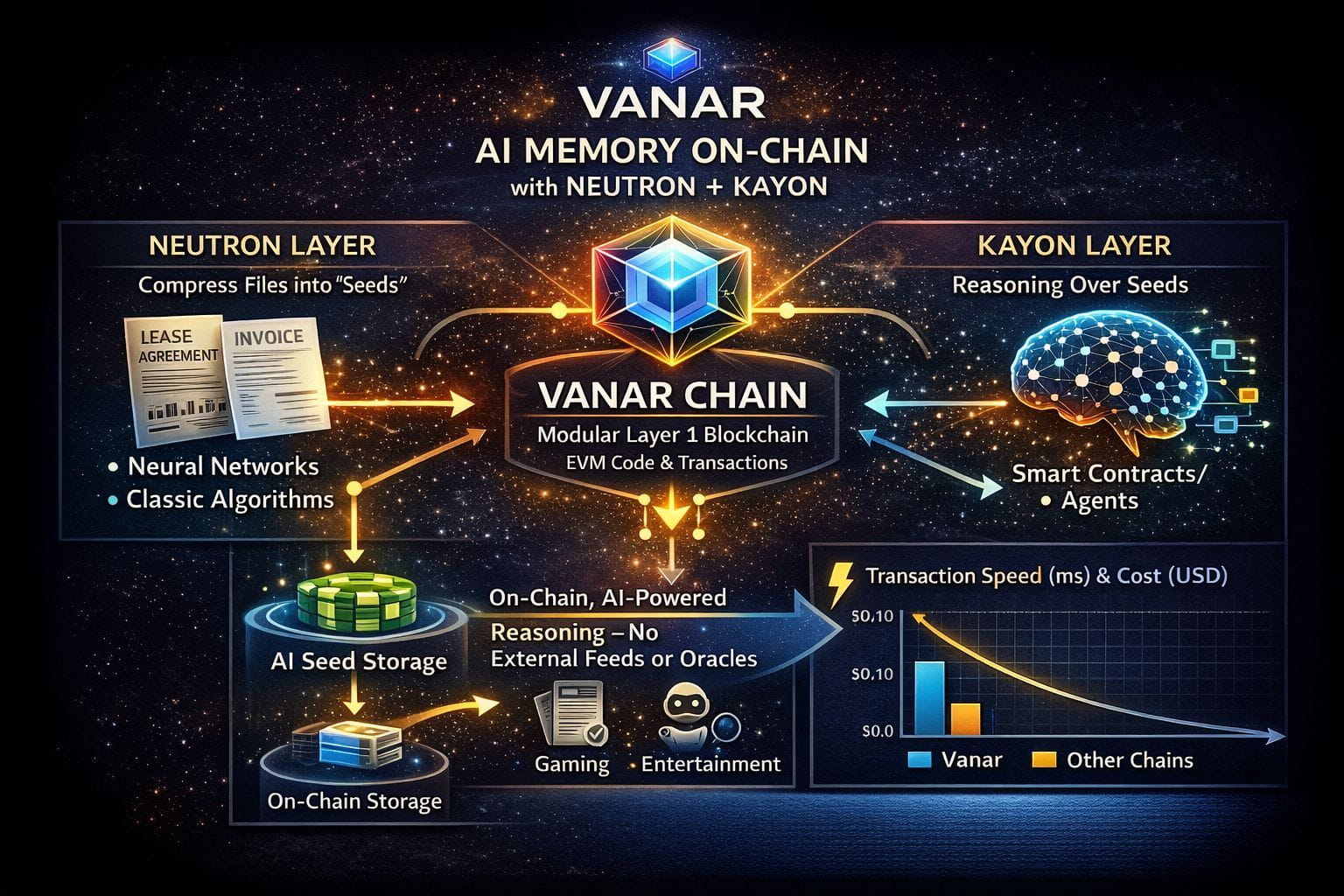
The base layer is a straightforward modular L1. It runs EVM code, keeps fees low, handles transactions quickly enough for payments or asset transfers. Nothing revolutionary on its own, but it sets a stable floor.
Neutron is where things get thoughtful. Take a real document—a lease agreement, a shipping invoice, a compliance certificate. Instead of linking to something that might disappear, Neutron compresses the file using a blend of neural networks and classic algorithms. The result is a tiny “Seed” stored directly on-chain. That Seed keeps the meaning, the relationships, the intent. An AI can later read it like a short, reliable memory note rather than staring at raw pixels.
Kayon sits on top as the reasoning engine. Once Seeds are there, smart contracts or agents can query them live. Need to verify a rule before releasing funds? Kayon looks at the compressed data, walks through the logic, and decides—all on-chain, no middleman. It’s like giving the contract a small notebook of verified facts it can reason from without phoning home.
Axon focuses on automations that flow from that reasoning, while Flows targets practical verticals like PayFi or tokenized real-world assets. The stack stays lean, avoiding the usual bloat of too many moving parts.
Developers benefit from familiarity. EVM compatibility means existing tools work. SDKs cover JavaScript, Python, Rust. APIs let you plug in these memory and reasoning features without rewriting your whole app.
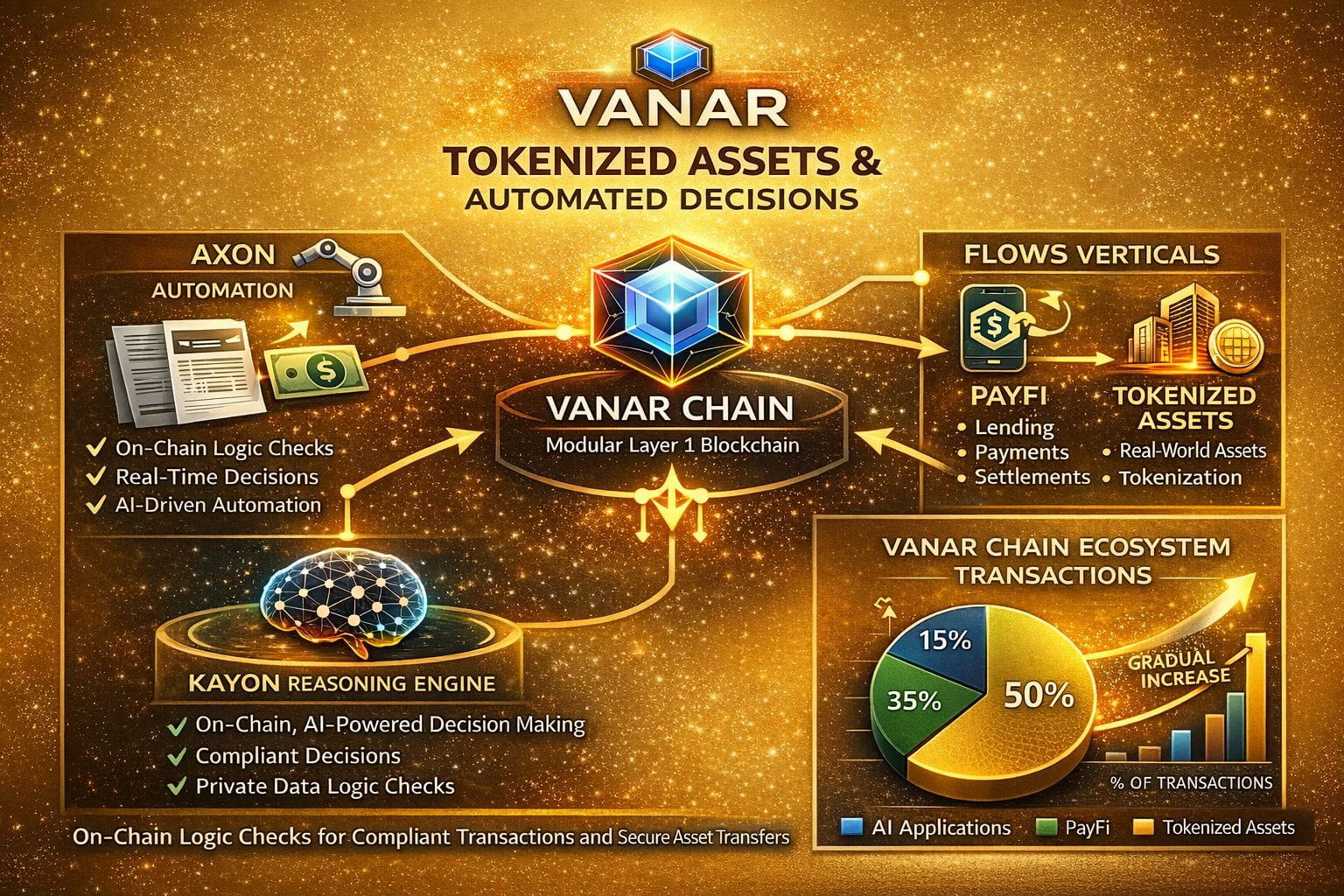 Risks are honest and present. Compression might drop nuances that matter in a dispute. Reasoning could misread edge cases even when the data is perfect. The chain competes against many others promising similar intelligence, so real usage has to show up or the whole thing stays theoretical. Token economics depend on activity that isn’t overwhelming yet. Regulatory clouds hang over tokenized assets and automated decisions everywhere.
In the background of louder projects, Vanar feels like someone carefully threading memory and logic back into a system that was built to forget. Whether that thread holds long enough to matter is still unfolding.
