

You know those evenings when you’re sorting through scattered notes or old emails, wishing there was a way to pull the important threads together without losing the essence? Vanar Chain seems to draw from that kind of everyday need, working toward blockchain systems that do more than just record transactions—they begin to hold context and make basic sense of data on their own.
At its heart, the project sets out to move beyond the usual programmable contracts toward applications that can adapt in modest ways. It focuses on areas like payments combined with finance, turning real-world items into digital tokens, and letting automated agents handle simple tasks securely. The foundation is a modular Layer 1 chain built to support these ideas steadily.
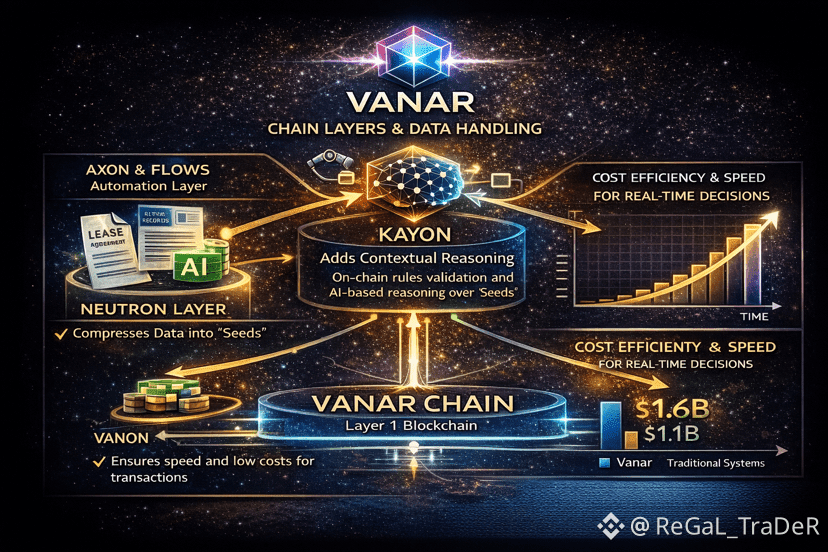
The technology unfolds in five connected layers. The first, the Vanar Chain itself, provides the reliable base—fast enough for everyday use and low in cost, while staying compatible with tools developers already know. Above that sits Neutron, which handles data in a thoughtful manner.
It takes something substantial, like a full invoice or property record, and condenses it into a compact form called a Seed. This version keeps the core meaning, stays verifiable, and lets the system respond to questions about it without exposing every detail. It’s a bit like turning a lengthy story into key reminders you can still explore later.
Next comes Kayon, adding a layer of contextual understanding. It helps the chain look at patterns across information and offer straightforward insights, such as checking rules before a payment proceeds, all without needing outside help. The upper layers, Axon and Flows, extend this into automations and targeted uses for different fields. Together they aim to make financial actions smoother and more self-contained.
What stands out in practice is how these pieces work without demanding much extra effort. Developers can use familiar languages and add intelligent features through simple interfaces. Transactions stay affordable, and the system supports storing meaningful data directly on the chain rather than scattering it elsewhere.
The native token, VANRY, plays a practical role here. It serves as the means to interact with the ecosystem and participate in staking, where holders can earn modest returns over time. Like other utility tokens, its value ties to actual usage and network activity.
The project has formed ties with several established organizations in infrastructure, payments, and cloud services. Recent steps include collaboration on agentic payments with a major finance player, shown at an industry gathering late last year, and the addition of someone focused on bridging traditional finance with these new tools.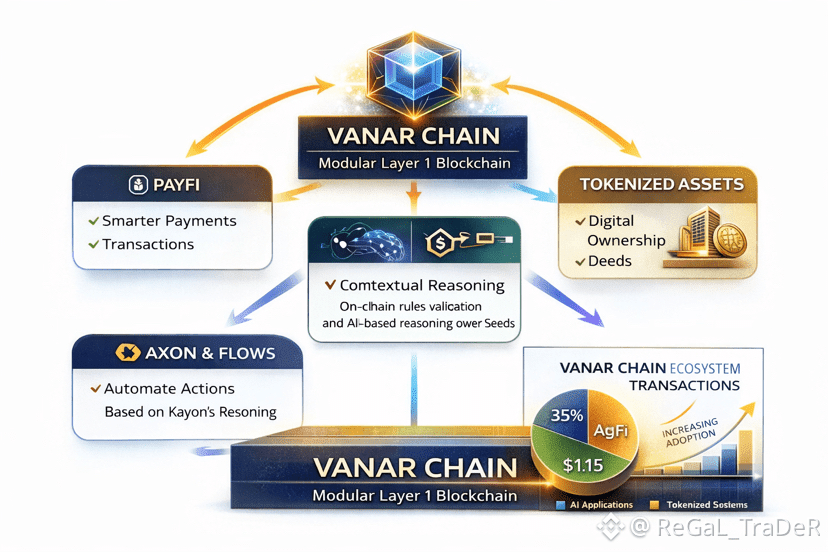
Of course, no project travels an easy path. Vanar Chain operates in a space crowded with competing blockchains, each vying for attention and developers. Questions linger around how well the AI elements will scale under real pressure, whether the compression and reasoning hold up reliably over time, and the regulatory considerations that come with handling tokenized assets or automated payments. Market swings affect the token, as they do everywhere in this field, and broader adoption will depend on proving everyday usefulness beyond early tests.
These developments sit quietly alongside the familiar rhythms of technology—small integrations that accumulate rather than transform everything overnight. In time, they may simply become part of how we manage information and value, one thoughtful layer at a time.