

Plasma stands as a quiet yet significant innovation in the blockchain landscape, built around a singular, focused vision: stablecoin transactions. Unlike the broad, generalized blockchains designed for multiple use cases, Plasma hones in exclusively on one thing—stable assets. It’s not about creating the next viral token or hosting decentralized apps; it’s about solving the age-old problems of cross-border payments with a streamlined, efficient, and low-cost solution.
 In 2026, when sending money internationally should feel as seamless as texting someone, traditional methods remain clunky and inefficient. Bank transfers still take days, with high fees chipping away at the amount being sent. Even in the crypto world, options aren’t ideal, with price volatility and excessive transaction costs still present when moving value across borders. Plasma aims to change this by creating a blockchain that is purpose-built for stablecoins. It’s not trying to be everything to everyone; it’s not chasing speculative gains or trying to create a playground for complex decentralized applications. Plasma’s design is simple, but powerful—focused entirely on the fast and reliable transfer of stable assets.
The key to Plasma’s approach lies in its design as a Layer 1 blockchain. By focusing on stablecoins, Plasma eliminates the need for unnecessary conversions and prevents the volatility that often plagues other crypto transfers. With over 1,000 transactions per second and block confirmations occurring in under a second, Plasma can process payments at incredible speeds. Even more impressive is its cost structure, which allows transfers to remain affordable, often with fees that are effectively negligible for smaller transactions. These qualities make Plasma an invaluable tool for real-world payments, where speed and low cost are paramount.
What Plasma brings to the table is not just technological efficiency, but also accessibility. It supports over 25 different stablecoins, ranging from the widely used Tether (USDT) to those pegged to local currencies, such as the Argentine peso or the Indonesian rupiah. This variety allows users to send or receive payments in the currency that makes the most sense to them, bypassing the need for forced conversions. This flexibility, paired with the ability to scale for high-volume transactions, positions Plasma as a solution that can handle the real-world payments that matter most to people today, from migrant workers sending money home to businesses conducting international trade.
Beyond its technological prowess, Plasma’s network is supported by a range of reputable partners, including Bitfinex, Founders Fund, and Framework, lending credibility and backing to the project. With over $7 billion in deposits, Plasma has proven its capacity to handle large sums and operate at a scale that’s necessary for widespread adoption. The network’s reach extends to over 100 countries, and the platform’s integration with various wallets and onramps ensures that it’s accessible to users across the globe. Yet, despite these impressive figures, Plasma operates in a space fraught with inherent risks.
Stablecoins themselves come with challenges. The primary concern revolves around issuer risk—the assurance that the reserve backing each stablecoin remains intact. If audits slip or market conditions stress the reserves, the stability of the entire system could be jeopardized. Plasma, by design, is tightly coupled with stablecoins, meaning it inherits this vulnerability. It’s a risk that can’t be ignored, especially for a blockchain that’s designed for high-frequency payments. An outage during peak periods, such as when millions of people are sending funds to their families, would hurt real individuals, not just speculative traders. While Plasma is designed for flawless uptime, this is a vulnerability that remains ever-present.
Another potential hurdle for Plasma lies in the evolving regulatory environment surrounding stablecoins. Governments are increasingly focused on the implications of stablecoins for monetary policy, financial stability, and even national security. While Plasma has positioned itself as a useful tool for cross-border payments, the network could find itself under scrutiny as regulations around stablecoins tighten. Governments could impose stricter rules on private issuers, and these developments might lead to challenges for a system like Plasma that is focused solely on stablecoins. At the same time, the regulatory framework surrounding stablecoins remains in flux, making it difficult to predict how these changes will affect the broader market in the long term.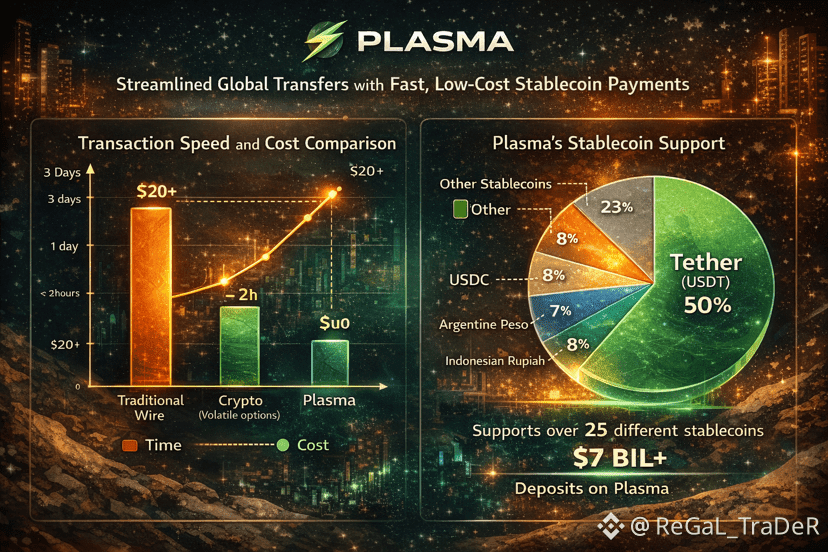
Despite these challenges, Plasma remains an exciting, patient bet on the utility of stablecoins in the real world. It’s not seeking attention or flashy headlines, but instead quietly providing a practical solution for people who need a reliable, low-cost method to move their money across borders. In a world filled with ambitious, complex, and often volatile crypto projects, Plasma’s simplicity and focus on practical utility give it a certain staying power. Whether or not it will continue to scale and maintain its edge depends on its execution, the reliability of its reserves, and how regulators respond to the growing stablecoin ecosystem. For now, Plasma quietly hums along, providing an efficient and accessible way to move value—no hype, no frills, just solid performance where it counts.