

Hey, have you ever stopped to think about how blockchain transactions are usually out there for everyone to see? Every transfer, every balance – it’s all public by design in many networks. That’s great for transparency in some cases, but when it comes to real financial applications, especially for businesses or institutions handling sensitive data, that openness can be a deal-breaker. This is exactly where Dusk Network stands out with its focus on native privacy through zero-knowledge proofs.
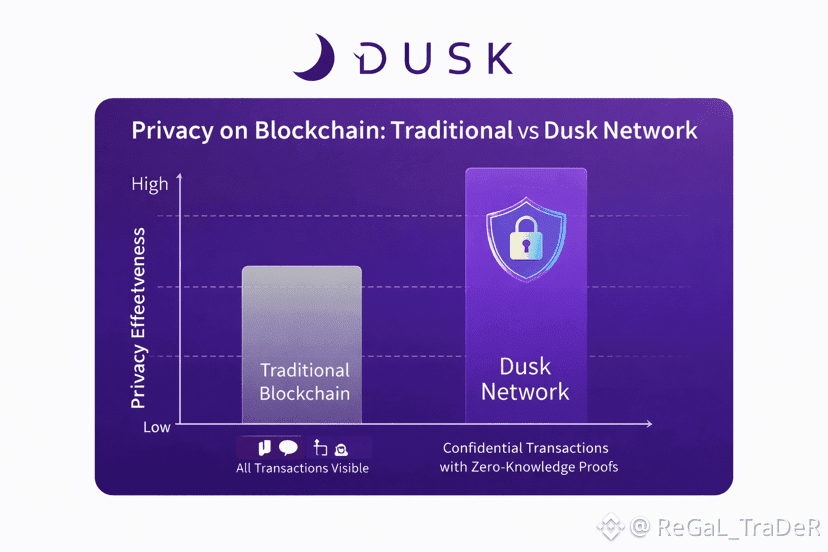
Let me walk you through this conversationally. Zero-knowledge proofs (ZK) let one party prove something is true without revealing the underlying details. On Dusk, this isn’t an add-on layer; it’s baked into the core architecture. The network uses a purpose-built zero-knowledge virtual machine that supports confidential smart contracts. These contracts can handle both public and private states, meaning developers choose what stays hidden – like trade amounts, participant identities, or contract logic specifics – while still ensuring the execution is verifiable on-chain.
Imagine a scenario: two parties want to trade securities privately. In a traditional public chain, the transaction details broadcast widely. With Dusk’s shielded transactions and confidential contracts, only the necessary proofs reach validators. The network verifies correctness without exposing the data. This uses succinct proofs that are efficient, helping maintain scalability. Dusk’s design avoids the performance hits sometimes seen when retrofitting privacy onto EVM-compatible chains. Instead, it starts from a privacy-first foundation, using techniques like zk-SNARKs or similar variants optimized for financial use cases.
Why does this matter practically? For institutions, it means they can run automated agreements – think lending protocols, insurance payouts, or derivative settlements – without leaking competitive info or customer data. Compliance requirements like GDPR-style privacy can be met while leveraging blockchain’s immutability and automation. Enterprises get the speed of on-chain execution with data security rivaling off-chain systems, minus the trust in intermediaries.
Dusk also incorporates features like succinct attestation and a consensus mechanism that supports this privacy model without compromising verifiability. Transactions settle instantly in many cases, and bulletin boards act as a reliable source of truth for matched deals without exposing full details upfront.
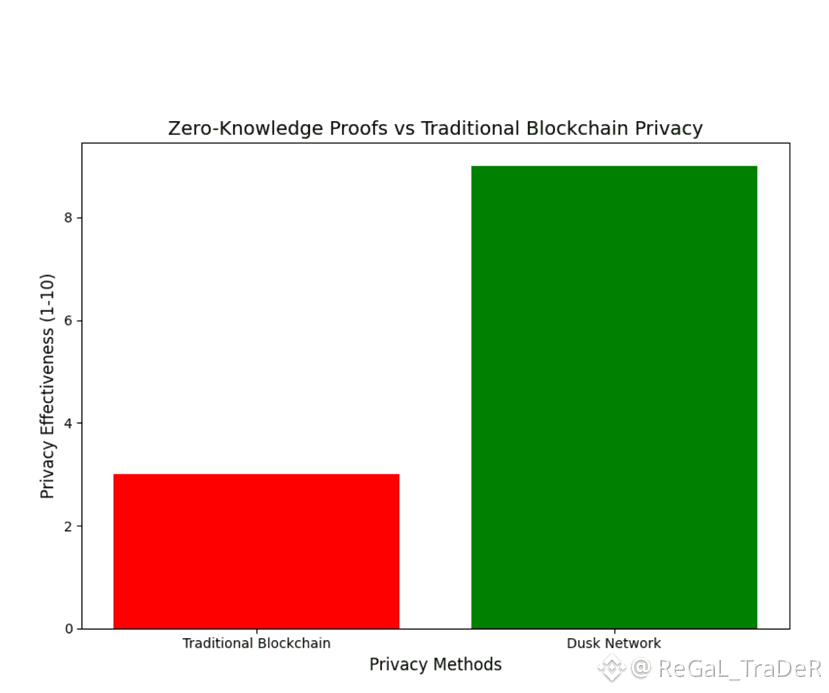
As someone who analyzes tech deeply, I find Dusk’s approach refreshing because it prioritizes real utility over flashy features. Privacy isn’t just a buzzword here; it’s engineered to enable broader adoption in sectors where data leaks could mean regulatory fines or lost business. It shows a mature understanding that blockchains must evolve beyond public ledgers to serve professional finance. In the long run, projects like this could help normalize privacy-preserving tech as standard, not niche.
What are your thoughts on balancing transparency and privacy in crypto? I’d love to hear.