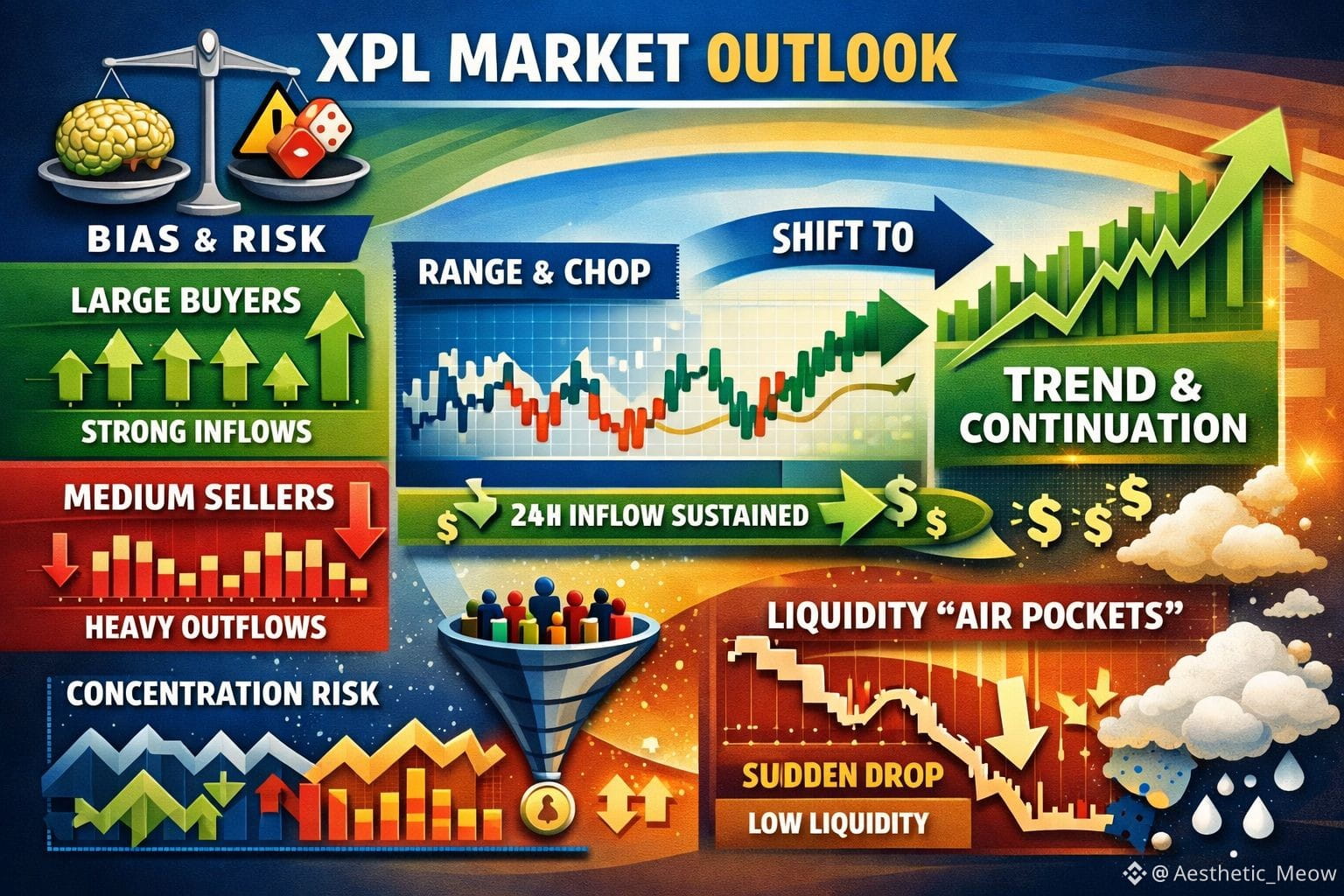
The last 24 hours for XPL do not seem like a story of people wanting to buy or sell. It looks more like people who really believe in XPL're fighting with people who are being careful. The numbers show that people are actually interested, in XPL. A lot of money was invested at times. But the market also spent a lot of time getting rid of XPL when people wanted to buy it. What this means is that XPL is a token that can get people to want to buy it. It still has trouble keeping more people buying than selling when sellers start to act.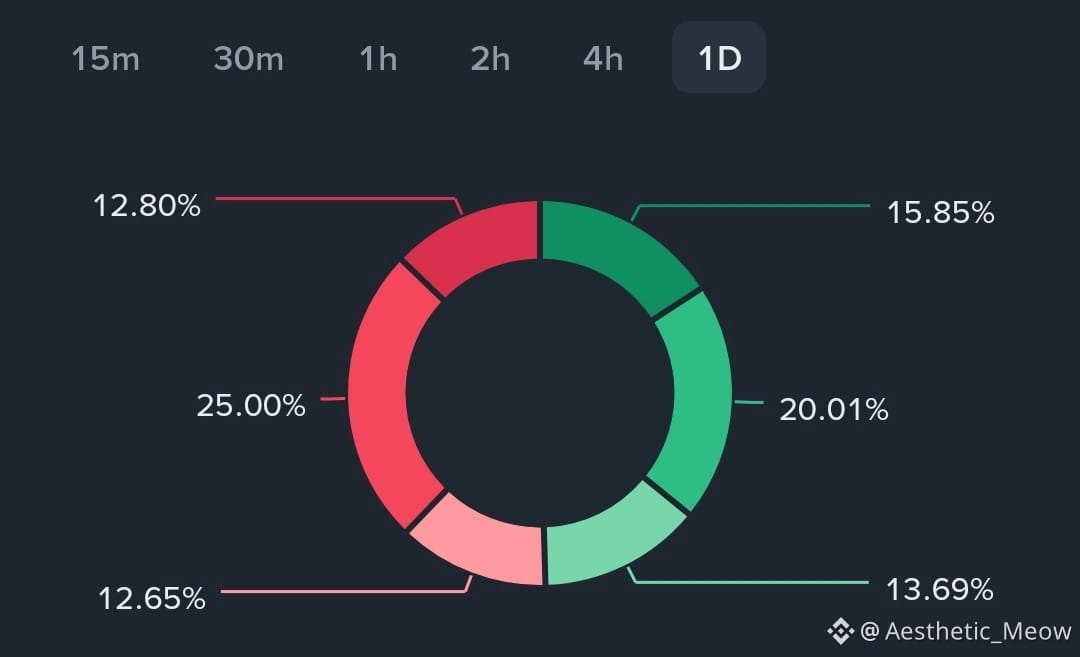
1) Order flow: whales supportive, mid-size pressure, retail mildly positive
The way people buy and sell things depending on how big the order is really shows what is going on. It tells us who is actually in control of what's happening with the buy and sell orders. The buy and sell split, by order size is very important because it shows who is doing the pushing when it comes to the buy and sell orders.
There were a lot of orders. The number of buys was 35.29 million. The number of sells was 28.50 million. This means that large orders had an inflow of 6.78 million. Large orders really had an impact with this net inflow of 6.78 million, from large orders.
This is the signal that we have on the board. The big players were not there they were actually buying more than they were selling. This does not mean that the price will go up. It usually means that it will not go down quickly. This is because the big buyers will try to keep the price from falling by buying more when it reaches a point so they tend to defend those areas, which are the zones that the big players like to buy and sell the stocks the big players will defend the zones of the stocks.
Medium orders have a lot of buys and sells. There are 44.56 million buys and 55.67 million sells. This means that the medium orders have an outflow of 11.11 million. To break it down the medium orders have sells than buys, which is why we see this net outflow of medium orders. The difference, between the buys and sells of orders is what gives us this net outflow of 11.11 million.
The weight that is dragging the market down is a problem. Sized traders, the ones who buy and sell a lot and try to make a profit are selling more than they are buying. When these sized traders are selling and the big traders are buying it means that smart money, the big money is buying when the market is low and the medium sized traders are selling when the market is high. This is what happens when the medium flow of money is negative and the large flow of money is positive. The big money, the money is buying the dips and the medium sized traders the crowd, in the middle are selling the bounces.
Small orders have a lot of buys around 30.47 million and sells around 28.16 million. This means there is an inflow of around 2.31 million for small orders. The number of small order buys is higher, than the number of small order sells.
The retail people are being a little helpful. It is not enough to make a big difference when you have a lot of mid-size companies selling their stuff. Retail is still trying to be supportive of this. Retail is not strong enough to change things when mid-size companies are selling.
We have a total of 110.32 million buys and 112.34 million sells. This means there is a difference of 2.02 million. So the net outflow of money is 2.02 million. The buys are 110.32 million. The sells are 112.34 million. This results in an outflow of 2.02 million.
The market ended up being a little negative. The important thing to note is that people are not leaving the market because everyone is selling. It is because the people who own an amount of shares are selling more than the people who own a lot of shares are buying. The market is negative because of this the medium-size selling is more, than the large-size buying.
This is what I call an accumulation profile. It usually means that the price of something will move up and down in a range for a while. The price will look really boring, for a time but then it will suddenly do something exciting. This kind of thing happens a lot with an accumulation profile.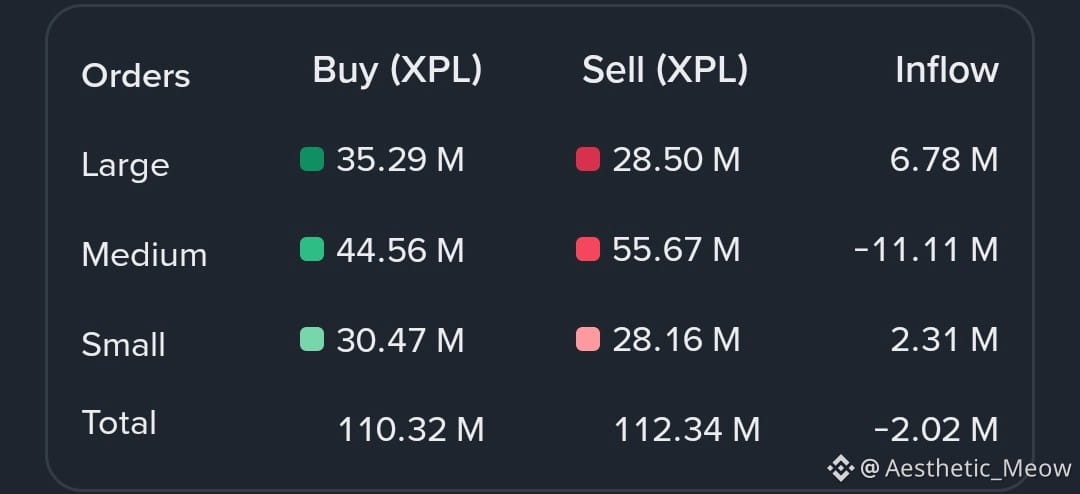
2) Five-day large inflow: volatility with a positive bias
The "5 × 24h Inflow" view gives us a better idea. The way big money is moving has not been steady. If we look at five days the total amount of money coming in is around +9.44M. But this money did not come in at once it came in bursts. The big money inflow happened at times, which is interesting to see. The "5 × 24h Inflow" view shows us that the big money movement is not slow and steady but rather it happens in big chunks.
A soft positive day (+1.70M)
A sharp negative day (-9.22M)
A strong rebound (+13.65M)
Another pullback (-4.06M)
And the latest day finishing green (+7.37M)
The big money flow is really active and on the move it is not slow and steady. This is a market where the big players like to switch things they buy when they can get a good deal and then they stop when it gets too busy. This can be a thing for the market in the long run but for now it is making things a little tricky. The big money flow can make it seem like the market is going one way. Then it suddenly changes direction, which can be confusing. The big money flow is what is really, in charge here and it is making the market do what it wants sometimes this helps the market. Sometimes it hurts it.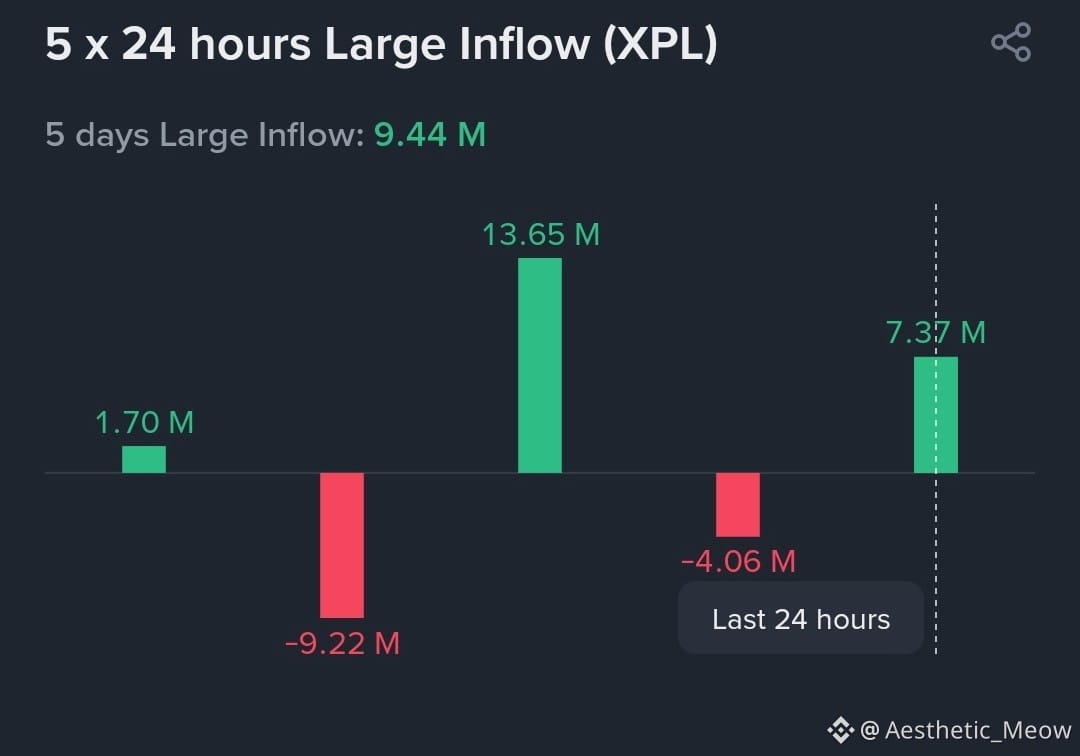
3) The “money inflow” curve: a classic rise-and-drain session
The 24 hour money inflow chart looks like something we have seen before. It shows that the money coming in went up a lot at the start of the day. The money inflow was very strong on. It reached its point around the top of the range. Then the money inflow started to go down for the rest of the day. The 24 hour money inflow chart shows that it kept going down. It even went into territory by the end of the day. The 24 hour money inflow was really low, at that point.
This behavior usually means one of two things:
When people want to buy something that is what we call demand. So when there is a distribution into demand it means that buyers are coming to buy the thing. These buyers show up. The price of the thing goes up because more people are interested in it. The sellers see that a lot of people are interested and that there are buyers so they use this opportunity to sell the thing they have. The sellers want to get out so they sell when they can. The distribution into demand is like an exchange where buyers and sellers meet and the price of the thing goes up because of it. The buyers and the sellers are doing what they want. The price of the thing is going up because the buyers are giving the sellers what they need to exit, which is a good price, for the thing they are selling.
The market had a momentum failure. It could not get a group of buyers after the initial push. Because of this people who got in late became the ones that people sold to when they got out. This happened because the market could not build a wave of buyers so late entrants in the market became liquidity, for people who were exiting the market, which is the Momentum failure.
The main thing to remember is that XPL got people at first but it could not keep that going. This does not mean that the big orders that came in were not important. It just means that the market for XPL is not in a phase where things are moving in an consistent way yet. The market for XPL is still not smooth. It is not trending in a consistent way. The people who are watching XPL want to see it move in a way but that is not happening right now. XPL needs to show that it can keep people interested, over a period of time.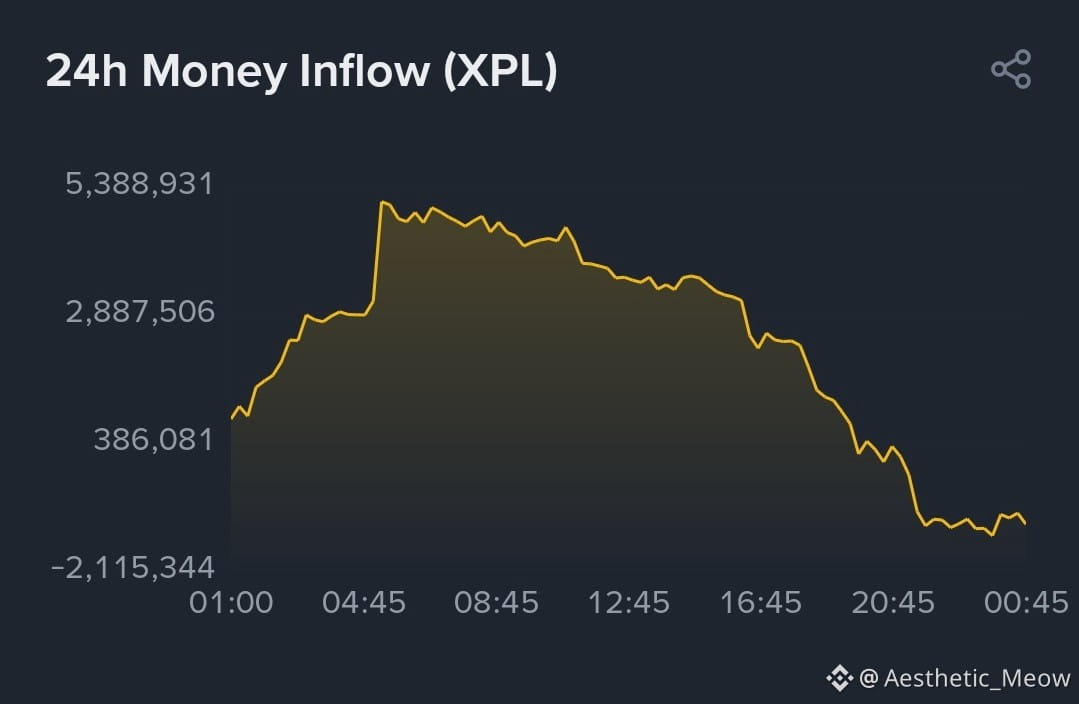
4) Platform concentration: a quiet but important warning light
The platform concentration line is going up during the day. This means that trading is getting more concentrated. More and more activity is happening in places. Even a tiny move upward is important. This is because it can affect how the price of something moves. The platform concentration line going up can make a difference, in how prices change.
When you have a concentration of something it can make the spikes bigger. This is because there is liquidity that is spread out which makes it easier to push the prices around. Higher concentration is what makes these spikes happen and with distributed liquidity it is even easier to make big changes. Higher concentration is the key, to these spikes.
It can also make dumps worse. If a place, with a lot of money to invest weakens the problem of prices moving quickly which is called slippage grows really fast. This happens with liquidity pockets and dumps. The slippage grows fast when a liquidity pocket weakens and that affects dumps.
If the concentration of something keeps going up we should get ready, for some big changes even if the main trend does not seem to be changing much. The concentration is what we need to watch because it can make the changes happen quickly and this is what will give us those big swings or what we call violent candles in the concentration.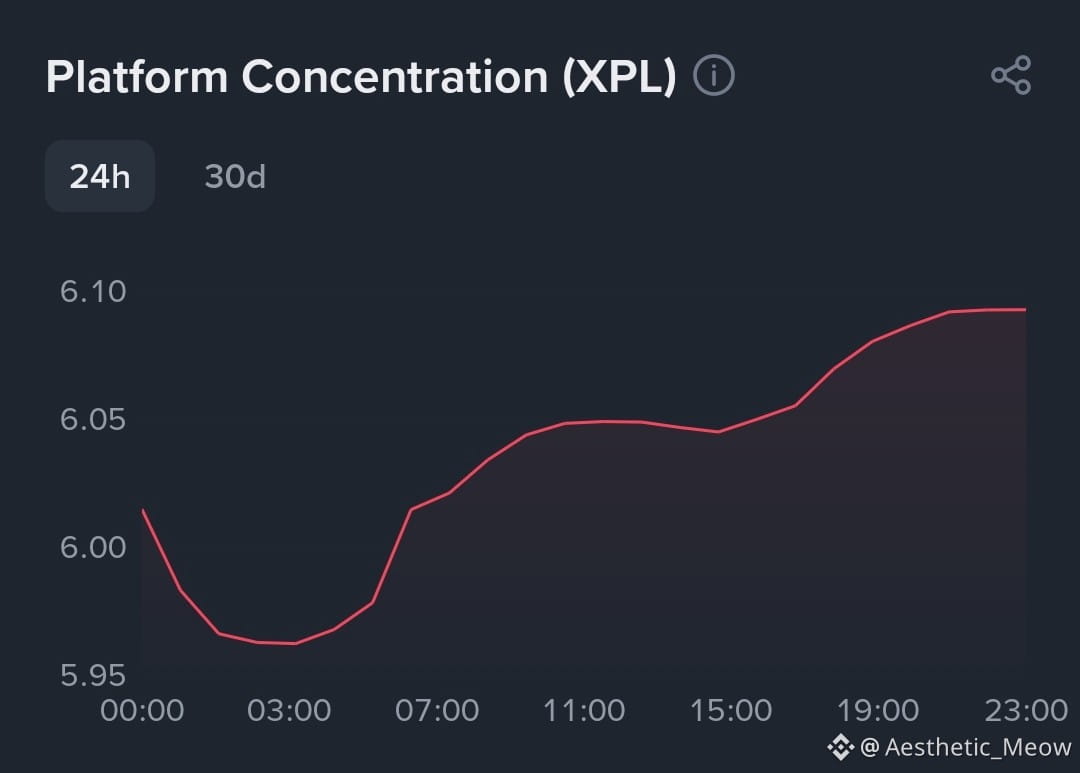
5) Now that we have all the pieces let us talk about what this means for the issue of bias and the problem of risk. The thing about bias and risk is that they are really important when it comes to making decisions. Bias and risk are concerns because they can affect the outcome of things. When we think about bias and risk we have to consider how they impact our decisions and the things that happen because of those decisions. The issue of bias and risk is something that we need to think about carefully especially when it comes to things, like bias and risk.
This set of signals does not scream moon or doom. It screams something realistic:
Supportive: Large orders are net buyers; five-day large inflow is positive overall.
The market is being held back. That is because the people who place medium sized orders are selling more than they are buying. At one point, during the day a lot of money was coming into the market. Then that money stopped coming in and the market started to slow down really fast. The medium orders are the ones that are selling so that is why the market is not doing well.
The thing, about things is that when concentration goes up it can make the good times and the bad times even more extreme than you thought they would be. Fragile concentration can really make the ups and downs the pumps and dumps a lot than you expected.
So the most defensible read is:
XPL is in a spot. This is a place where people, with a lot of money want to invest in XPL. There are also a lot of other people who are selling XPL quickly. These sellers are looking for any chance to get out of XPL. They think that every time XPL goes up a little it is a time to sell XPL.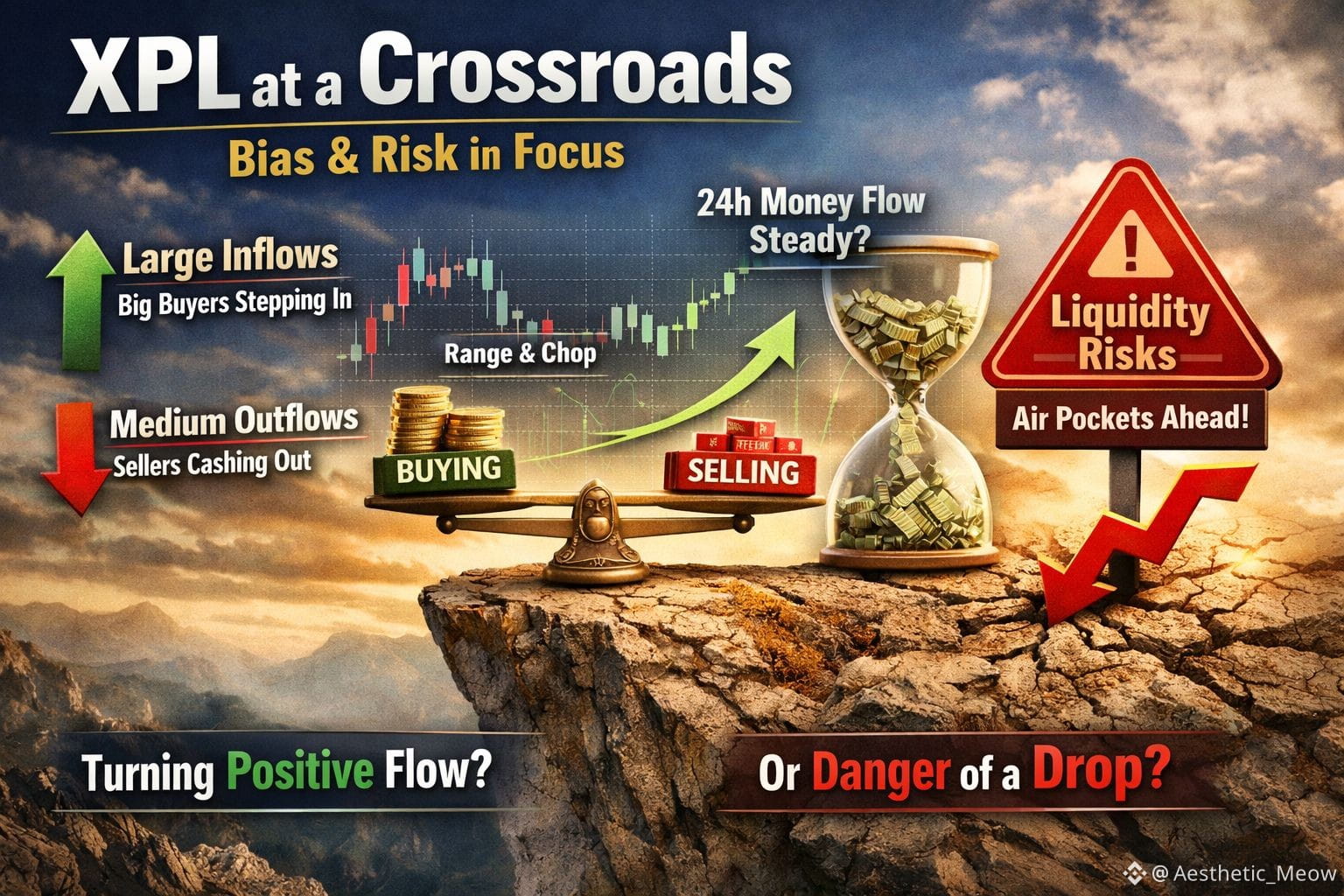
A practical forward view (without pretending certainty)
If XPL is going to shift into a trend you would normally want to see two things happen together. XPL needs to have these two things line up. The first thing is that XPL must show some sign of improvement. Then the other thing that XPL needs is for everything to work out in a way that supports this trend, for XPL.
The medium flow is changing from outflow to an positive flow. This means that the selling pressure is fading away. The medium flow is now moving in a positive direction.
The money that comes in over 24 hours stops going up and then coming down. Now the demand for the 24h money inflow is steady it does not just happen once. The 24h money inflow curve is not. Then draining like it used to. The demand, for the 24h money inflow is sustained over time.
If that happens when the large flow is still positive the market usually changes from a situation where prices go up and down a lot and do not move much into a situation where the market starts to move in one direction and just keeps going. The market often goes from "range and chop”, into "trend and continuation". This means the market is moving from a period of "range and chop" to a period of "trend and continuation".
When the opposite thing happens, like when a big flow of money into the market stops and the amount of something people want to buy keeps going up then the market can get into trouble. This is because it can create holes where people who want to buy or sell something cannot find anyone to trade with and the price of that thing can fall very quickly which is faster than people think it will. The market becomes vulnerable to these air pockets where liquidity disappears and the price of the market drops faster than people expect and this is what happens when a large inflow of money, into the market turns negative while the concentration of people wanting to buy keeps rising.
Final thought
Right now, XPL looks like a token that can attract serious interest—but it’s still earning the right to trend. The most interesting detail isn’t the small negative total inflow. It’s that big money stayed net-positive while the middle of the market sold harder. When that mismatch resolves, it usually resolves decisively—either into a clean upside continuation or a sharp reset that shakes out the remaining sellers.