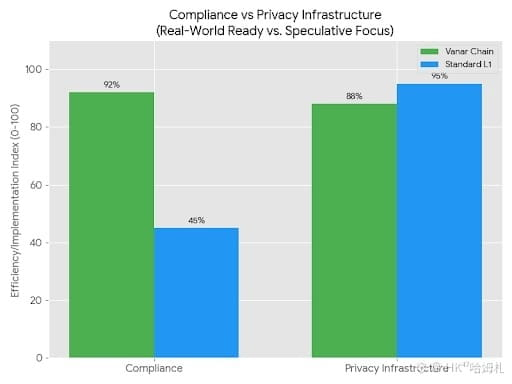
In a market crowded with loud promises and short-lived hype cycles Vanar is one of those projects that has chosen a very different path. Instead of chasing speculative DeFi narratives or competing for fleeting liquidity, Vanar has been quietly building a full-scale Layer-1 blockchain designed for something far more difficult: real-world adoption. Not adoption measured in TVL spikes or meme-driven volume, but adoption that comes from gamers, brands, creators, and everyday users who don’t care how a blockchain works—as long as it works.
Vanar’s story begins with Virtua, a project originally focused on digital collectibles and immersive virtual experiences. As the scope expanded beyond NFTs and into full Web3 infrastructure, the team made a decisive move. Virtua evolved into Vanar Chain, and the legacy TVK token was replaced with VANRY on a one-to-one basis. This was more than a rebrand. It was a reset of identity, signaling a shift from a single-product ecosystem into an independent Layer-1 blockchain with ambitions well beyond a single metaverse.
At its core, Vanar exists to solve a problem most blockchains still struggle with: usability. The project is built on the belief that mainstream users shouldn’t need to understand wallets, gas fees, or smart contract mechanics to enjoy Web3 experiences. Gaming, entertainment, AI-powered apps, and brand interactions are meant to feel familiar, intuitive, and fast, with the blockchain operating silently in the background. That philosophy shapes everything from Vanar’s technical design to its ecosystem strategy.
Technologically, Vanar stands on its own. It is not a sidechain, not a rollup, and not dependent on another network for security. As a standalone Layer-1, it runs its own consensus and validator set, designed around a hybrid model that blends Proof of Stake concepts with reputation and delegated authority mechanics. The idea is to prioritize reliability, scalability, and long-term validator credibility rather than pure capital dominance. For developers, Vanar’s EVM compatibility means building on the chain feels familiar, lowering the barrier to entry and allowing existing Ethereum tooling to plug straight in.
Speed and cost are where Vanar quietly shines. Transactions confirm in seconds, and fees are so low they’re almost invisible—fractions of a cent that make microtransactions, in-game actions, and consumer-facing apps actually viable. This is not a chain designed for high-frequency traders battling over gas fees; it’s designed for millions of small interactions that feel instant and frictionless. On top of that, Vanar positions itself as an eco-conscious blockchain, aligning infrastructure decisions with renewable energy initiatives rather than ignoring sustainability concerns.
Where Vanar truly differentiates itself, however, is in how deeply it integrates artificial intelligence into the blockchain stack. Rather than treating AI as a buzzword or a bolt-on feature, Vanar is building what it calls AI-native capabilities. Systems like Neutron and Kayon introduce concepts such as on-chain semantic memory and reasoning engines, enabling applications to store meaning, context, and intelligence directly within the blockchain environment. This opens doors to smarter games, adaptive digital worlds, and AI-enhanced user experiences that go beyond static smart contracts.
The VANRY token sits at the center of this ecosystem, but it’s designed for use, not hype. With a maximum supply of 2.4 billion tokens and roughly four-fifths already circulating, VANRY is structured for long-term network sustainability rather than sudden inflation shocks. The overwhelming majority of tokens are allocated to validator rewards and network security over a multi-decade emission schedule, ensuring the chain remains decentralized and secure as it grows. Notably, there is no direct team allocation, a rare design choice that reinforces Vanar’s community-first positioning.
In practice, VANRY functions as the fuel for everything happening on the chain. It pays for transactions, secures the network through staking, enables governance participation, and acts as the medium of exchange across games, AI tools, and digital experiences. As Vanar rolls out subscription-based AI services and enterprise tools, VANRY becomes embedded into real economic loops, with mechanisms such as token burns and buybacks beginning to emerge. This shifts the token from passive speculation into active utility, tied directly to usage rather than narrative.
The ecosystem itself is broad but cohesive. Virtua remains a flagship product, offering an immersive metaverse where users can own assets, explore digital spaces, and participate in virtual economies powered by VANRY. Alongside it, the VGN Games Network provides infrastructure for developers to build and scale blockchain games without forcing players to confront crypto complexity. AI tools extend the ecosystem further, introducing intelligent agents, memory layers, and adaptive logic that blur the line between Web3 and next-generation software platforms. For brands and enterprises, Vanar offers a gateway into blockchain-powered loyalty programs, digital assets, and interactive experiences that don’t require deep technical expertise.
From a market perspective, Vanar remains relatively under the radar. Prices have fluctuated widely across 2025 and early 2026, reflecting broader market conditions rather than project-specific failures or hype cycles. Market capitalization and liquidity remain modest compared to major Layer-1s, and the holder base is still small by mainstream standards. Yet this quiet phase aligns with Vanar’s long-term approach. The focus has never been on short-term price action, but on building infrastructure capable of supporting millions of users when the moment arrives.
Recent developments suggest that groundwork is being laid carefully. AI-driven features continue to mature, UX improvements aim to abstract wallets and complexity, and security integrations—such as biometric verification partnerships—signal a serious approach to identity and fraud prevention. Token utility is gradually expanding through real products rather than promises, and enterprise-facing solutions hint at a future where blockchain adoption doesn’t look like crypto at all.
Of course, Vanar is not without risk. The Layer-1 landscape is brutally competitive, especially in gaming and metaverse narratives. Adoption is never guaranteed, regulation remains unpredictable, and execution matters more than vision. Vanar’s success will ultimately depend on whether developers choose to build, whether users stay, and whether real-world products gain traction beyond the crypto bubble.
Still, Vanar represents something increasingly rare in this industry: a patient attempt to build Web3 infrastructure for people who don’t care about Web3. If that bet pays off, VANRY won’t need hype to justify its existence. Its value will be written quietly into games played, worlds explored, AI agents used, and digital experiences enjoyed—without users ever needing to know what Layer-1 they’re standing on.