
Vanar is one of the more ambitious blockchain projects emerging in the constantly shifting world of Web3, not because it simply adds another chain to the long list of Layer 1 networks, but because it was designed from the outset with a clear real-world purpose in mind. While many blockchains focus on financial applications, decentralized finance, or NFT speculation, Vanar’s core mission is to make blockchain technology meaningfully accessible to mainstream audiencespeople who might never have cared about crypto before but would embrace it if wrapped into experiences they already enjoy, like gaming, entertainment, digital communities, and brand interactions. This drive to take Web3 beyond niche crypto circles and into everyday life sets Vanar apart and shapes everything from its product design to its tokenomics and ecosystem strategy At its heart, Vanar is a Layer 1 blockchain built from the ground up to be usable, fast, affordable, and scalable enough to support mass adoption. The team behind Vanar brings deep experience from gaming, entertainment, and working with major brands an unusual blend of skills that reflects the project’s focus on bridging the gap between digital culture and decentralized technology. These are not theorists building abstract protocols; these are people who have built real digital worlds, interactive experiences, and commercial partnerships. That practical perspective is visible in Vanar’s approach: instead of treating blockchain as a technology only for the crypto-rich, they imagine it as an infrastructure layer underlying mainstream digital experiences where people spend time, money, and attention every day.
One of the most striking features of Vanar is how it stretches across multiple verticals rather than limiting itself to just one niche. The team emphasizes gaming, metaverse integration, artificial intelligence, ecological sustainability, and brand solutions all within a single ecosystem. Products already associated with Vanar include the Virtua Metaverse—which offers immersive virtual spaces where users can socialize, play, own digital assets, and create content—and the VGN Games Network, a gaming infrastructure layer that makes it easier for developers to build Web3 games with seamless blockchain integration. Both of these are not theoretical ideas but functioning components designed to take advantage of Vanar’s speed and low transaction costs, bringing blockchain into spaces where billions of people already invest time.
Underpinning all of this is the VANRY token, the native digital asset that fuels the Vanar ecosystem. VANRY is much more than a speculative coin; it is the lifeblood of the network, used to pay gas fees for transactions, reward validators who secure the chain, and potentially participate in future governance decisions as the ecosystem grows. The token originally evolved from an earlier project identity Virtua, which had a token called TVK and in a carefully planned rebranding, TVK holders were transitioned one-for-one into VANRY tokens, allowing the project to refocus its identity without fracturing its community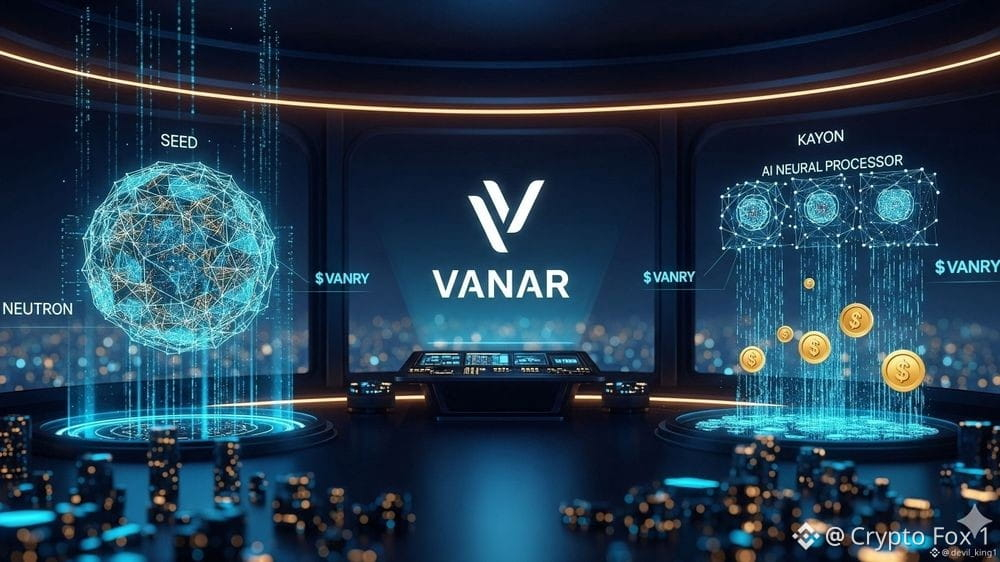
Vanar’s tokenomics reflect a deliberate strategy. Unlike projects that set aside large percentages of tokens for founders or early investors, a significant portion of VANRY’s future supply is slated for validator rewards, ensuring that the security and performance of the network remain strong as it scales. Smaller allocations go toward development and community initiatives, emphasizing an ecosystem-first approach geared toward long-term growth rather than short-term speculation. The maximum supply is capped, and as the chain grows, staking and fee mechanisms help create incentives aligned with network health.
One of the biggest challenges facing broader blockchain adoption has always been technical friction: high fees, slow transactions, and the complexity of onboarding new users. Vanar addresses these head-on by designing its infrastructure to support ultra-fast transactions at very low fees, often in fractions of a penny, making it suitable for microtransactions such as in-game purchases or small payments that traditional networks struggle to accommodate efficiently. This focus on performance and cost reduction doesn’t just make the technology more usable it makes it economically viable for developers and brands to build real products that everyday users can interact with comfortably, without needing deep blockchain knowledge.
Beyond gaming and metaverse experiences, Vanar also leans into artificial intelligence integration. In a world where AI is reshaping digital experiences, Vanar’s vision includes embedding AI tools into Web3 applications to create more intuitive, adaptive, and personalized interactions. This could mean games that respond dynamically to player behavior, e-commerce portals that tailor content in real time, or brand campaigns powered by smart AI agents that engage customers more naturally. These integrations are not peripheral add-ons—they are woven into the chain’s underlying value proposition, signaling a future where blockchain and AI coexist and enhance one another in tangible user experiences.
Another interesting dimension of Vanar’s story is its partnership ecosystem. The project has been included in technology programs like NVIDIA’s Inception Program, which gives it access to advanced development tools and an ecosystem of AI and graphics resources. Collaborations with game studios and entertainment brands further underline that Vanar is not building in isolation but actively seeking to align itself with partners who can help bring compelling content and users into its world. While blockchain partnerships often remain superficial, Vanar’s approach seems rooted in practical integrations rather than empty branding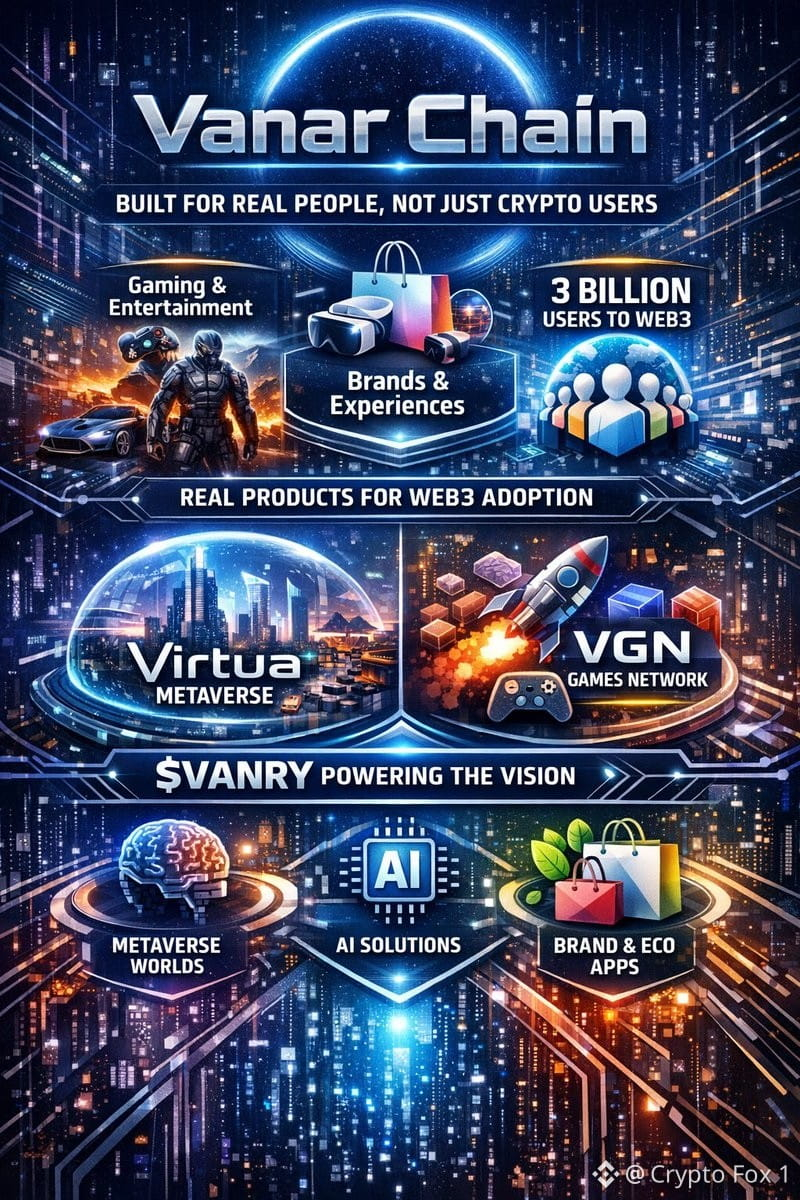
Despite all these ambitions, like any emerging blockchain, Vanar faces challenges. Its market capitalization and user base are still relatively modest compared to legacy networks, and the broader industry is highly competitive, especially in areas like gaming and metaverse frameworks. Adoption outside the crypto-native community remains an uphill battle, and delivering on the promise of onboarding billions of users will require not just technology, but compelling user experiences, developer adoption, and real utility that resonates beyond niche Web3 circles. Critics also point out the volatility and regulatory uncertainties inherent in crypto projects, suggesting that long-term success will depend on execution and market dynamics.
What sets Vanar apart, however, is not just the sum of its parts but the intent behind its architecture. By prioritizing user-friendly experiences, low costs, environmental sustainability, and real-world use cases, Vanar positions itself not merely as another blockchain, but as an infrastructure for a new kind of digital economyone where gaming, entertainment, AI, and commerce intersect in ways that feel accessible to everyday people for the first time. Whether that vision fully materializes remains to be seen, but the thinking behind Vanar represents a thoughtful attempt to redefine how blockchain technology should be built if it ever hopes to touch billions of lives rather than just millions of wallets
