
Let’s face it: almost everything we want to do online these days requires far more information than we ought to give out.
Purchasing a concert ticket? Enter your name, email, phone number, and sometimes even your ID scan.
Subscribing to a streaming service? Link a card and the viewing history becomes forever stored.
Future smart cities or IoT type stuff? Could be your location, habits, health info – end up in somebody’s database somewhere.
We're putting our trust in those large organizations (or unscrupulous apps) not to sell, divulge, or develop secret profiles about us, tracking our movements into the future. Most persons are unaware of just how integrated their virtual life currently is.
That is exactly why Self-Sovereign Identity (SSI) feels so exciting right now. The idea is simple: You are in control of your credentials. You can verifiably claim “I'm over 18”, or “I bought the VIP ticket”, or “I completed KYC”, etc. without giving away your entire life story and without some entity being the middleman.
Early this year, a certain paper was published by Xavier Salleras (from Dusk Network) titled Citadel: Self-Sovereign Identities on Dusk Network, which actually tries to solve this in a serious, privacy-first way.
Most NFT-based identity projects today are still far from reaching that ideal.
A lot of teams tried putting tickets, memberships or access rights on-chain as NFTs — more often than not, on Ethereum or similar chains.
You mint NFT, you prove ownership with a zero-knowledge proof, but no one knows what’s inside.
Sounds good, doesn't it… until one looks at it
The information contained in the NFT itself is typically completely public (Token ID, address, date of mint, etc.)
Even if the users hide their information, linking between the events or services could deanonymize users still.
Revoking a stolen ticket or a cancelled membership? Very hard without either violating privacy or using a centralized server.
Citadel was designed specifically to fix those exact issues, and it does so by living natively inside Dusk Network, a Layer-1 chain that has been designed for privacy from day one.
How Citadel actually works-the cool part
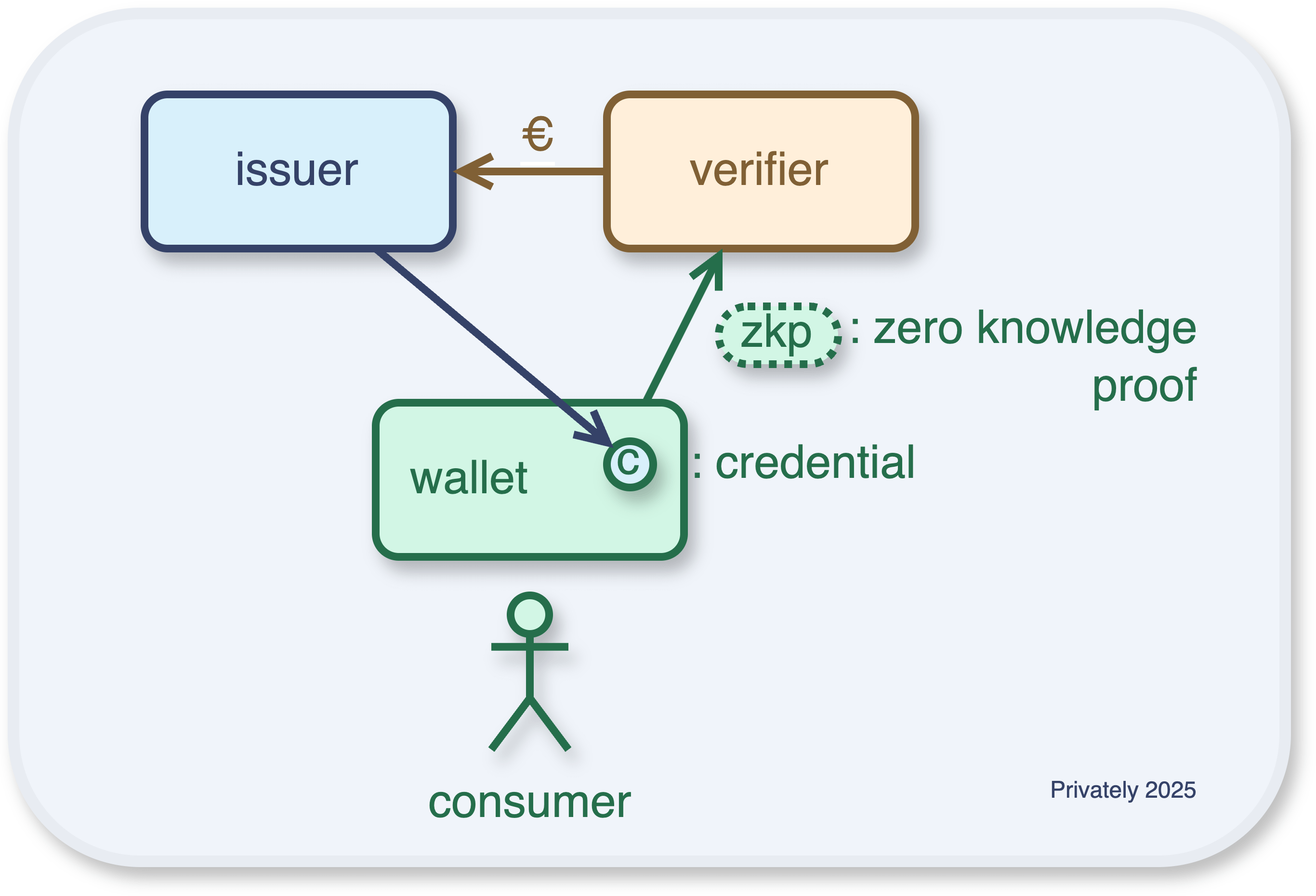
The Citadel SSI Workflow: Privacy-preserving interaction between Issuer, User and Verifier.
Dusk already has an extremely elegant transaction model called Phoenix; confidential notes — like private UTXOs — with zk-SNARK proofs on every transfer.
Citadel extends that very system to create private NFTs; they call them private notes carrying rights/licenses.
Two Flavors:
Type 2: Semi-transparent NFT (metadata visible, however benefits from Dusk privacy everywhere else)
Type 3: Fully encrypted payload. Only the owner can decrypt the contents (i.e., the ticket details, a signature from the issuer, and the expiry date).
Real-world example:
You want a festival ticket
You send $DUSK payment to the organizer via Phoenix
The Organizer then signs your attributes: (VIP access, valid 3 days, holder over 18)
They mint a private encrypted NFT note and send it to a one-time stealth address that you created
That message remains private on the Dusk blockchain, and no one else can read what is contained there
At the gate, you generate a zk-SNARK proof showing:
• You own/decrypt this note
• The signature is valid
• The note has not been spent or revoked …all without revealing your identity or the note itself
Why this actually matters?
No on-chain traces that join you across events or services.
True decentralized revocation - organizer able to revoke stolen tickets through consensus without requiring access to your wallet.
You choose what to reveal, just the word ‘over 18’, ‘VIP holder’, etc., never the actual ticket data itself.
Mobile friendly – heavy proof generation can be left to helpers (which Dusk’s approach safely supports).
No need for gas wars or wallet linking as in Ethereum.
Imagine 2026
Buy festival tickets anonymously.
Get venue access without scanning a QR code that links to your wallet history.
Organizer revokes fake tickets without a central server.
Same technology that's been used for parking rights, gym memberships, and other regulated DeFi apps and privacy-preserving voting systems.
That is the kind of future that Citadel is pointing to. @dusk_foundation has been working on its own privacy infrastructure, but the Citadel cum RWA tokenization drive, along with the push for MiCA, could make $DUSK one of the cleanest chains for private yet regulated activity. What do you think? Are we finally close to tickets & rights that are both secure and private?