
The first time someone hears “gasless transfer,” there’s usually a pause. Not excitement. More like suspicion. Because anyone who has used blockchains for more than a week knows nothing is ever free. Fees don’t vanish. They relocate.
That’s the right instinct to have.
Gasless USDT transfers are not about erasing cost. They are about hiding it carefully, then managing it behind the scenes so the user doesn’t have to think about it every time they send a small amount. This sounds subtle, but it changes how people behave on a network. Less hesitation. Fewer half-finished transactions. More casual use. Whether that’s good or risky depends on how the system underneath holds up.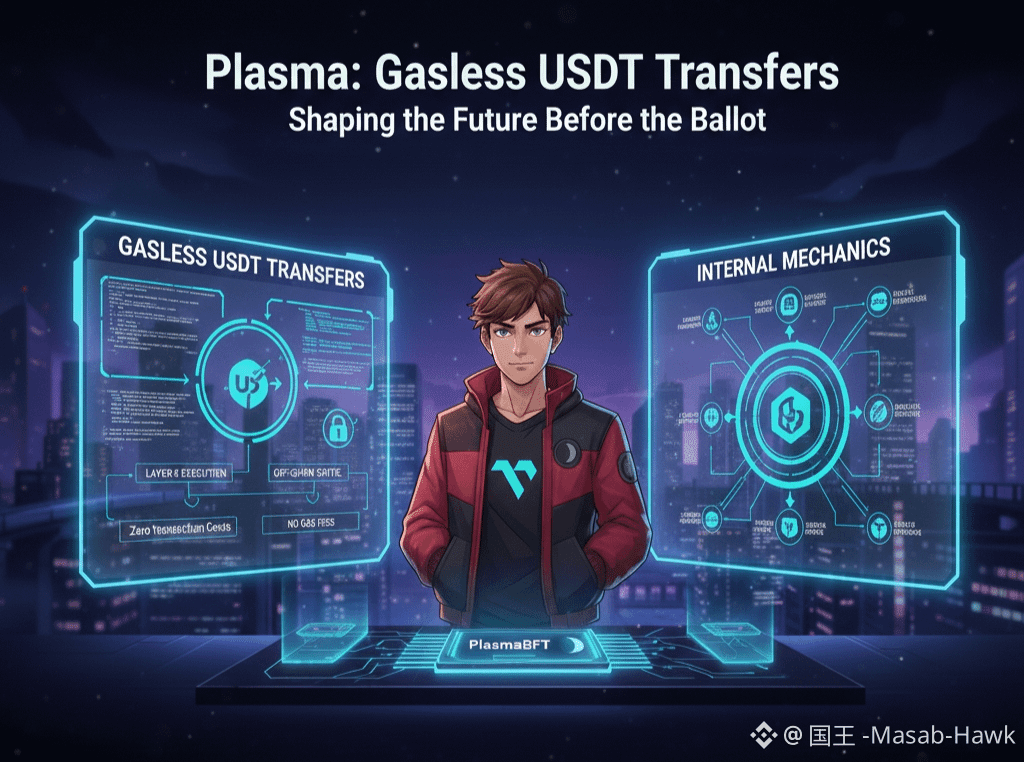
And that part rarely gets talked about.
What “Gasless” Actually Means When You Slow Down:
At a protocol level, gasless does not change how computation works. The network still measures execution in gas units. Validators still expect to be paid. Blocks don’t become lighter just because the interface feels smoother.
What changes is who is responsible.
Instead of the sender attaching native tokens to cover fees, that responsibility is delegated. The transaction says, in effect, “I’m signed by the user, but someone else agreed to pay for this.” That agreement is not a vibe. It’s code.
This matters because it introduces intention into fee payment. Fees are no longer automatic. They are conditional. That condition can be generous, strict, or quietly selective.
Where the Paymaster Fits In, and Why It’s Not Just a Helper:
The paymaster is often described like a helpful service. That framing is a little misleading. It’s closer to an accountant with rules and limits, not a benefactor.
When a user initiates a gasless USDT transfer, the request is shaped differently from a normal transaction. It carries extra information. Who is sponsoring. Under what logic. What happens if something goes wrong. Before anything executes, the paymaster checks whether this transfer fits its boundaries.
Those boundaries are where design philosophy leaks through.
Some systems are conservative. They sponsor small, infrequent transfers and quietly decline anything that looks unusual. Others are more open early on, then tighten rules once usage patterns emerge. Early signs suggest the second approach attracts users faster, but also burns through funds more quickly.
There’s no universal right answer. Just trade-offs.
Validation Still Happens, Even If the User Never Notices:
One easy mistake is to assume gasless means fewer checks. In practice, it often means more.
Validators still need assurance that the transaction is legitimate and that the gas will be paid. That assurance comes from pre-validation logic. The network checks that the paymaster has funds. It estimates gas usage. It confirms signatures. None of this is optional.
If these checks fail, the transaction never executes. From the user’s side, it just looks like something didn’t go through. Underneath, a whole decision tree fired and shut the door.
This is one of the quieter risks. When failure reasons become invisible, users can’t tell whether they made a mistake or the system did. That confusion accumulates over time.
How Costs Are Settled When No One Is Watching:
After execution, the gas bill lands somewhere specific. It always does.
In simple setups, the paymaster balance decreases immediately in native tokens. In more complex systems, costs are tracked internally and settled in batches. For example, sponsoring 5,000 small transfers in a day might result in one reconciliation event later. This reduces friction but increases exposure if network conditions change suddenly.
Gas prices are not stable. A spike that lasts even a few hours can turn a sustainable sponsorship model into a loss generator. Some systems pause gasless features automatically when this happens. Others eat the cost and hope usage growth compensates later.
Whether that hope is justified remains to be seen.
Abuse Isn’t Loud. It’s Boring and Repetitive.
Most abuse in gasless systems doesn’t look dramatic. It looks like thousands of tiny, pointless transactions that barely move value but steadily drain sponsorship funds.
That’s why limits exist. Per-address caps. Time-based throttles. Pattern detection that flags behavior which feels mechanical rather than human. These controls don’t get announced. They just quietly shape what’s possible.
From a user perspective, this can feel arbitrary. One day transfers work instantly. Another day they don’t. The system hasn’t broken. It has decided something.
This is where trust is tested, not in big failures but in small inconsistencies.
Risks That Don’t Show Up in Demos:
The biggest risk is sustainability. If gasless transfers become the default expectation, someone has to keep paying indefinitely. That “someone” eventually asks what they’re getting in return. Volume. Retention. Data. Network effects. If those don’t materialize fast enough, sponsorship tightens.
There’s also a quieter centralization risk. Paymasters influence access. Even if the protocol is open, the lived experience can depend on which sponsor you’re routed through.
And finally, there’s behavioral risk. When users stop seeing fees entirely, they lose a sense of cost. Reintroducing it later feels like a penalty, not a correction.
Not Free, Just Carefully Rebalanced:
Gasless USDT transfers are not a promise. They’re a balancing act.
They move friction away from the user and into infrastructure, accounting, and policy. When done carefully, the system feels steady and almost invisible. That invisibility is earned, not automatic.
If the accounting holds and incentives stay aligned, gasless transfers can make stablecoins feel usable in everyday contexts. If not, the cracks won’t appear all at once. They’ll show up quietly, in limits, pauses, and small denials that add up.
And that’s usually how real systems reveal what they are made of.
@Plasma $XPL #plasma