

Dusk makes more sense when you stop thinking “privacy chain” and start thinking “financial plumbing with rules.” In regulated finance, the hard part isn’t hiding data. The hard part is moving value in a way that can survive the boring stuff: audits, reconciliations, incident calls, and the moment someone asks, “Show me exactly what happened and who had permission to see it.”
That’s the real job Dusk is aiming at: keep sensitive information confidential without losing the ability to prove things and disclose them when you’re required to. Institutions don’t want mystery boxes. They want systems that behave the same way on a normal day and a stressful day. Predictability beats hype because predictable systems are the ones you can plug into operations.
Under the hood, the network leans on proof-of-stake and committee-style BFT coordination. In plain terms: validators lock stake, and smaller selected groups do the proposing, checking, and ratifying work for each block. The point isn’t “faster for fun.” The point is structured finality and coordination—clear roles, measurable behavior, and less ambiguity about when something is truly settled.
The privacy piece is also less “cloak and dagger” than people assume. Zero-knowledge tools are useful here because they let you prove a claim without dumping the entire dataset on-chain. That’s selective disclosure: reveal what you must, to who you must, when you must—without turning every transaction into a public spreadsheet. That’s closer to how real financial systems work than most fully transparent chains.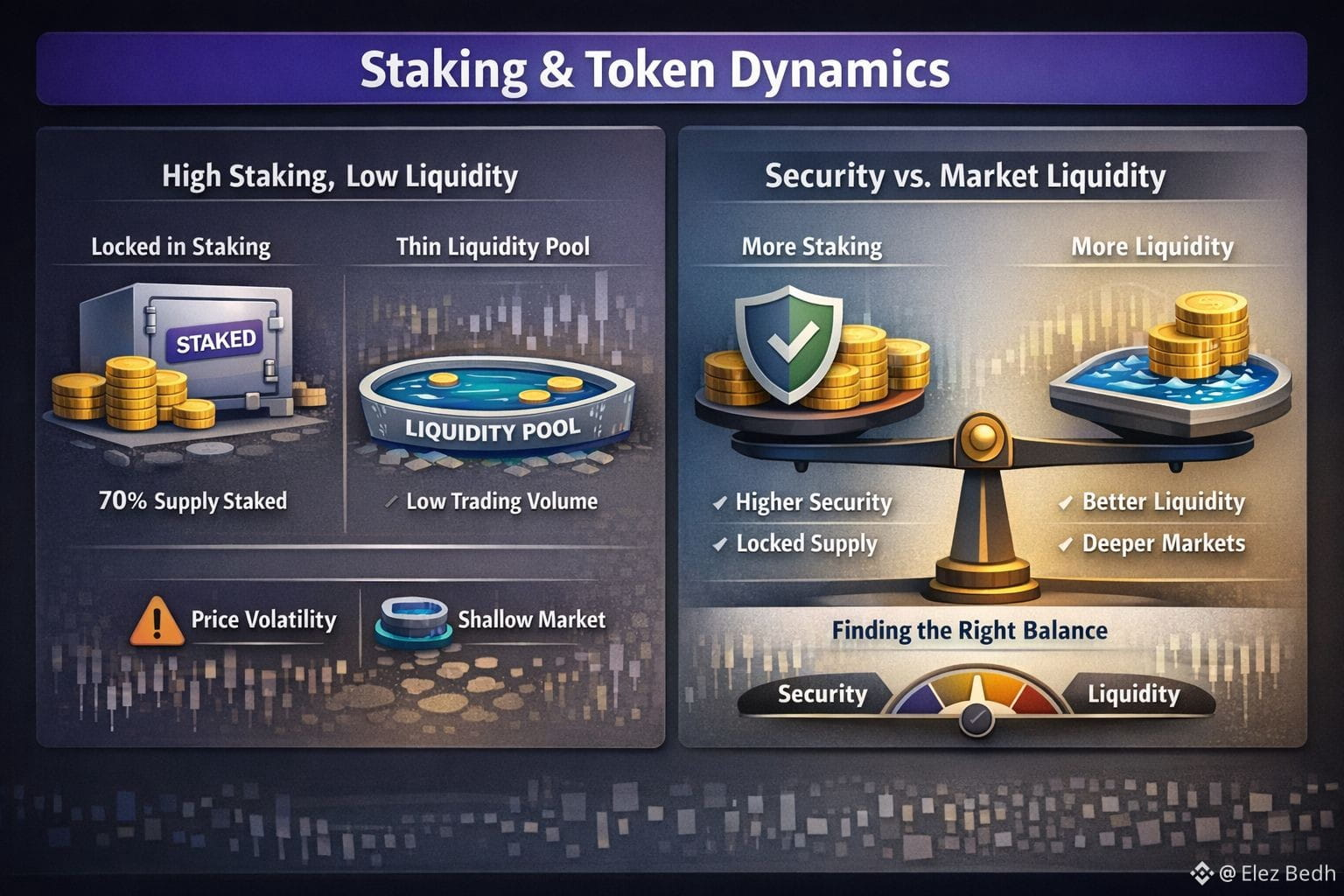
Now, the token mechanics are where the trade-offs get real. DUSK is the bond that makes validators behave. Staking locks supply, rewards keep operators online, and penalties punish bad behavior or extended downtime. If a lot of supply is staked, security improves—because attacking the chain becomes expensive and honest validators have “skin in the game.” But that same lock-up also shrinks the liquid float, and that matters a lot more than people like to admit.
Because here’s the weird part: a network can look disciplined on-chain and still trade messy off-chain. If liquidity pools are thin and turnover is low, the token’s market becomes a shallow pond. Even modest buy or sell pressure can move the price around, not because fundamentals changed, but because there just isn’t enough depth to absorb flow smoothly.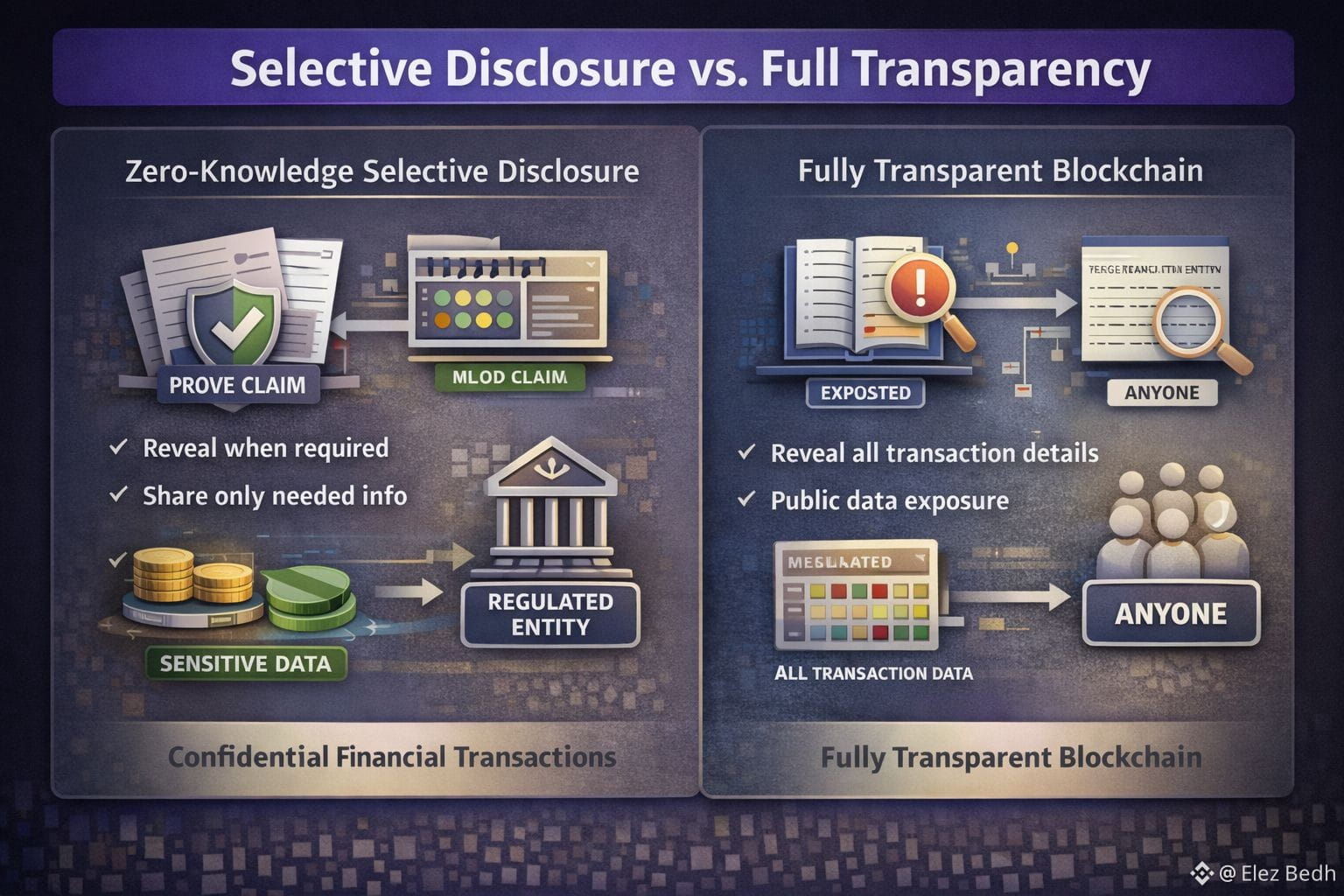
That’s why price discovery can feel “distorted.” In a deeper market, price is the result of many participants constantly disagreeing and rebalancing. In a thin market, price is often just the result of whoever showed up last. When most supply is parked in staking, the market ends up reflecting liquidity constraints more than true conviction.
The risks follow naturally. Liquidity depth is a practical constraint—especially for larger allocators who need to enter and exit without becoming the market. Adoption pacing matters because regulated integrations usually move slowly; if real usage ramps gradually, the token can stay stuck in thin-float dynamics longer than people expect. And regulatory coordination is not just “will regulators like it,” but “can multiple institutions agree on disclosure rules, permissions, and reporting formats without turning every integration into a custom project.”
The takeaway is simple: Dusk behaves like a back-office financial system because it’s built around finality discipline, validator accountability, and controlled disclosure. But the token won’t trade like mature infrastructure until the market structure matures too. If you want alignment, you don’t need louder narratives—you need deeper, boring liquidity and steadier participation so the token reflects the system’s maturity instead of the market’s thinness.
