
Over the past months, the conversation around Dusk has slowly shifted from short-term price speculation to something far more meaningful: how to properly hold and use native $DUSK on mainnet. This evolution shows maturity in the community. The Genesis onramp was not just another “bridge” announcement; it was the official gateway that allowed early participants to migrate their balances into the network’s initial state so their holdings existed from the very first blocks. That detail is crucial, because Dusk is not simply another token — it is the operational fuel of a privacy-focused blockchain designed for compliant, confidential smart contracts and real financial use cases.
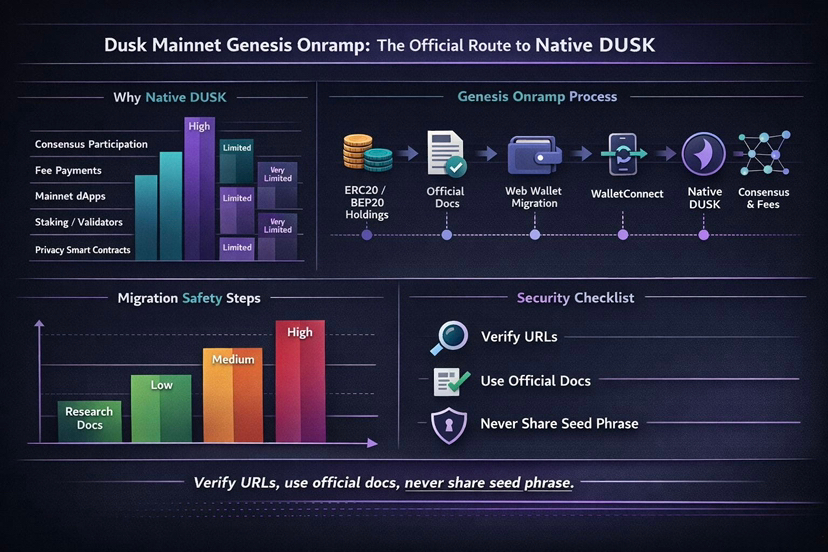
Remaining on ERC-20 or BEP-20 versions of $DUSK limits functionality, especially when it comes to staking, governance participation, and paying network fees. Native tokens unlock the full ecosystem experience, including consensus involvement and access to privacy-preserving applications that are central to the Dusk vision. For users who missed the Genesis window, the migration path still exists through the official web wallet and WalletConnect-compatible wallets. However, caution is essential: always start from official documentation, verify URLs, and treat migration links with the same skepticism you would apply to suspicious emails.
The long-term value of Dusk lies not only in market charts but in infrastructure readiness and user education. As adoption grows, understanding how to securely hold and migrate native assets becomes part of responsible participation. Following updates from @Dusk and staying aligned with official channels ensures that users remain both safe and empowered while exploring the expanding utility of $DUSK .