
@Vanarchain RPC nodes are the quiet middle layer of a Vanar-based app: not the chain itself, but the doorway almost every wallet, dashboard, and bot walks through. When you add Vanar Mainnet to an EVM wallet, the “network” details you paste in are really a promise that a URL will answer questions and forward transactions. Vanar’s docs publish a public HTTP RPC endpoint, a WebSocket endpoint, chain ID 2040, and an official explorer.
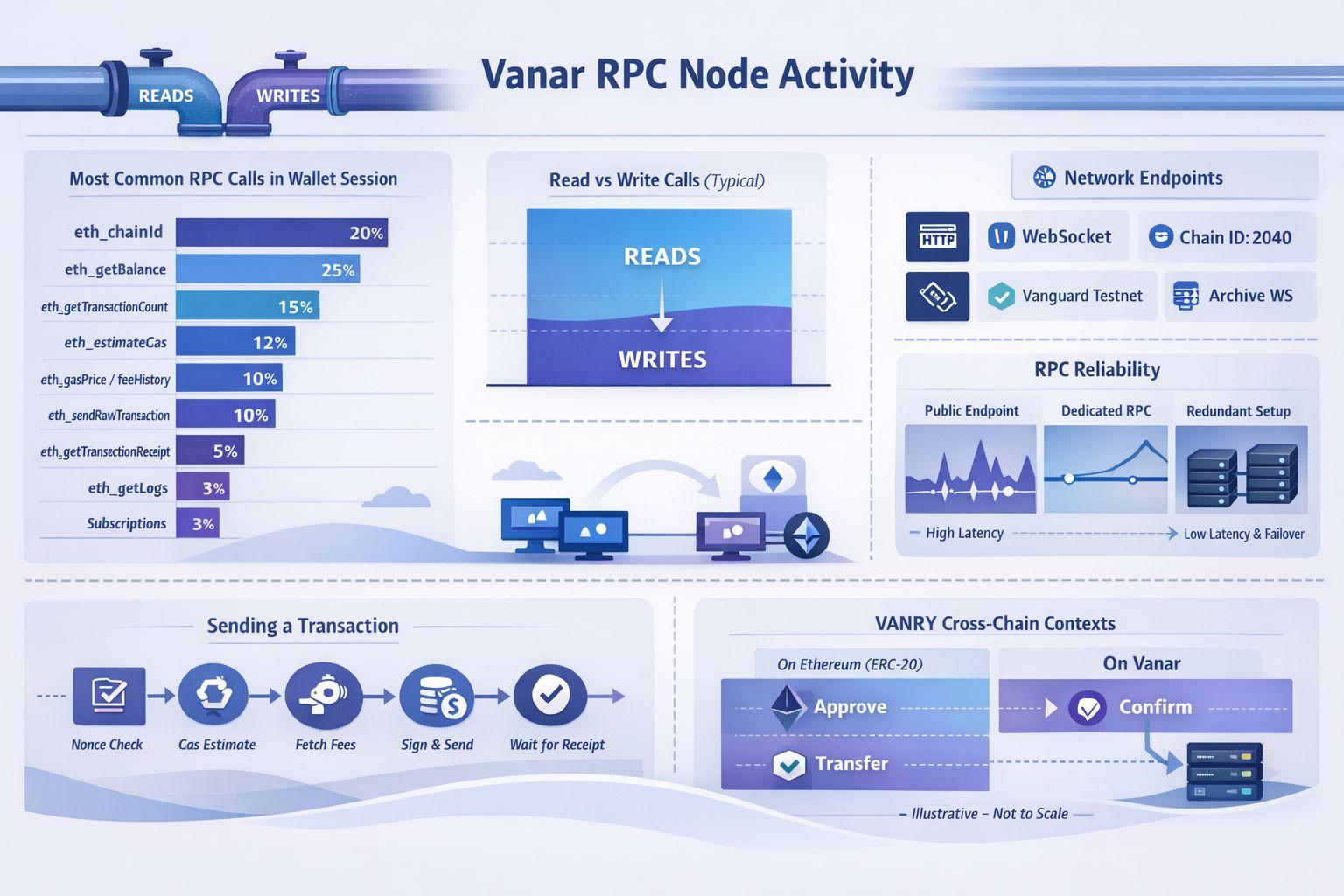
Because Vanar is EVM compatible and built as a fork of Geth, the RPC layer feels familiar if you’ve used Ethereum tooling: JSON-RPC over HTTP for one-off requests, and WebSocket for subscriptions that stream new blocks or event logs. I think of an RPC node as two pipes. One pipe reads state—balances, contract data, receipts, and logs. The other pipe broadcasts signed transactions into the peer-to-peer network. When either pipe gets noisy with timeouts, stale responses, or rate limits, the chain itself gets blamed. In reality, many “network issues” are just RPC issues. Public endpoints are shared, so traffic spikes can surface as weird timeouts. A dedicated RPC—self-hosted or paid—doesn’t add magic; it removes an avoidable variable and reduces data exposure for serious apps.
VANRY enters the story in two distinct ways, and the split matters when you’re reading network calls. On Vanar mainnet, VANRY is the native currency symbol, so the most frequent VANRY-related activity isn’t a token contract call at all; it’s native balance checks and fee math. Open a wallet and you’ll commonly see eth_chainId to confirm you’re on 2040, eth_getBalance to fetch your VANRY balance, and eth_getTransactionCount to fetch your nonce. Before you send anything, the app will ask eth_estimateGas, then query fees (eth_gasPrice or feeHistory), then it broadcasts with eth_sendRawTransaction. After that, it polls eth_getTransactionReceipt until the transaction is mined and the paid VANRY fee is reflected in your balance. If you’re watching a UI that updates live, it’s often WebSocket subscriptions (new block headers or filtered logs) doing the work, not constant HTTP polling.
The other VANRY reality is cross-chain and, for newcomers, occasionally confusing, especially after Virtua rebranded and the ticker moved from TVK to VANRY with a 1:1 swap. On Ethereum, VANRY exists as an ERC-20 with a public contract address tracked by explorers, and that ERC-20 version is what many exchanges and bridges interact with. If you bridge via a flow like thirdweb’s, you often see two RPC conversations: on Ethereum you read balances and allowances, then send approve and transfer transactions; on Vanar you check the incoming result and confirm finality. In logs, it looks like eth_call, eth_sendRawTransaction, eth_getLogs for Transfer events, and receipt polling on both sides.
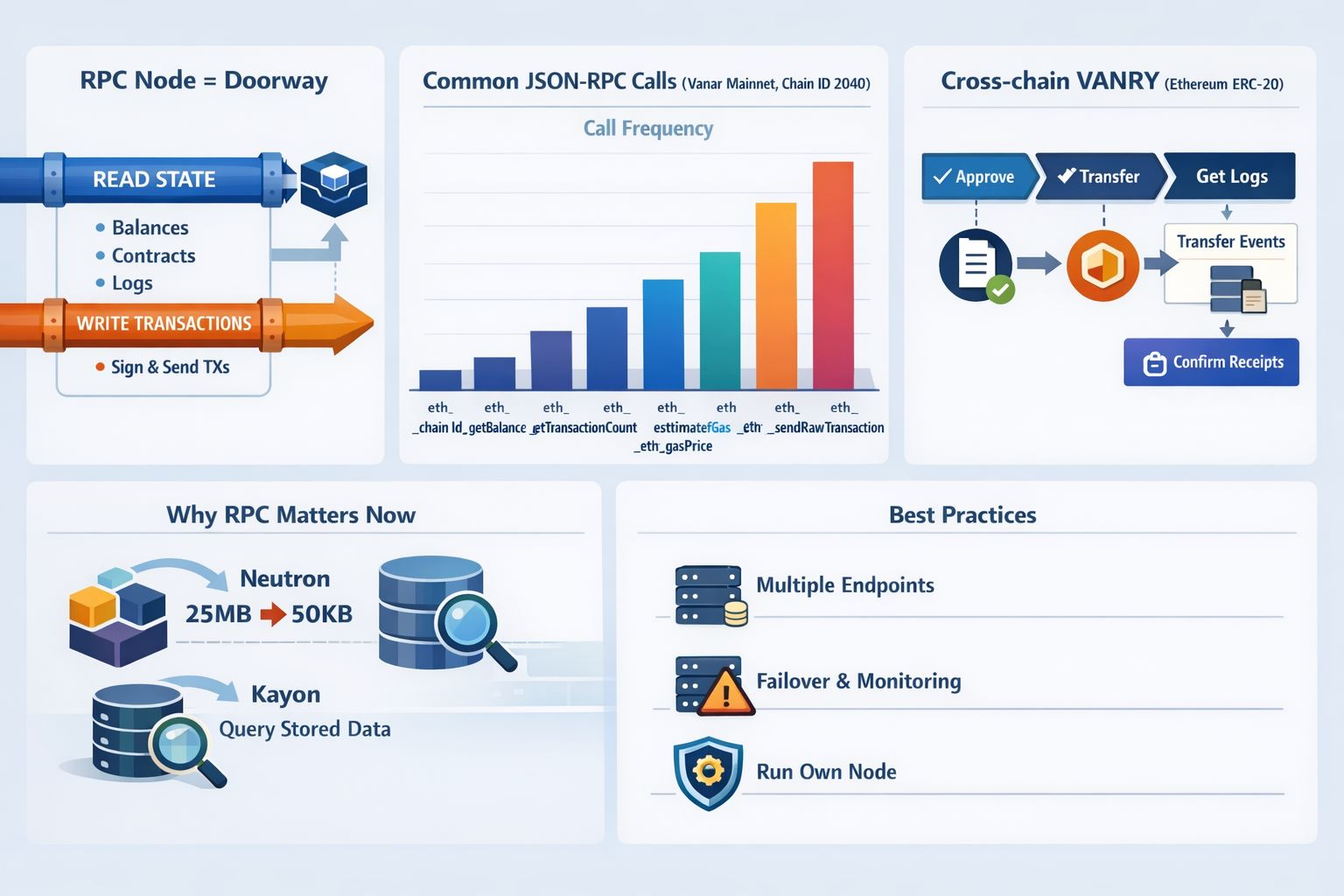
So why are RPC nodes on Vanar getting extra attention right now, instead of being treated as background plumbing? Some of it is basic ecosystem growth: Vanar maintains a Vanguard testnet with its own RPC and WebSocket endpoints, which lowers the cost of experimenting and debugging without risking real funds. But the bigger driver is that Vanar is pushing patterns that are heavier on reads. Neutron is described as compressing large files into much smaller on-chain objects, with a concrete 25MB-to-50KB example. Vanar also describes Kayon as a layer that lets smart contracts and apps query and reason over stored data, which implies more calls, more subscriptions, and more pressure on RPC reliability. The testnet details even include an archive WebSocket endpoint, which is a quiet hint that some builders are already doing deeper history queries, not just “latest block” reads.
That visibility is why the most grown-up Vanar RPC decision is usually boring: don’t rely on a single public endpoint for anything you care about. Vanar’s node guide explicitly recommends running RPC “as a service” to avoid disconnections. In practice, redundancy is sanity: multiple endpoints, clear fallback logic, and monitoring for latency and error rates. I’m opinionated here in a calm way: reading your own RPC logs for an hour is one of the fastest ways to understand what your app actually does, and what it demands from the chain. Vanar’s docs also note you can run your own node for exclusive access and faster data availability.