

I accepted gas the same way most people in crypto do. As a given. Something you complain about, work around, and eventually learn to tolerate. It was just the cost of using decentralized systems.
You keep a little extra balance ready. You double-check networks. You hope fees don’t spike at the worst possible moment. It becomes routine after a while.
And if you’ve been around long enough, you almost stop noticing how strange that is.
Because outside of crypto, almost no one thinks like that.
I didn’t really question it until I started paying attention to how normal payment apps feel. You open an app. You tap a button. The payment goes through. You don’t think about infrastructure. You don’t think about fees moving between layers. You don’t think about what token is required to make the system function.
It just works.
That contrast stayed in the back of my mind for a while. Especially whenever I saw new users struggle with the simplest on-chain actions. Not because they didn’t understand crypto, but because the experience itself was asking too much from them.
That’s when I started noticing conversations around gas abstraction on Plasma.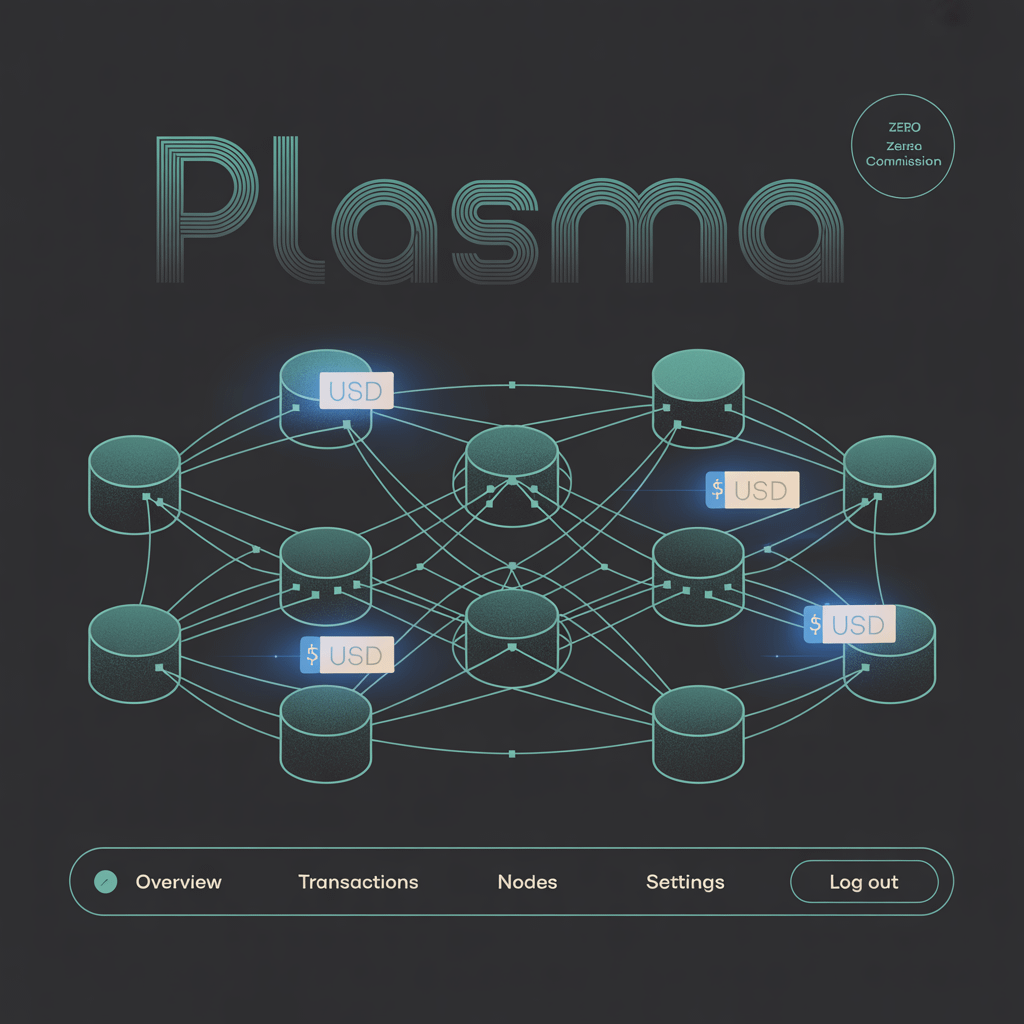
At first, it sounded like another technical improvement. One of those things that developers care about, but regular users barely notice. Crypto has a lot of those. Small changes that make systems more efficient behind the scenes.
But the more I thought about it, the more it felt like something bigger than just a technical tweak.
Because gas has always been one of the quiet friction points in crypto.
Not the kind that makes headlines. But the kind that makes people hesitate. You want to send something, but you realize you don’t have the right token for fees. You want to interact with an app, but there’s an extra step before you can even start. You pause. You figure it out. You move forward.
It doesn’t sound like much.
But every extra step changes how something feels.
Web2 figured this out a long time ago. Payment apps hide complexity. Fees are either invisible or bundled. The user experience is smooth because the infrastructure stays out of the way. People focus on what they want to do, not what they need to manage to make it happen.
Crypto, on the other hand, has always exposed its inner workings. You see the networks. The tokens. The gas. The confirmations. For power users, that transparency feels normal. For everyone else, it feels like friction.
That’s where gas abstraction on Plasma started to make more sense to me.
Instead of expecting users to think about gas every time they do something, the system moves that complexity into the background. The interaction becomes simpler. More direct. Closer to how people already expect digital payments to work.
And that shift feels subtle until you imagine what it changes.
You don’t need to explain to a new user why they need a specific token just to complete an action. You don’t need to walk them through multiple steps before they can even begin. The experience starts to feel less like operating a system and more like using a service.
That’s a very Web2 lesson.
Good UX isn’t about showing everything. It’s about removing what doesn’t need to be seen.
What I find interesting is that gas abstraction doesn’t remove the underlying mechanics. The infrastructure is still there. Fees still exist. Transactions still need to be processed. But the responsibility of handling all that starts to shift away from the user.
And that matters more than it sounds.
Because the biggest gap between Web2 and Web3 has never really been about capability. It’s been about comfort. People are used to systems that feel simple, predictable, and forgiving. Crypto, for all its power, often feels the opposite. Precise. Rigid. Easy to get wrong.
Small UX changes can quietly change that perception.
Plasma’s approach to gas abstraction feels like it’s pulling from that Web2 mindset. Not by copying it entirely, but by recognizing that people don’t want to think about infrastructure every time they make a simple transaction.
They just want the action to work.
I used to think this kind of improvement was minor. Something nice to have, but not essential. Over time, that perspective started to shift. Because the more mainstream crypto tries to become, the less room there is for confusing entry points.
Every extra step filters people out.
Every moment of hesitation adds friction.
And gas has always been one of those silent barriers that experienced users forget about, but new users feel immediately.
I’m not saying gas abstraction solves everything. There are trade-offs. Someone, somewhere, still has to handle the cost. Systems become more layered. And whenever complexity moves into the background, it raises new questions about who’s managing it and how.
But from a pure user experience perspective, it feels like a step in a direction crypto has needed for a long time.
Less thinking about how to use the system.
More focus on what you’re actually trying to do.
That’s how most successful payment platforms evolved. Not by making users smarter, but by making interactions simpler. By removing steps. By reducing the number of things people need to worry about before they can complete something basic.
Plasma’s take on gas abstraction feels aligned with that idea.
It doesn’t try to change what blockchain is doing underneath. It just changes how much of that complexity reaches the surface. And sometimes, that’s enough to change how people feel about using it in the first place.
I’m still curious to see how far this approach can go. UX improvements don’t always get the attention they deserve in crypto. They’re quiet. They don’t create instant hype. But over time, they shape behavior.
And behavior is what determines whether people come back.
For years, crypto has asked users to adapt to the system. Maybe the next phase is about the system adapting to the user.
If that’s the direction things move in, then lessons from Web2 payments aren’t just helpful.
They’re necessary.