

Vanar feels like the kind of project that doesn’t whisper its ambitions—it shouts them from the rooftops and then builds the rooftop higher. It isn’t trying to be just another Layer 1 in an already crowded sea of blockchains. It’s trying to be the chain that finally makes billions of everyday people use Web3 without even realizing they’re using Web3. And the wild thing is, the more you dig into it, the more you feel like this might actually be possible.
Vanar started life as Virtua, a metaverse-first project, before shedding its old skin and transforming into something much bigger. The switch to the Vanar identity wasn’t just a rebrand; it was an evolution. The team took all the lessons from building games, virtual worlds, AI tools, and digital economies and poured them into a brand-new chain designed to be fast, cheap, smart, and friendly to people who have never touched a crypto wallet. They didn’t just want a blockchain. They wanted a bridge—something that could connect gamers, brands, creators, companies, and normal everyday people directly into the heart of Web3 without friction.
And that goal shaped everything.
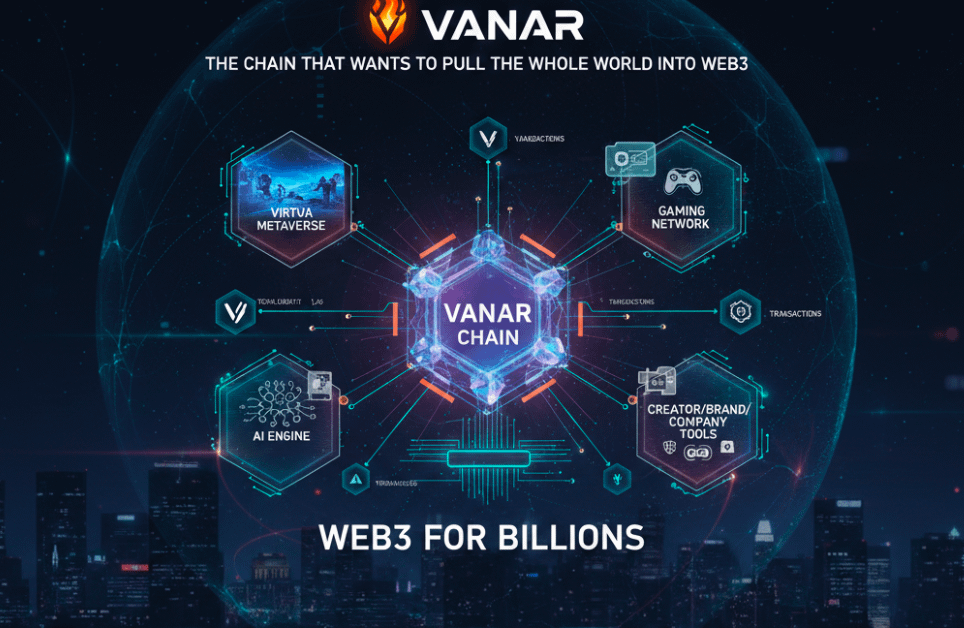
When you look at Vanar’s chain design, you see something built for real use. Transactions happen in milliseconds, and the cost is so tiny you could run millions of micro-payments without blinking. Developers don’t need to learn exotic tools; it’s EVM-compatible, so they can port anything they already built. At the same time, Vanar injects something fresh into the mix: AI is baked straight into the infrastructure. Not as a gimmick but as a core ingredient. Semantic compression shrinks huge data into tiny vectorized packages. On-chain inference engines let apps behave intelligently. Even the user experience leans on AI to make onboarding smoother than anything most blockchains offer today.
The people behind Vanar have spent decades in gaming, tech, and entertainment, and you can feel that influence everywhere. This is a chain obsessed with delighting the user. A chain that understands the psychology of gamers. A chain that knows brands don’t want complexity—they want smooth, scalable solutions that feel familiar. And that’s why Vanar built not just a chain but an entire universe around it: the Virtua metaverse, the VGN gaming network, the myNeutron AI engine, and tools designed for creators, companies, and newcomers who don’t care about blockchains—they just want things to work.
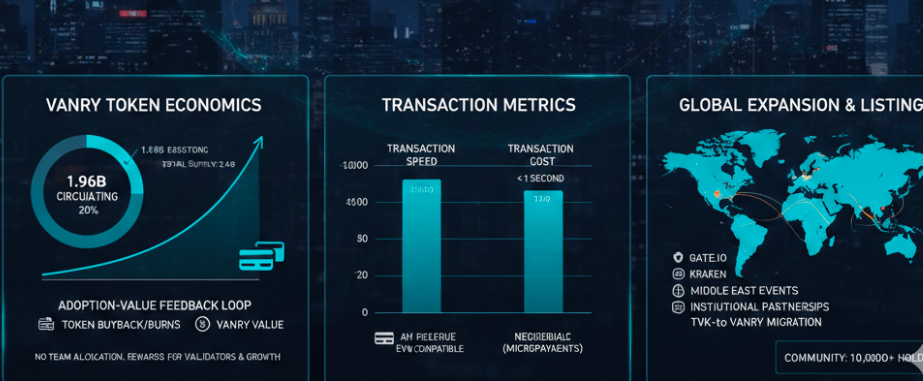
Everything in the ecosystem revolves around the VANRY token. It powers transactions, fuels AI services, rewards validators, and eventually becomes the community’s voice in governance. The supply is capped at 2.4 billion, with around 1.96 billion already circulating as of late 2025. What’s unusual—and refreshing—is that no portion was reserved for the founding team. Rewards go to validators and ecosystem growth, not private insiders. Vanar even links AI revenue to token value: subscriptions for tools like myNeutron feed back into the VANRY economy through buybacks, burns, and redistribution. If adoption climbs, the token feels it.
Listings have also been expanding. Gate, Kraken, and other platforms have onboarded VANRY, giving it global visibility. The community has grown to thousands of holders, with more joining through the completed TVK-to-VANRY migration that marked the chain’s rebirth. Vanar has also been making noise across major crypto events, especially in the Middle East, signaling that it’s actively trying to build institutional, government, and enterprise relationships—not just retail hype.
Of course, no emerging chain has a frictionless path. Vanar still needs developers to build, users to adopt, and enterprises to take the leap. It needs dApps that people genuinely want to use. It needs its AI-native concept to mature and prove it’s more than a flashy feature. And as Vanar enters realms like regulated finance, compliance and global regulation will become serious hurdles. But the team seems aware of this, pushing hard on RWA frameworks, brand onboarding, and corporate-friendly integrations.
Yet even with these challenges, Vanar stands out. It’s not trying to be the fastest chain for bragging rights or the most DeFi-heavy chain chasing yield farmers. It’s chasing something harder: real users. Real companies. Real use cases. Real entertainment. Real value. Its entire blueprint feels like a rejection of the “crypto for crypto people” mentality. Instead, Vanar is building for the billions who don’t know what private keys or RPC URLs areand shouldn’t need to.
If Vanar succeeds, people won’t say “I’m on a blockchain.” They’ll just enjoy a game, explore a world, use an AI tool, join a brand experience, make micropayments, or manage digital assets—and Vanar will be the invisible engine quietly running under the hood. That’s the dream. That’s the plan. And that’s why Vanar feels like one of the most intriguing, high-energy, and potentially transformative Layer 1 projects heading into 2026
