
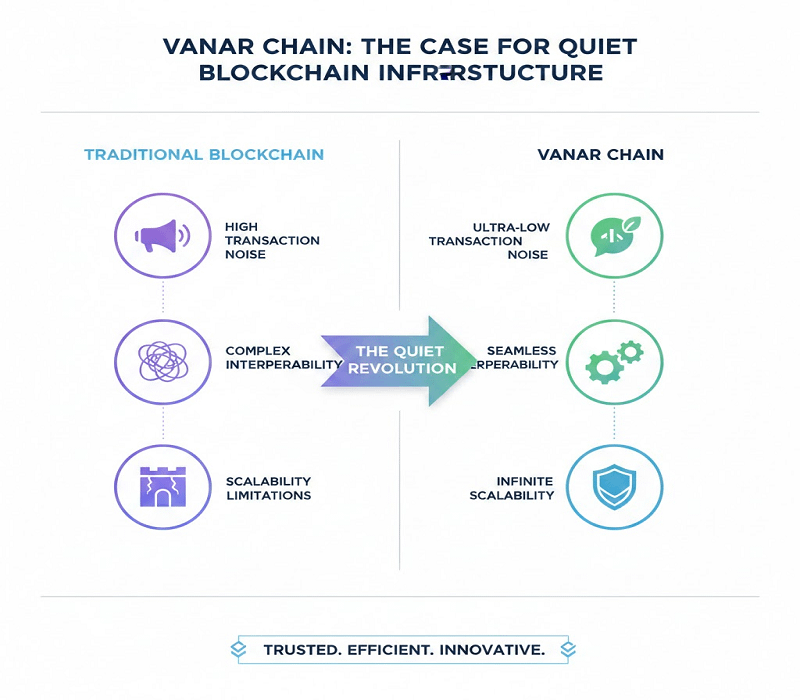
Vanar Chain is not something you notice right away, and that is kind of the point. While most networks try to be seen, Vanar seems more interested in staying out of the way. It behaves more like infrastructure than a product. When it works, you barely think about it.
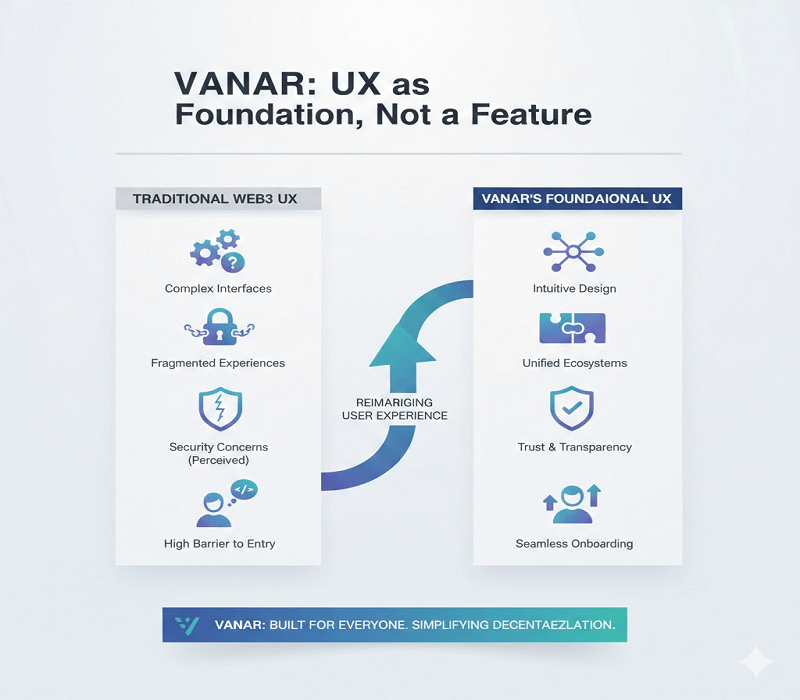
What stands out is the focus on user experience as a baseline, not a feature. Vanar is built with the assumption that most users do not want to learn how a blockchain works. They just want things to load, respond, and feel familiar. In that sense, it is closer to a road system than a destination. You care about it only when it fails.
The $VANRY token exists inside that logic. It supports the system, but it does not define the experience. That matters long term, because adoption usually comes from tools that disappear into normal use, not from ones that constantly demand attention. Watching @Vanarchain over time, the emphasis feels consistent: make the chain usable first, visible second.
There are limits, of course. Competing in infrastructure is slow and often thankless. UX improvements are hard to measure, and real adoption takes patience. If developers do not build, or users do not stay, the design alone is not enough. Still, the approach feels grounded.
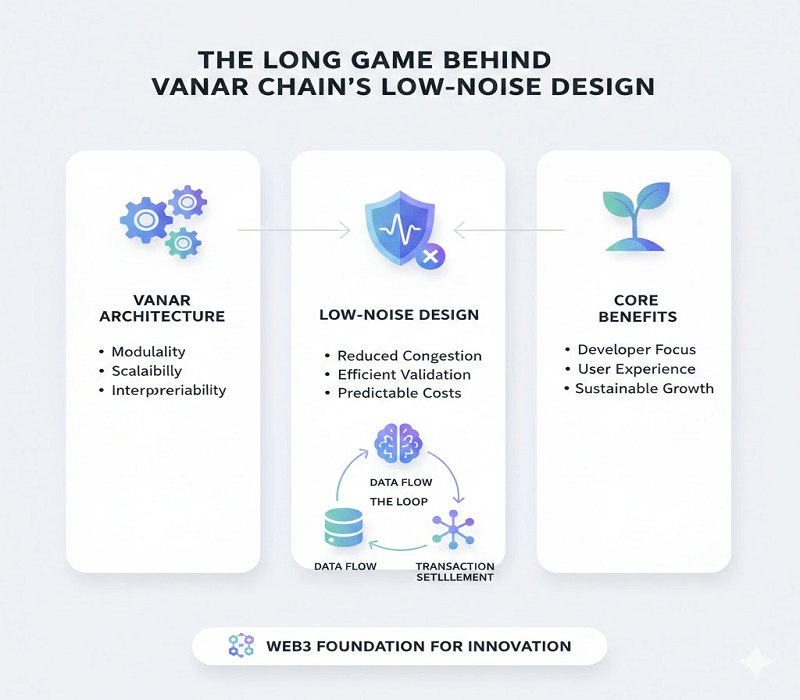
Resources like https://tinyurl.com/vanar-creatorpad suggest a steady attempt to lower friction rather than raise noise. In a space that often rewards volume over durability, #Vanar reads like a long conversation instead of a headline.
