

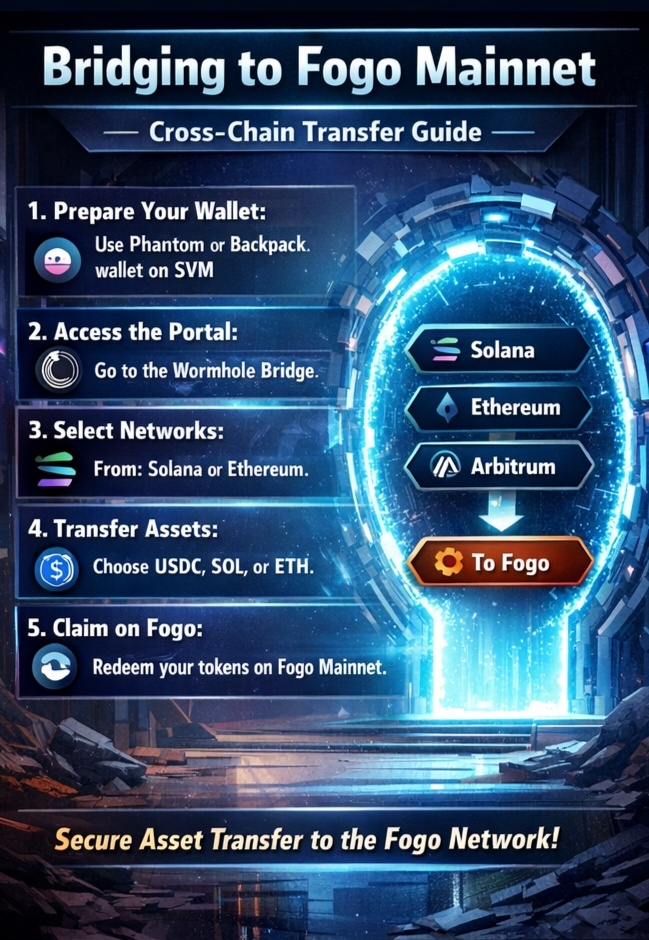
The blockchain landscape of 2026 has moved past the era of general-purpose networks. As decentralized finance (DeFi) matures, the demand for specialized, institutional-grade infrastructure has given rise to Fogo Core. Launched in January 2026, Fogo is not just another Layer 1 it is a vertically integrated execution environment designed to bridge the gap between the speed of Centralized Exchanges (CEX) and the transparency of on-chain settlement. @Fogo Official
By leveraging the Solana Virtual Machine (SVM) and introducing pioneering concepts like Colocation Consensus, Fogo has established itself as the Nasdaq of the Blockchain.
1. SVM L1 Compatibility: The Architecture of Speed
@Fogo Official Fogo’s foundation is built upon the Solana Virtual Machine (SVM), widely regarded as the most efficient execution environment in the industry. However, FOGO does not merely fork Solana; it optimizes the SVM for a specific vertical: high-frequency trading (HFT).
Parallel Processing Power
The SVM allows for parallel transaction processing Unlike Ethereum which processes transactions in a single line (sequential), the SVM identifies transactions that do not affect the same state and processes them simultaneously. This allows Fogo to handle massive bursts of trading activity without the "bottleneck" effect seen on legacy chains.
Seamless Developer Migration
For developers, SVM compatibility means that the entire library of Solana tools—Anchor, SPL tokens, and existing smart contracts—can be deployed on Fogo with near-zero modifications. This has allowed #fogo to launch its mainnet with a fully formed ecosystem, including DEXs like Valiant and lending protocols like Pyron.
2. Colocation Consensus: Defying the Laws of Physics
The most significant technical breakthrough of Fogo is its Colocation Consensus model. In traditional networking, the speed of light is the ultimate limit; the further a signal has to travel between nodes, the slower the consensus.
Multi-Local Validator Hubs
Fogo addresses this by organizing its validators into geographical zones or hubs located near major financial data centers in Tokyo, London, and New York.
Reduced Quorum Distance: By ensuring that a majority of active validators are physically close to each other, Fogo minimizes propagation delay.
40ms Block Times: This proximity allows Fogo to achieve a staggering 40-millisecond block time—roughly 10x faster than Solana and 18x faster than Sui.
Global Resilience: While the active consensus happens within these high-speed hubs, global backup nodes ensure that the network remains decentralized and resilient against regional outages.
3. Fogo Core: The Vertically Integrated Tech Stack
Fogo’s No Bullsht mantra is rooted in its engineering. The team, led by veterans from Citadel and Jump Crypto, implemented a pure Firedancer-based validator client. This client uses kernel bypass and zero-copy data streams" to move data directly from the network card to the CPU, bypassing the traditional operating system lag.
Enshrined Infrastructure
Unlike other chains where traders must rely on third-party services, Fogo "enshrines" core components at the protocol level:
Native Price Oracles: Price feeds are integrated directly into the consensus, providing millisecond-accurate data for liquidations and swaps.
MEV Mitigation: The speed of Fogo’s 40ms blocks leaves almost no "latency floor" for MEV bots to front-run retail orders, creating a fairer vacuum track for all participants.
Enshrined DEX: A built-in liquidity layer ensures that every dApp on Fogo can tap into a unified pool of assets without fragmentation.
4. The Trading Ecosystem: A New Era for DeFi
The Fogo Mainnet launch wasn't just a technical milestone; it was the birth of a high-octane financial ecosystem. By moving the order-book experience on-chain, Fogo has enabled strategies that were previously impossible in a decentralized setting.
Key Ecosystem Pillars
Valiant DEX The flagship central limit order book CLOB that mimics the UI/UX of Binance but settles entirely on Fogo Core.
FluxBeam: A real-time trading platform focusing on advanced limit orders and automated grid trading.
Liquid Staking (Brasa): Allows users to secure the network while maintaining liquidity for trading, utilizing the native FOGO token.
5. Tokenomics and the FOGO Economy
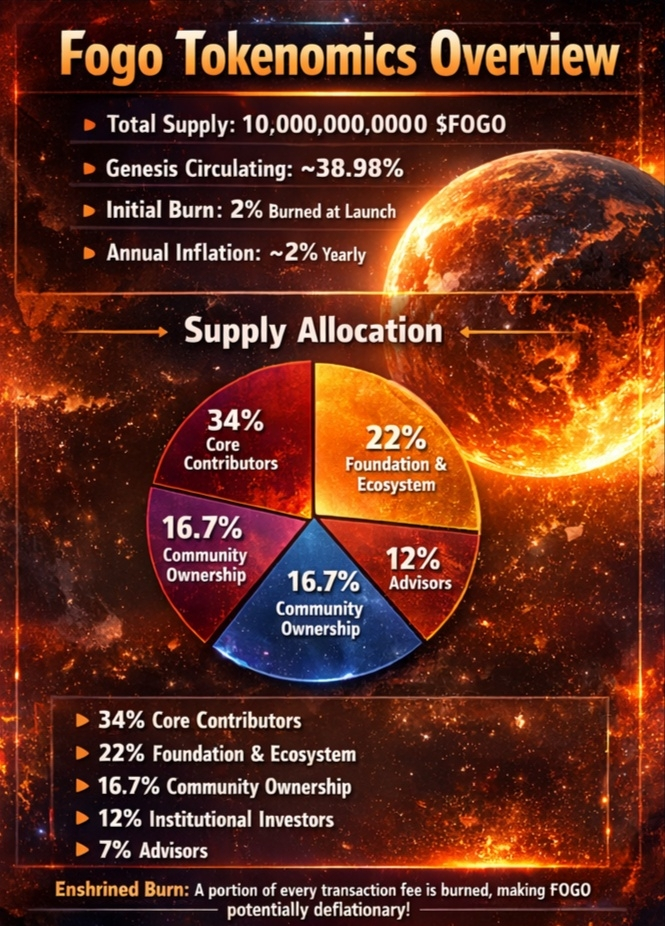
The FOGO token is the lifeblood of this high-speed engine. Unlike many 2024-era launches plagued by high VC-overhang Fogo opted for a community-heavy cap table.
Network Fuel $FOGO is used to pay for transaction fees. Due to the high-frequency nature of the chain, the burn mechanism from fees creates a constant deflationary pressure.
Institutional Staking: Large-scale validators must stake $FOGO to participate in the high-performance hubs, ensuring they have skin in the game.
Governance Holders influence protocol upgrades, specifically regarding the expansion of new Consensus Zones in emerging markets.
6. Conclusion: The Future of the SVM
Fogo Core represents the Performance Premium era of 2026. By choosing specialization over generalization, it has solved the latency tax that has hindered on-chain professional trading for years. With its sub40ms finality and colocation strategy, #fogo isn't just competing for users; it is building the foundation for the next generation of Real-World Assets (RWA) and institutional liquidity.
The mainnet is live, the Flames have been ignited, and the message is clear: In the world of Fogo, if you aren't trading at the speed of light, youre standing still.