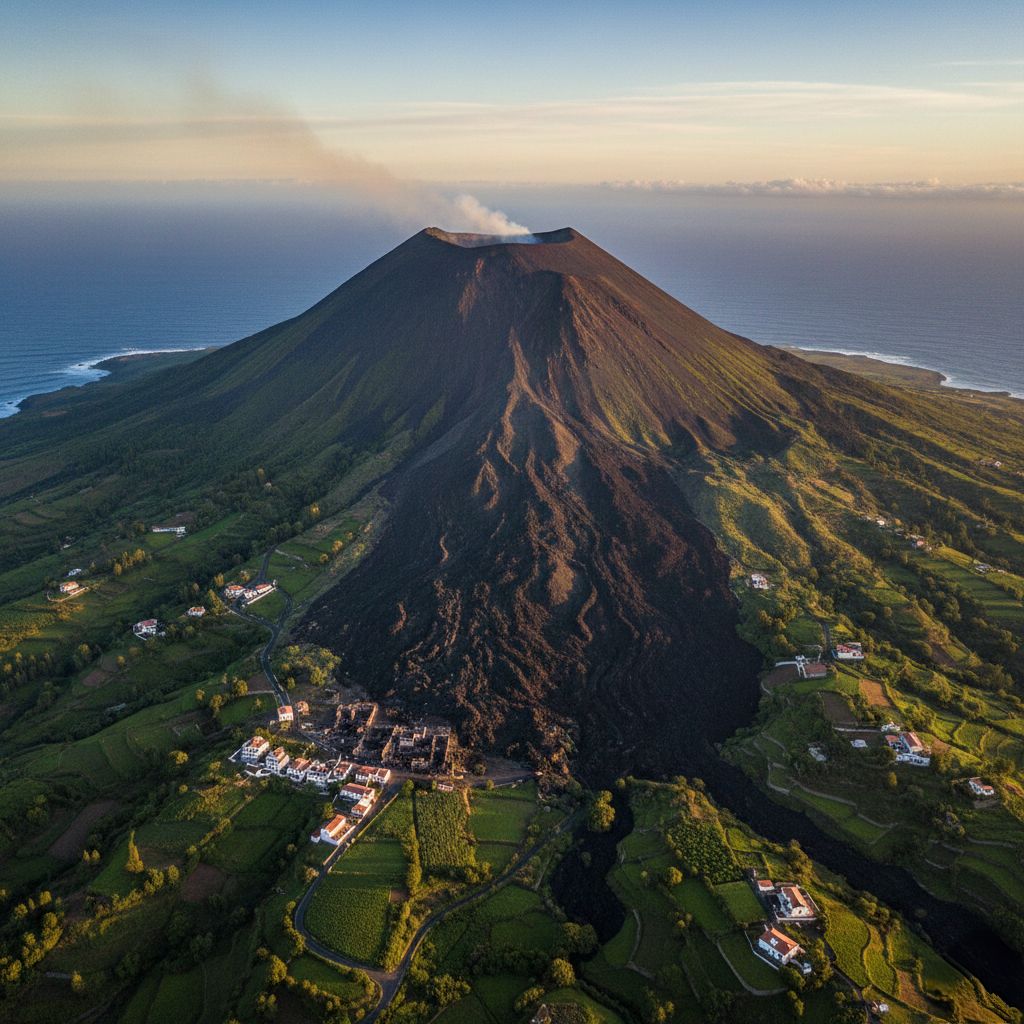
Fogo, one of the Cape Verde islands, is a stratovolcano with a long history of eruptions. It is considered one of the most active volcanoes in the Atlantic, and its recent activity has been closely monitored by scientists.
Here's a brief analysis of Fogo's latest activity:
Current Status: As of [insert latest date of information, e.g., early 2024], Fogo is generally in a quiescent state, meaning there are no active eruptions. However, this doesn't mean it's entirely inactive. Volcanic systems often exhibit periods of unrest even without visible lava flows.
Recent Eruption (2014-2015): The most recent significant eruption of Fogo occurred between November 2014 and February 2015. This event was characterized by effusive activity, producing lava flows that destroyed villages and agricultural land on the island's flanks. The eruption significantly altered the landscape within the caldera and surrounding areas.
Post-Eruption Activity: Following the 2014-2015 eruption, there have been periods of seismic activity and gas emissions, which are normal for an active volcano. These are often indicators of magma movement beneath the surface. Scientists continuously monitor these signals to detect any potential changes in the volcano's behavior
Monitoring Efforts: The Instituto Nacional de Meteorologia e Geofísica (INMG) of Cape Verde, in collaboration with international scientific institutions, maintains a robust monitoring network on Fogo. This includes seismometers to detect earthquakes, GPS stations to measure ground deformation, and gas sensors to monitor volcanic gas emissions.
Potential Hazards: While Fogo is currently quiet, it remains a potential hazard. Future eruptions could pose risks to the local population, including lava flows, ashfall, and the release of volcanic gases. Understanding the volcano's behavior and maintaining effective monitoring systems are crucial for early warning and mitigation efforts
Ongoing Research: Researchers continue to study Fogo's eruptive history, magma plumbing system, and the factors that trigger its eruptions. This research is vital for improving eruption forecasting and risk assessment for the communities living on the island
Here's an image of Fogo: