


I didn’t expect gas fees to be the thing I stopped thinking about on Fogo. After a few trades inside the ecosystem, I realised I wasn’t checking balances before every action anymore. No topping up tokens just to press confirm. Some applications simply covered the transaction cost.
The difference shows up immediately in behaviour. On most networks I hesitate before small actions. Is this swap worth the fee? Should I batch transactions? On Fogo I placed smaller orders, tested interfaces faster and retried without worrying about wasting money. Trading felt closer to using a regular exchange than managing a wallet.
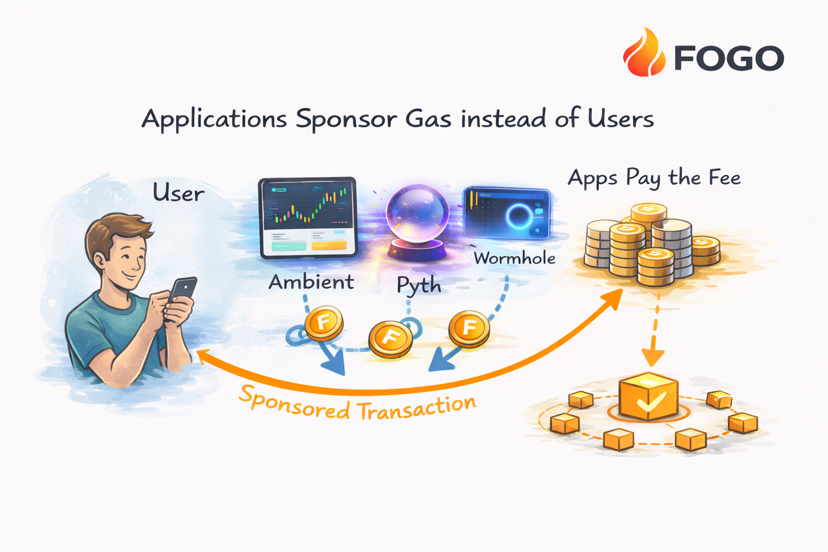
Fogo changes the logic by letting applications sponsor gas. Ambient executes trades while Pyth already feeds pricing data into the system, so confirmation happens without extra steps. The user experience becomes simple: choose the trade and execute. No separate gas calculation.
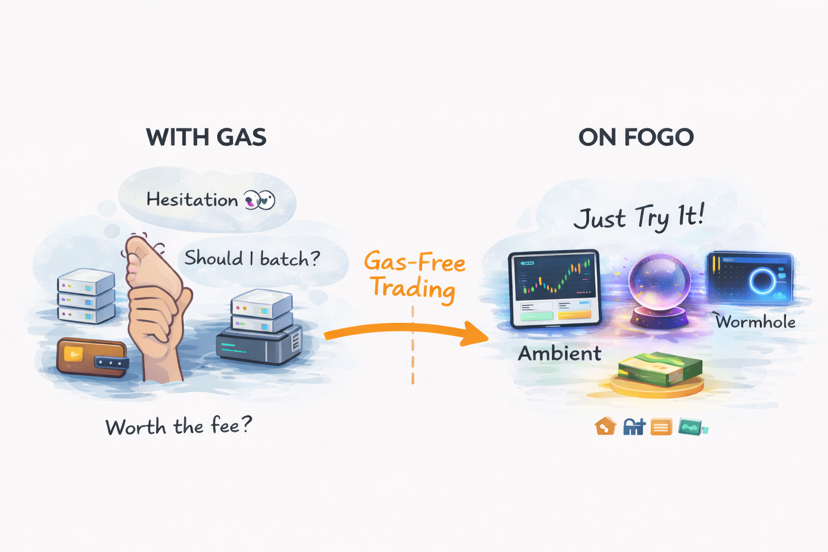
Of course, zero gas doesn’t mean zero cost. Someone still pays validators. Here that responsibility moves to the application itself. Protocols decide who receives sponsored transactions and how often. That creates a filter against spam because a DEX won’t endlessly fund meaningless activity.
From a market perspective it changes competition. If one platform removes friction while another still asks users to manage fees, the choice becomes obvious. More attempts, faster reactions and smaller orders suddenly make sense again.
After testing it myself, Fogo doesn’t feel like a chain trying to be cheaper. It feels like a network trying to remove hesitation between decision and execution. The real question is whether sponsored gas becomes a long-term advantage or simply the new expectation traders start demanding everywhere.