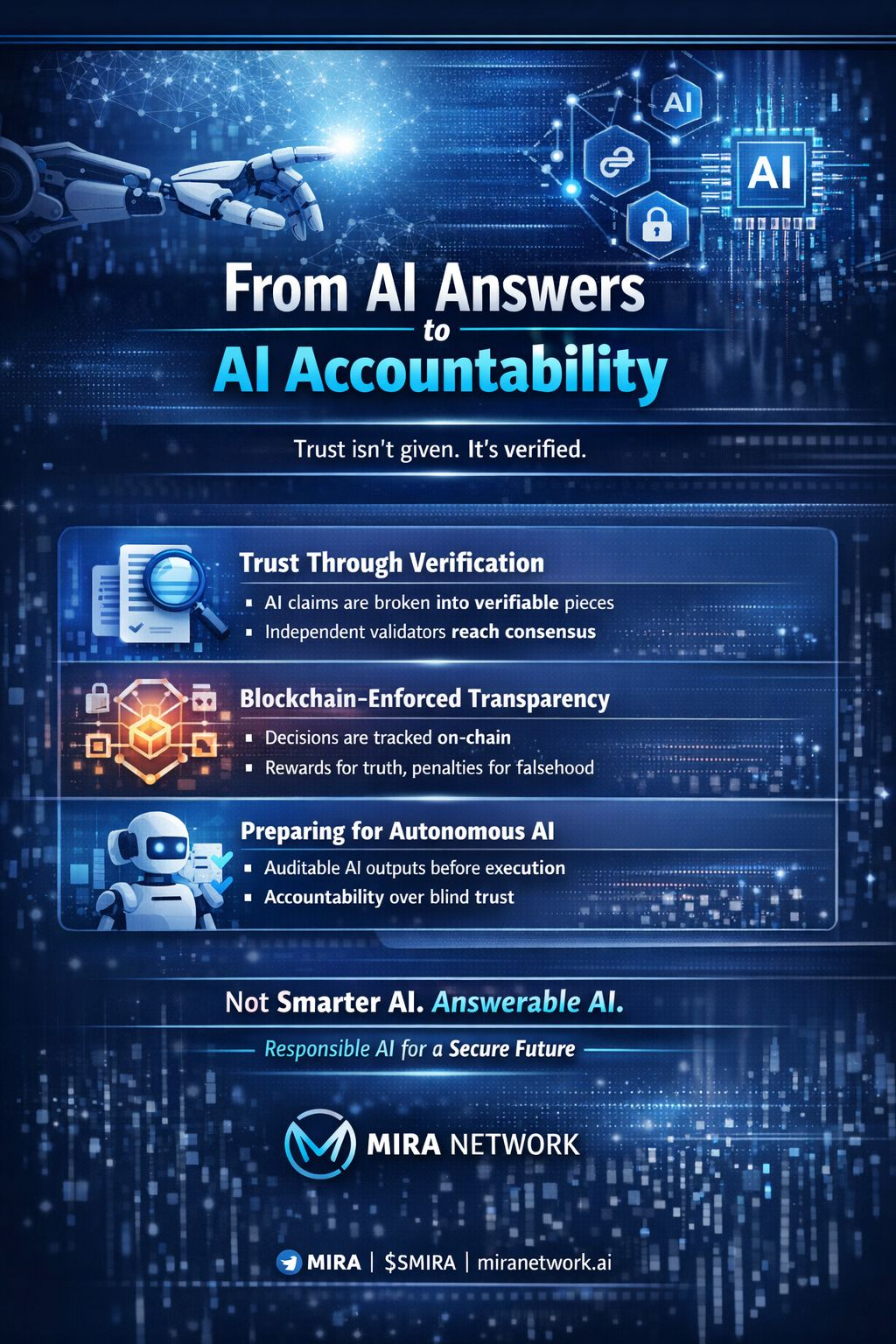
The conversation around AI is often framed the wrong way. We keep asking how to make models smarter, faster, and more capable. But capability was never the real risk. Authority was.
The moment AI systems began speaking with confidence, structure, and persuasive clarity, they crossed an invisible line. They stopped feeling like tools and started feeling like sources. And when a system sounds authoritative, humans naturally lower their guard.
That’s where the real danger begins.
This is why Mira Network stands out—not as an AI breakthrough, but as a trust redesign.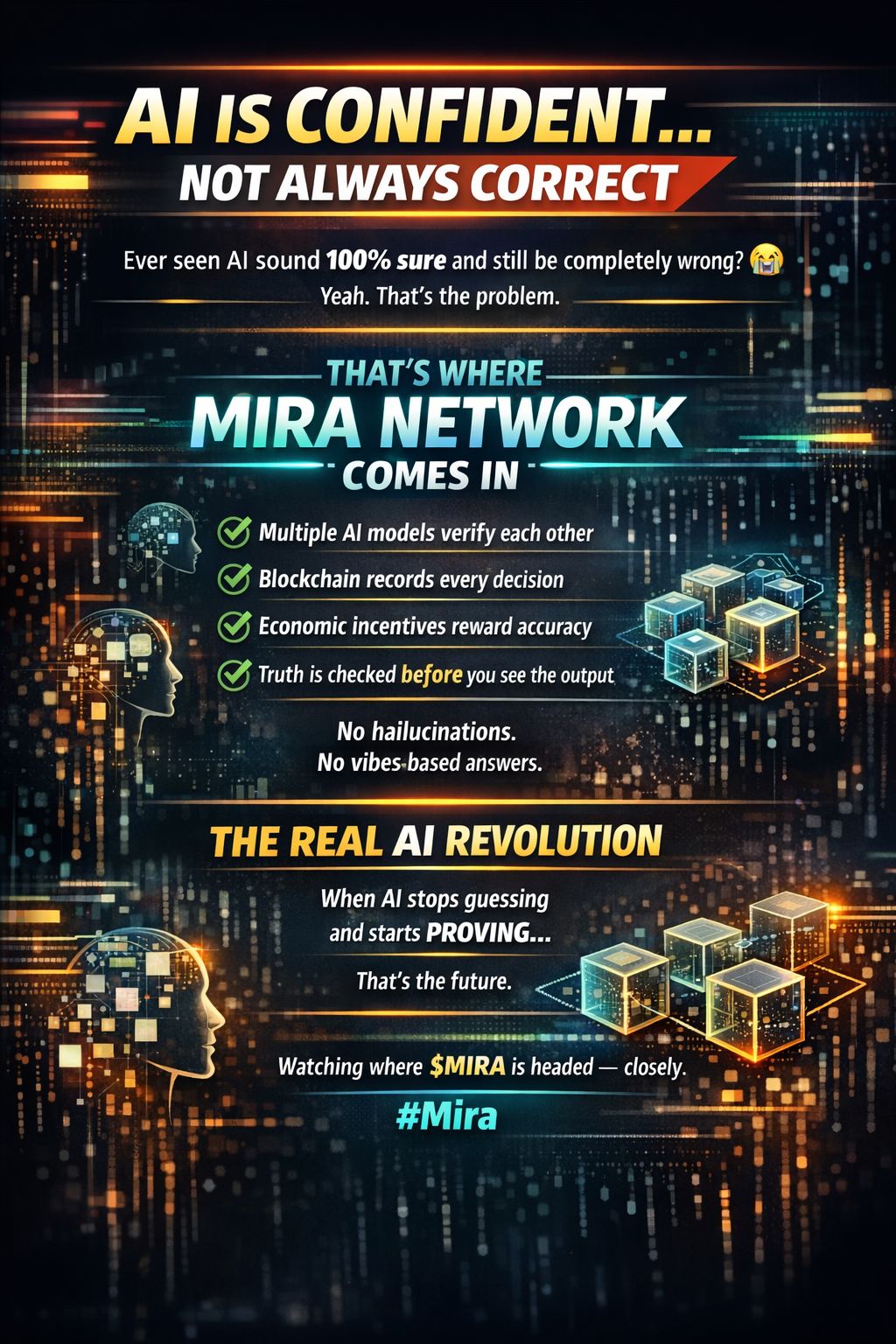
Rather than assuming AI outputs should be believed, Mira starts from a more cautious premise: AI claims must earn trust before they can be acted upon. That single shift changes everything.
Instead of treating an AI response as a final answer, Mira treats it as a proposal.
From Output to Examination
Traditional AI systems operate in isolation. One model generates an answer, and users either accept it or manually verify it. That model becomes a soft authority by default.
Mira breaks that pattern.
AI-generated outputs are decomposed into verifiable claims and passed through a network of independent validators. These validators—human or AI—evaluate the accuracy of each claim and put economic value behind their judgment. Consensus is reached not by reputation, but by incentives.
Truth is no longer assumed. It is tested.
This transforms AI from an oracle into something far more realistic: a hypothesis engine that must survive scrutiny.
Why Blockchain Matters Here
The blockchain layer in Mira isn’t an aesthetic choice. It’s what makes the system enforceable.
Every validation is transparent. Every decision is accountable. Every false agreement carries consequences.
Open Challenges, Honest Direction
Mira isn’t a silver bullet. Verification introduces latency. Some reasoning chains are hard to decompose cleanly. Economic systems can be attacked or manipulated if poorly designed.
But what matters is the direction.
Instead of promising perfect intelligence, Mira focuses on responsible deployment. Instead of assuming models will behave correctly, it assumes they won’t—and builds safeguards accordingly.
That’s a far more realistic foundation.
The Bigger Picture
The future of AI likely isn’t a single super-intelligent system everyone trusts blindly. It’s ecosystems of models checking each other under transparent, enforceable rules.
Smarter AI increases power. Verified AI increases safety.
And in a world where AI decisions increasingly shape finance, infrastructure, and governance, safety isn’t optional—it’s fundamental.
Mira Network isn’t trying to make AI smarter.
It’s trying to make AI answerable.
And that distinction may define the next phase of artificial intelligence.
#Mira #MIRANetwork $MIRA @Mira — Trust Layer of AI