
📊 Análise Fundamental: Fundação Fabric & Criptomoeda ROBO
O que é a Fundação Fabric?
A Fundação Fabric é uma organização independente sem fins lucrativos focada na construção de infraestrutura descentralizada para a economia robótica emergente — onde sistemas de IA autônomos e robôs interagem, coordenam e transacionam em cadeia. Sua missão é garantir que máquinas inteligentes operem com segurança, permaneçam alinhadas com os humanos e contribuam amplamente para a atividade econômica, em vez de serem controladas por alguns atores centralizados. �
Fundação Fabric +1
A Fundação financia pesquisas, modelos de governança, padrões de identidade, sistemas de verificação e ferramentas de bem público que permitem a interação transparente e coletiva entre máquinas e humanos. �
Fundação Fabric
🧠 O que é o Token ROBO?
$ROBO é o token nativo de utilidade e governança dentro do ecossistema Fabric. Ele desempenha um papel econômico fundamental ao possibilitar:
Logística de rede: $ROBO é usado para pagar taxas de verificação de identidade, transações e coordenação de robôs no protocolo. �
Fundação Fabric
Staking & participação: Participantes apostam ROBO para obter acesso a primitivos de coordenação, ativação de robôs e priorização nos mecanismos do protocolo. �
@Fabric Foundation 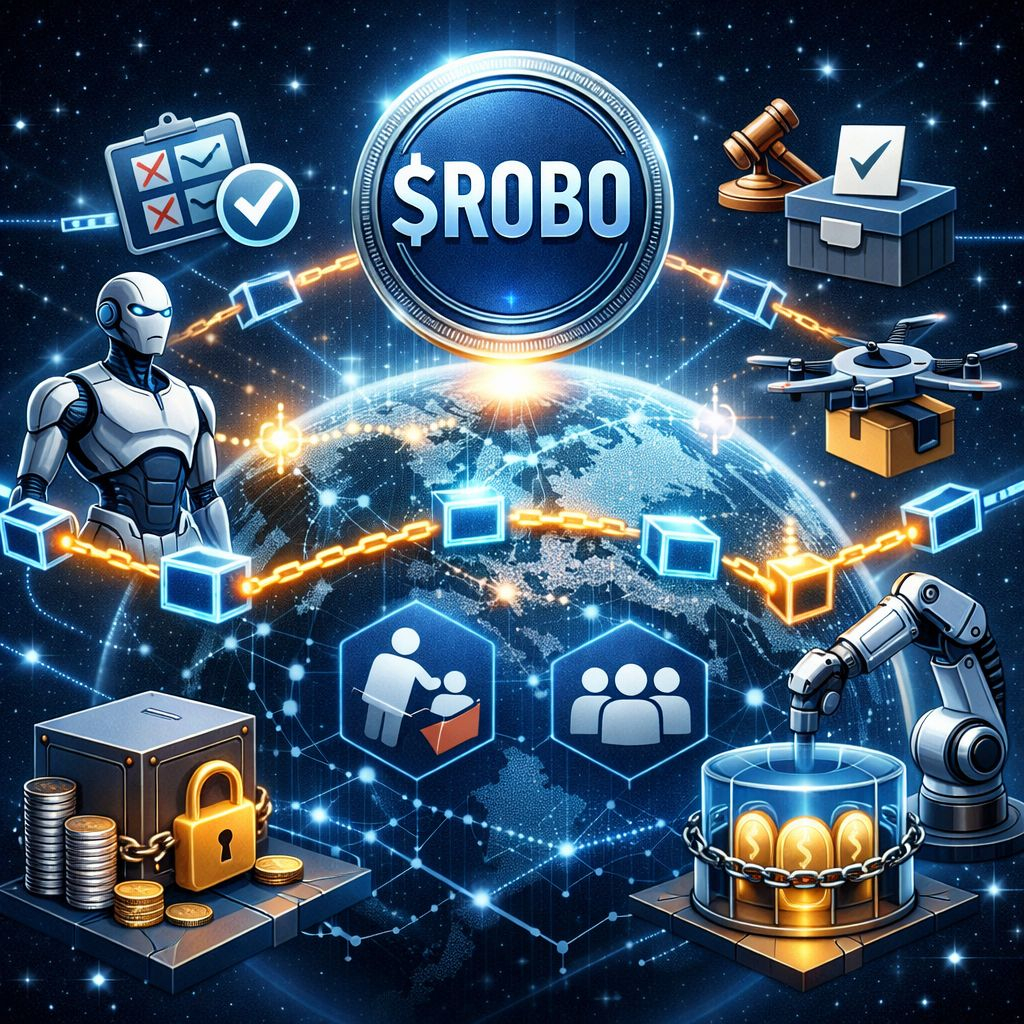 Fundação Fabric
Governança: Detentores de tokens podem votar em alterações de parâmetros ou atualizações futuras do ecossistema. �
MEXC
Incentivos do ecossistema: Uma parte dos tokens (cerca de ~29,7%) é alocada para apoiar atividades comunitárias e desenvolvimento. �
Bingx Exchange
O suprimento total é fixo em 10 bilhões de tokens, com cronogramas de vesting voltados para a estabilidade de longo prazo em vez de vendas imediatas. �
Bingx Exchange
🚀 Desenvolvimentos Recentes
📈 Listagens em Bolsas & Integração de Mercado
Binance Alpha / KuCoin: $ROBO acaba de ser listado para negociação em grandes bolsas, como a Alpha da Binance e a KuCoin — um marco importante sinalizando validação de mercado e expansão de liquidez. �
Binance +1
Atividade de mercado inicial em bolsas como MEXC mostrou alto volume antes da listagem, indicando interesse especulativo. �
HOKANEWS.COM RBO hatambém apareceu no roteiro de listagem da Coinbase, sugerindo um potencial acesso mais amplo no futuro. �
MEXC
Essas integrações de bolsa são etapas-chave na transição de distribuição comunitária para descoberta de preços em mercado aberto e participação mais ampla de investidores. �
HOKANEWS.COM
🗺️ Roteiro do Projeto & Planos Futuros
Enquanto o roteiro oficial publicado ainda está emergindo, marcos estratégicos principais podem ser delineados com base em fontes oficiais e indicadores do ecossistema:
Fase 1 — Fundação & Lançamento Inicial
✅ Protocolo & Fundação estabelecidos com infraestrutura de governança construída. �
✅ Evento de Geração de Tokens (TGE) e verificação de airdrop comunitário concluídos (Fev 2026). �
✅ Listagens em bolsas (Binance Alpha, KuCoin, outros) ao vivo a partir de 27 de fevereiro de 2026. �
Fundação Fabric
HOKANEWS.COM
Binance
Fase 2 — Crescimento do Ecossistema (2026)
🔹 Liquidez de mercado e expansão de negociações em locais centralizados e descentralizados. �
🔹 Ativação da governança: Mecanismos de votação para envolver as partes interessadas nas decisões do protocolo. �
🔹 Crescimento do ecossistema de desenvolvedores: dApps e provedores de serviços construindo sobre o Fabric. �
HOKANEWS.COM
MEXC
Bingx Exchange
Fase 3 — Infraestrutura Nativa (Final de 2026 + )
🔹 Migração da Base para uma blockchain Layer-1 personalizada voltada para interações de máquinas de alta frequência e coordenação de robôs. �
🔹 Sistemas econômicos máquina-a-máquina: permitindo que a atividade econômica robótica autônoma, pagamentos e transações de identidade funcionem sem intermediários. �
🔹 Adoção mais ampla no mundo real: parcerias com empresas de robótica, plataformas de IA e integradores de automação do mundo real.
CoinUnited.io
Bingx Exchange
🔍 Por que isso importa fundamentalmente
🌐 Visão da Economia de Robôs do Mundo Real
Ao contrário de muitos tokens especulativos que se concentram apenas em DeFi ou narrativas de memes, a missão central do Fabric liga a economia do token à coordenação de robótica autônoma do mundo real. Esse foco dual em IA e integração de máquinas físicas o diferencia de outros projetos de cripto que permanecem confinados a serviços digitais apenas. �
HOKANEWS.COM
🏗️ Bem Público & Governança
A estrutura sem fins lucrativos da Fundação Fabric destaca um compromisso com governança aberta, infraestrutura pública e participação global — reduzindo riscos de centralização e controle proprietário sobre sistemas autônomos. �
Fundação Fabric
⚖️ Utilidade do Token Sobre Especulação
$ROBO's design enfatiza utilidade — não apenas negociação de mercado — incorporando-o diretamente em sistemas de identidade, mecanismos de coordenação de robôs e governança descentralizada. Isso pode ajudar comportamentos como staking, participação e desenvolvimento, em vez de pura especulação. �
Bingx Exchange
🧠 Riscos & Considerações
Embora o conceito seja inovador:
O risco de execução permanece alto, já que construir uma economia de robôs descentralizada é sem precedentes.
A volatilidade do mercado é típica para tokens recém-listados, especialmente aqueles ligados a narrativas tecnológicas emergentes como IA + robótica.
Incertezas regulatórias em torno de tokens de utilidade e identidade de máquinas ainda estão evoluindo em jurisdições globais.
Sempre faça sua própria pesquisa e entenda a diferença entre fundamentos e preços de mercado especulativos.