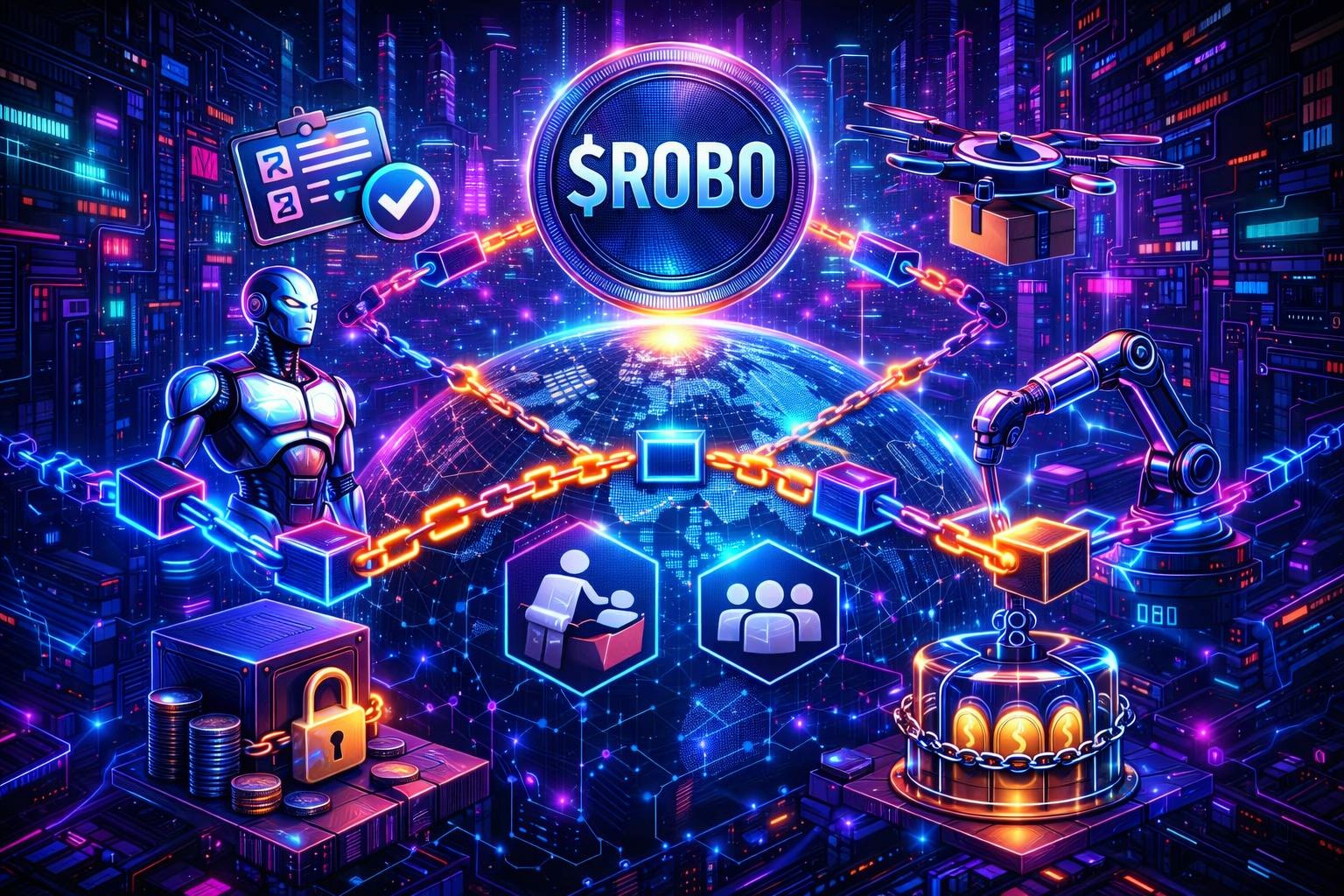
A ascensão de sistemas autônomos e robótica avançada gerou novas questões sobre como as máquinas interagem economicamente no mundo real. A Fabric Foundation (@Fabric Foundation ) está se posicionando como uma força líder neste setor emergente, visando construir uma infraestrutura descentralizada que permita que robôs autônomos, agentes de IA e máquinas inteligentes coordenem tarefas, troquem valor e operem dentro de uma estrutura econômica aberta. No coração dessa visão está o token nativo $ROBO, que desempenha um papel central na governança, utilidade e coordenação econômica em todo o ecossistema Fabric.
Fundação Fabric +1
A missão do projeto é baseada na criação de infraestrutura de bem público que apoia a identidade de máquinas, coordenação descentralizada de tarefas e governança transparente — componentes essenciais para uma economia de máquinas que não depende de autoridades centralizadas. A organização enfatiza segurança, alinhamento com valores humanos e ampla participação para que sistemas inteligentes possam aumentar a sociedade em vez de criar estruturas de poder concentradas.
Fundação Fabric
Desenvolvimentos Recentes
A Fabric alcançou várias conquistas notáveis no início de 2026. Um desenvolvimento chave foi a abertura do portal de reivindicação de $ROBO tokens, que permitiu que participantes elegíveis reivindicassem tokens como parte do processo de distribuição e engajamento, funcionando até 13 de março. Enquanto isso, a binance Alpha foi uma das primeiras plataformas a listar $ROBO, e pares de negociação foram abertos em grandes exchanges como Bybit, Bitget e Kucoin, marcando uma transição crítica para a descoberta de preços no mercado aberto. �
TechFlow +1
A distribuição de ROBO enfatiza o alinhamento de longo prazo e a saúde do ecossistema. A tokenomics mostra um suprimento fixo de 10 bilhões de unidades com cronogramas de aquisição estruturados para investidores e a equipe, juntamente com incentivos para a comunidade e o ecossistema projetados para fomentar a participação e o crescimento sustentado.
HOKANEWS.COM +1
Outro desenvolvimento importante foi o engajamento da comunidade por meio de portais de elegibilidade para airdrop e colaborações com plataformas como @KaitoAI e comunidades parceiras, que ajudaram a impulsionar as alocações iniciais de $ROBO O.
site.twstalker.com
Roadmap e Visão Estratégica
O roadmap da Fabric reflete um progresso de longo prazo do desenvolvimento de infraestrutura em direção à expansão do ecossistema e à adoção no mundo real:
1. Implementação de Token e Integração de Mercado (2026):
O lançamento bem-sucedido, a venda pública, a verificação de elegibilidade, o portal de reivindicação e as listagens iniciais em exchanges representam a primeira fase importante da Fundação. Esses passos ajudam a distribuir o ROBO amplamente, construir liquidez e permitir a participação inicial no protocolo. �
rootdata.com +1
2. Ativação da Governança:
A transição para um modelo de governança totalmente descentralizado é fundamental. À medida que o protocolo amadurece, os detentores de ROBO ganharão mais influência sobre decisões como ajustes de parâmetros, atualizações e incentivos do protocolo. Isso é uma pedra angular para o crescimento alinhado à comunidade.
site.twstalker.com
3. Crescimento de Desenvolvedores e Ecossistema:
A Fabric visa atrair desenvolvedores, OEMs e integradores de robótica para construir aplicativos, serviços e ferramentas sobre sua infraestrutura. Isso ajudará a ampliar os casos de uso e envolver contribuidores do mundo real.
Bingx Exchange
4. Escalonamento de Infraestrutura e Sistemas de Identidade:
As ambições de longo prazo incluem sistemas de identidade descentralizados robustos para máquinas, permitindo pagamentos autônomos, coordenação de tarefas e atividade econômica máquina-a-máquina — um grande salto em direção a uma infraestrutura de robótica totalmente descentralizada.
Fundação Fabric
Por que isso importa
Fundamentalmente, a Fabric se distingue por se concentrar menos na especulação e mais na utilidade tecnológica. Enquanto muitos projetos de cripto giram em torno de finanças digitais ou narrativas especulativas, a tese central da Fabric é que sistemas robóticos e de IA precisarão de "trilhos" econômicos descentralizados para operar de forma eficaz. Esta é uma tese de futuro que coloca a Fabric na interseção de blockchain, IA e robótica — três dos setores tecnológicos mais transformadores.
Fundação Fabric
No entanto, os riscos permanecem. Os desafios de execução são significativos, especialmente porque a adoção no mundo real de robôs autônomos em larga escala ainda está em estágios iniciais. Além disso, a volatilidade dos tokens e as incertezas regulatórias são considerações contínuas para investidores e participantes do ecossistema.
Ainda assim, com um roadmap estruturado, apoio crescente do ecossistema e presença em exchanges em expansão, a Fundação Fabric e seu $ROBO token estão criando um nicho único no futuro das economias de máquinas descentralizadas. #ROBO