
The first thing you notice when you spend enough time onchain is how much hesitation exists between intention and action.
You open a wallet to do something simple. Swap a token. Claim a reward. Bridge to another chain. What follows is a small ritual of confirmations, signatures, gas estimates, and second guessing. You check the contract address. You read the approval message twice. You wait a few seconds for the network to respond.
None of this is unusual anymore. It is just how crypto works.
But after a while you start to notice something else. Humans tolerate this friction because we understand the stakes. Machines would not.
A robot, an AI agent, or any autonomous system would struggle to operate inside the same interaction model that humans use today. The wallet confirmations alone would stop most automated behavior before it even begins.
And that observation reveals something interesting about crypto infrastructure. Most of it was designed for careful humans, not active systems.
When people talk about onchain automation they usually focus on smart contracts or bots. But bots today mostly interact with crypto in narrow ways. They watch mempools. They arbitrage prices. They liquidate loans. These are reactive systems that operate around the edges of user activity.
They are not participants in the ecosystem. They are tools.
The moment you imagine machines acting as full economic actors, the whole structure starts to look different. Identity becomes a problem. Permissions become a problem. Coordination becomes a problem.
This is where ideas like Fabric Protocol start to appear in conversations. Not because traders suddenly want robots onchain, but because the existing infrastructure quietly assumes that humans are the only actors interacting with it.
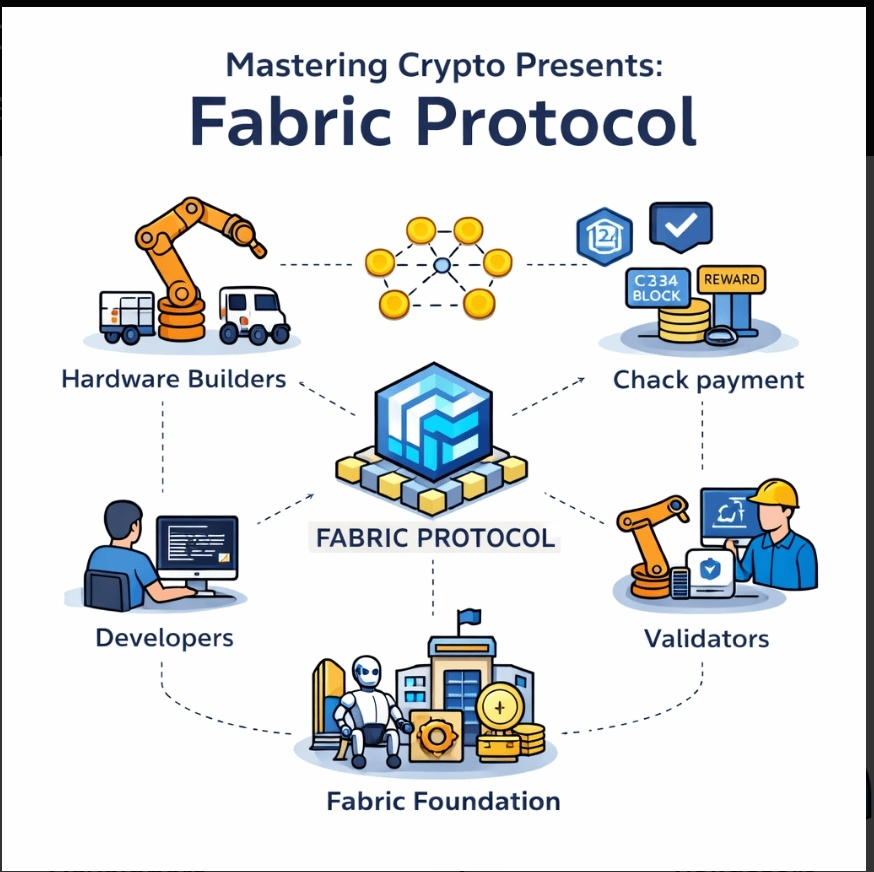
Fabric Protocol explores the idea of giving machines something crypto users already take for granted, an identity and a way to participate economically in a shared network. The protocol focuses on coordination between machines and autonomous systems through onchain identity, task verification, and payment infrastructure.
At first glance it sounds futuristic. But the deeper implication is actually about something very familiar to anyone who has used DeFi.
Trust.
Most people who trade or use DeFi develop a mental checklist over time. They scan contracts. They look at permissions. They avoid interacting with anything that feels slightly uncertain.
This caution shapes behavior more than technology does.
Centralized exchanges succeed partly because they remove that mental overhead. You log in, click a button, and the trade happens. The infrastructure disappears behind the interface.
In DeFi the opposite happens. The infrastructure is visible all the time.
You sign approvals. You revoke permissions. You worry about infinite allowances. Every action reminds you that something irreversible is about to happen.
Machines cannot operate in that environment the same way humans do. A robot delivering packages, or an autonomous system renting computing resources, cannot pause every few seconds to ask for confirmation.
It needs a framework of predefined permissions.
That idea already exists in smaller forms inside crypto. Session keys, delegated permissions, and account abstraction all attempt to solve this problem from different angles. They allow a wallet to grant limited authority to a system so it can act without constant signatures.
But these mechanisms mostly focus on user convenience.
When you start thinking about autonomous agents, the question becomes broader. How do you define the boundaries of behavior for something that operates continuously inside a network?

Fabric approaches this from the perspective of identity and accountability. Machines can be assigned verifiable onchain identities and activity histories so their actions can be tracked and coordinated inside a shared system.
That sounds technical, but the psychological effect is simple.
Identity changes how participants behave.
If a robot performing a task has an identity, a history, and a record of previous actions, users interact with it differently. The system begins to resemble a marketplace instead of a collection of scripts.
Crypto users already rely heavily on reputation signals. Liquidity pools with deeper history attract more users. Validators with consistent uptime gain trust. Even anonymous developers build credibility over time.
Machines would need the same structure.
Another subtle issue appears when you think about speed.
Humans tolerate latency because we expect it. Waiting ten seconds for a confirmation feels normal in crypto. Waiting a minute is annoying but acceptable.
Machines experience time differently.
If two autonomous systems are negotiating tasks or exchanging value onchain, latency becomes more than an inconvenience. It becomes a coordination problem.
This is one reason many infrastructure projects begin exploring specialized transaction flows, relayers, or offchain coordination layers. Not to replace blockchains, but to allow faster interaction patterns between automated systems.
Interestingly, this mirrors how humans already use crypto.
Many traders keep funds on centralized exchanges not because they distrust self custody, but because speed matters. The execution is immediate. The interface is predictable. The friction disappears.
DeFi still struggles to replicate that feeling.
When you sign a transaction in a wallet, there is always a small pause. A moment where you wonder if the gas is correct or if the contract is safe.
That pause is invisible to machines. They cannot doubt or reconsider. Either the system allows the action or it does not.
Which means the permission model has to carry the weight of that decision.
This is why infrastructure conversations often drift toward account abstraction and programmable permissions. Not because the technology is exciting, but because it changes how participants interact with the network.
A wallet that can define rules instead of requiring constant signatures begins to look less like a wallet and more like a control system.
From there it becomes easier to imagine automated participants operating safely inside defined boundaries.
The deeper lesson is that crypto is slowly shifting from a tool humans use manually into an environment where actions can happen continuously.
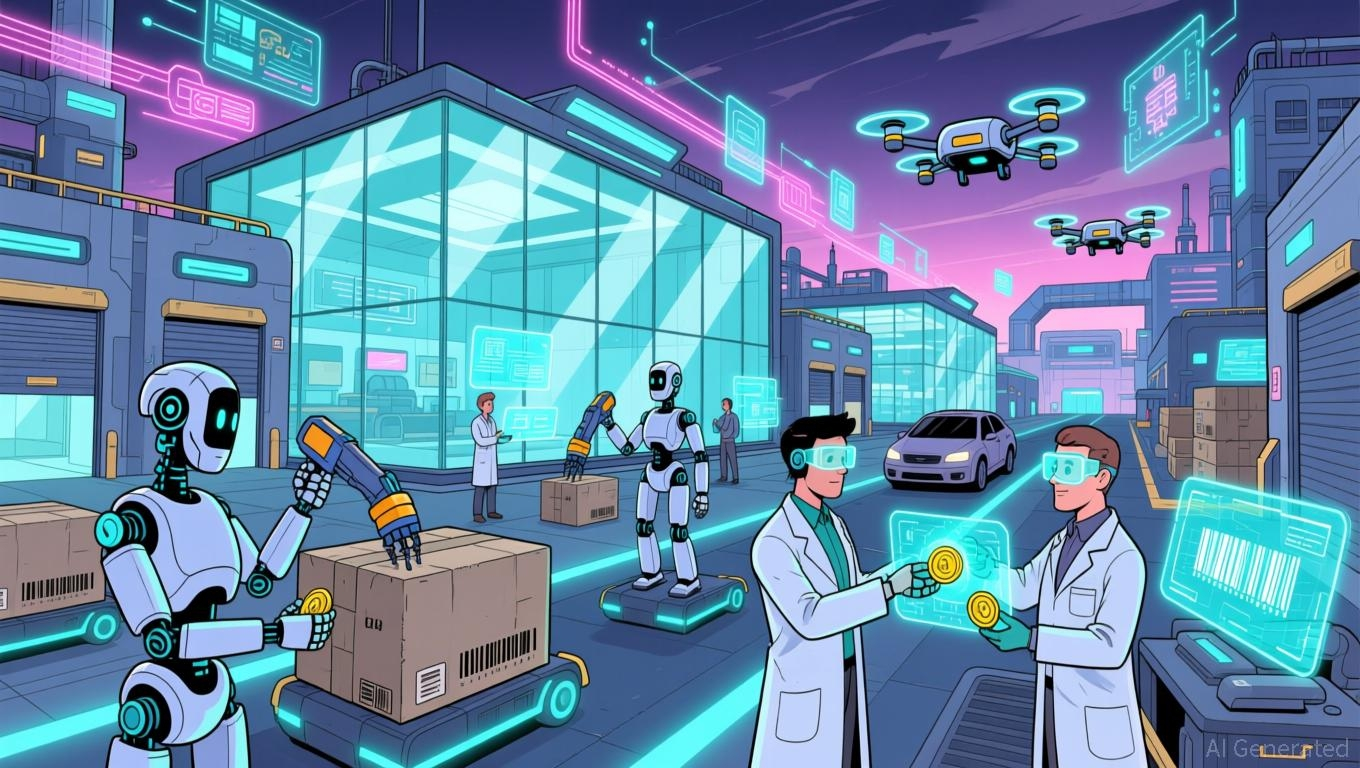
Machines registering tasks, exchanging resources, and settling payments without human intervention may sound distant, but the infrastructure needed for that future overlaps heavily with problems users already face today.
Gas abstraction improves user onboarding.
Delegated permissions improve automation.
Onchain identity improves trust between strangers.
These solutions were not invented for robots. They were invented because crypto was difficult to use.
Projects like Fabric simply extend the same logic one step further. If machines are going to participate in economic systems, they need the same primitives humans rely on today, identity, coordination, and transparent rules for interaction.
When you look at it that way, the concept feels less like science fiction and more like an extension of existing infrastructure trends.
Crypto has always been about removing intermediaries while replacing them with rules.
But rules only work if participants understand them.
Humans interpret them through interfaces, dashboards, and community discussions. Machines interpret them through code and permissions.

Both require the same underlying structure.
And that might be the quiet cost of building decentralized systems.
We are not just designing networks for people. We are designing environments where any participant, human or machine, must learn how to belong.
The interesting question is not whether that future arrives. It is how much of today's infrastructure will need to evolve before participation, human or machine, finally feels natural onchain.
