

As the world of automation shifts from digital screens into the physical world, the conversation is rapidly evolving from simple robot capability to the necessity of coordination and accountability. While general-purpose robots are increasingly capable of performing complex physical tasks, they still face significant hurdles in the "Robot Economy," specifically regarding identity, payment, and autonomous decision-making. This brings us to the critical role of the Fabric Protocol and its native asset, ROBO—a platform and token system designed to ensure that the next generation of machines can operate as first-class economic citizens within a verifiable framework.
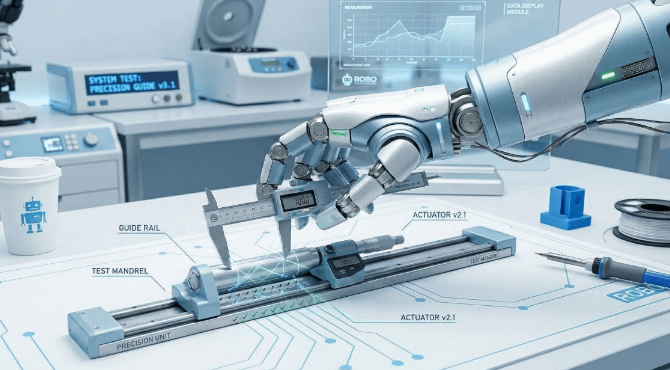
The central thesis of the Fabric Foundation is that robots should not be viewed merely as siloed tools, but as autonomous agents that require an on-chain identity and a decentralized governance layer to function safely and efficiently. Rather than relying on a centralized authority to manage robot activity, the network utilizes ROBO to align incentives across a decentralized ecosystem of developers, operators, and validators. Through the use of public ledgers, the network records and verifies "Proof of Robotic Work" (PoRW), ensuring that every action taken by a machine is not only intelligent but also cryptographically verifiable.

This architecture follows the broader shift toward Web3-based infrastructure and decentralized AI. By removing the "winner-takes-all" risk associated with big-tech monopolies, Fabric promotes open participation where anyone can contribute to the "Robot Skill App Store" or coordinate the "Genesis" of new robot fleets. Governance plays a pivotal role here: $ROBO olders can lock their tokens to obtain voting weight (veROBO), allowing the community—rather than a single provider—to set fees, operational policies, and safety standards for the robot economy.

A key technical pillar of this system is the concept of a hardware-agnostic operating system (OM1) paired with the Fabric Protocol. This allows for a high degree of composability, where a "skill chip" or a verified robot capability can be reused across different hardware types—from humanoids to robotic arms—without the need for repeated, redundant verification. However, as robots become more autonomous, the risk of "black box" decision-making and privacy exposure remains. The network addresses this through transparent, non-discriminatory on-chain payments and a "Global Robot Observatory," where human feedback and cryptographic metadata ensure that machine behavior remains aligned with human values.
If these governance and coordination challenges are successfully navigated, the Fabric Protocol and the $ROBO osystem represent a foundational step toward a future where humans and machines coexist in a transparent, decentralized, and highly productive economy.
$ROBO #ROBO @Fabric Foundation