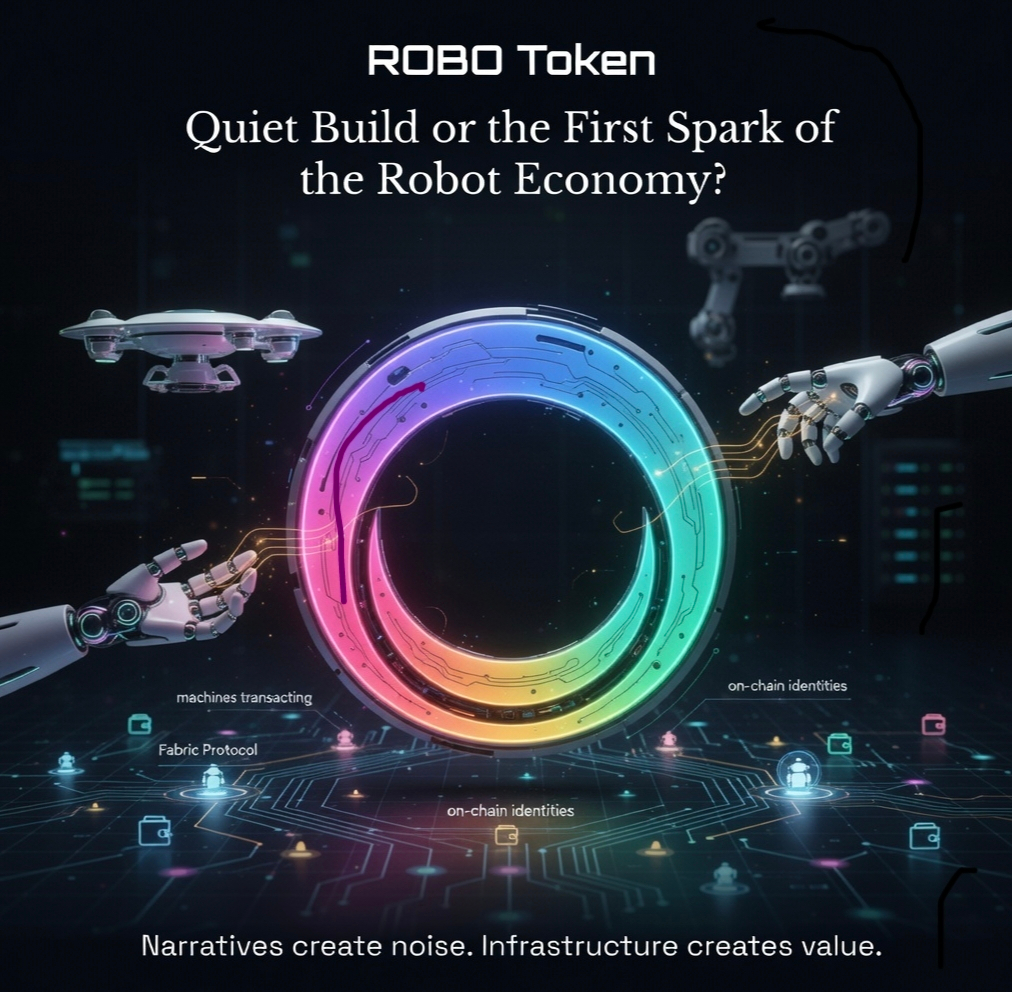
Robo Token não é comercializado com fogos de artifício - é construído em silêncio enquanto outros empreendimentos de criptomoeda correm por manchetes. A equipe trabalha em um código que ainda deve funcionar quando as modas de hoje forem esquecidas.
Muitos círculos de atividade cripto giram em torno de apostas de preços - o Robo Token se afasta desse ciclo. Ele mira um setor futuro em que robôs atuam como traders, compradores e vendedores. A noção parece remota, mas as peças necessárias agora existem em laboratórios e em testnets.
O Fabric Protocol forma a espinha dorsal do plano - o problema que enfrenta é claro, mas vasto. Um robô que transporta pacotes ou processa dados não pode aparecer em um balanço. Ele não possui nome, chave ou conta. Se ele termina um trabalho, uma pessoa deve faturar, coletar e distribuir a taxa. Funcionários humanos permanecem o gargalo.
O Fabric Protocol substitui esse padrão - ele emite a cada máquina um registro único em cadeia e uma carteira pareada. Após o registro e a carteira estarem ativos, o robô possui um endereço, mas também uma chave. Ele pode receber moedas digitais por trabalho, enviar moedas a um fornecedor ou assinar um contrato sem uma pessoa no meio.
Isso cria a base para o comércio entre máquinas. Imagine robôs de entrega autônomos pagando estações de carregamento por eletricidade, drones pagando redes de mapeamento por dados de navegação atualizados, ou robôs de armazém contratando outras máquinas especializadas para completar tarefas mais rapidamente. Em um ecossistema assim, os robôs não seriam simplesmente ferramentas controladas por humanos, mas participantes ativos em uma rede econômica descentralizada.
O Token ROBO está no centro dessa estrutura emergente. Ele atua como a camada econômica nativa que alimenta as interações entre máquinas e serviços dentro do ecossistema Fabric. Se a rede crescer, o token pode funcionar como o meio através do qual os robôs pagam, ganham e coordenam tarefas em uma infraestrutura descentralizada.
A atenção do mercado já começou a aparecer. Seguindo listagens recentes em exchanges e a narrativa crescente em torno da IA e DePIN (Redes de Infraestrutura Física Descentralizadas), a capitalização de mercado do ROBO se moveu em direção à faixa de $90 milhões. Para um projeto ainda no início de seu ciclo de desenvolvimento, esse nível de interesse mostra quão rapidamente os investidores estão se aproximando de ideias de blockchain impulsionadas por IA.
No entanto, a volatilidade permanece alta, o que é típico para tokens em estágio inicial explorando novos territórios tecnológicos. Movimentos de preços sozinhos raramente contam toda a história nesta fase. O que realmente importa é se a rede subjacente começa a demonstrar uso no mundo real.
Para investidores sérios, a abordagem mais inteligente é focar menos no hype de curto prazo e mais em sinais de adoção mensuráveis. Empresas reais de robótica estão integrando a tecnologia? Máquinas autônomas estão realmente sendo implantadas na rede? A atividade em cadeia está aumentando à medida que agentes começam a interagir com o sistema?
Esses indicadores, em última análise, determinarão se o ROBO se torna uma peça significativa da futura economia das máquinas ou simplesmente mais um experimento ambicioso em criptomoedas.
Narrativas podem criar ruído no mercado, mas a infraestrutura é o que, em última análise, cria valor duradouro. Se o Fabric Protocol conseguir habilitar máquinas a manter identidades, transacionar autonomamente e colaborar sem intermediários humanos, as implicações podem se estender muito além da indústria de criptomoedas.
A ideia de robôs participando de sua própria economia pode parecer incomum hoje. Mas muitas das tecnologias que moldam o futuro um dia foram assim.
E se a economia robótica realmente emergir, projetos como o ROBO poderiam representar algumas das suas primeiras faíscas.
#ROBO #FabricFounddation $ROBO