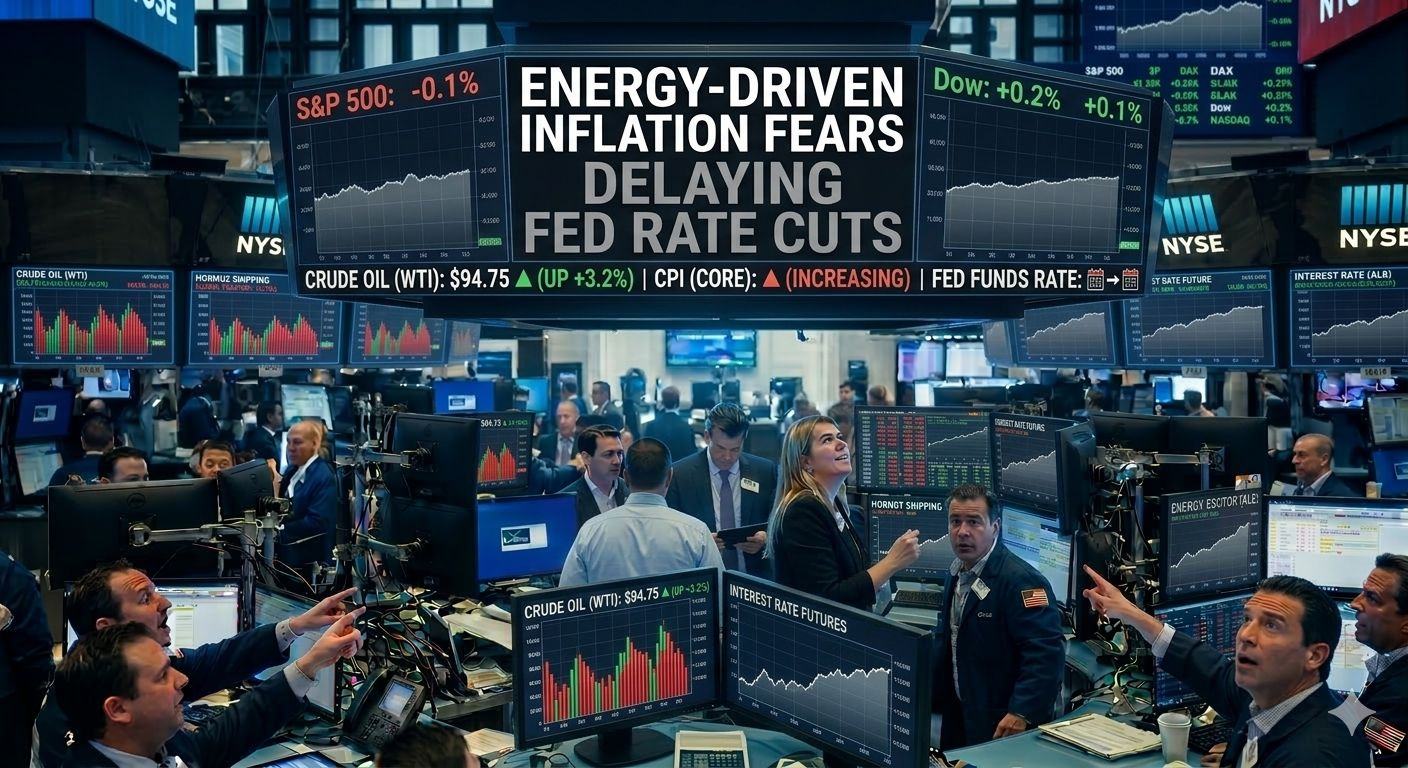
Rising energy prices are once again becoming a central driver of global market sentiment, complicating the outlook for monetary policy in the United States. As oil markets tighten and geopolitical tensions disrupt supply routes, investors are reassessing how quickly the Federal Reserve may be able to shift toward interest-rate cuts.
Oil Prices Reignite Inflation Concerns
Energy prices play a crucial role in shaping inflation expectations. When oil prices surge, transportation, manufacturing, and logistics costs increase across the global economy. These higher costs often feed directly into consumer prices, making inflation more persistent than policymakers anticipate.
Recently, crude oil has climbed sharply amid geopolitical risks affecting major shipping corridors and energy supply chains. The price increase has revived concerns that inflation could remain elevated longer than expected, challenging the narrative that the inflation cycle is steadily cooling.
For central banks, especially the Federal Reserve, sustained inflation pressure limits the flexibility to ease monetary policy.
Markets Reprice Rate-Cut Expectations
Earlier in the year, financial markets widely anticipated that the Federal Reserve would begin cutting interest rates as inflation gradually slowed and economic growth moderated. However, the renewed rise in energy costs has forced investors to reconsider that timeline.
Higher oil prices increase the risk that inflation could stabilize above the central bank’s long-term target. If that scenario unfolds, policymakers may delay rate reductions to prevent inflation from accelerating again.
Bond markets have already begun reflecting this shift in expectations, with yields rising as traders adjust to the possibility of tighter financial conditions persisting for longer.
Broader Impact on Financial Markets
Energy-driven inflation fears have also influenced risk appetite across global markets. Equity indices have faced renewed pressure as higher interest rates reduce corporate valuation multiples and increase borrowing costs.
At the same time, commodities and defensive assets often gain attention when inflation expectations rise. Investors typically shift toward sectors that can benefit from higher energy prices or maintain purchasing power during inflationary periods.
Policy Dilemma for the Federal Reserve
The Federal Reserve now faces a complex balancing act. On one side, economic growth shows signs of slowing after a period of aggressive rate hikes. On the other, energy-driven inflation risks could prevent policymakers from easing financial conditions too quickly.
If oil prices remain elevated, the central bank may need additional time to confirm that inflation is on a sustainable downward trajectory before implementing rate cuts.
Outlook
The trajectory of energy markets will likely remain a key factor in shaping monetary policy expectations in the coming months. Should oil prices stabilize or decline, the path toward rate cuts could reopen. However, if energy inflation continues to intensify, markets may have to adjust to a longer period of higher interest rates.
For now, the resurgence of energy-driven inflation fears serves as a reminder that global commodity markets still hold significant influence over central bank decisions and the broader direction of financial markets.
#MetaPlansLayoffs #BTCReclaims70k #PCEMarketWatch