
Why Altcoins Could Be the Next Big Opportunity After Bitcoin’s Rally
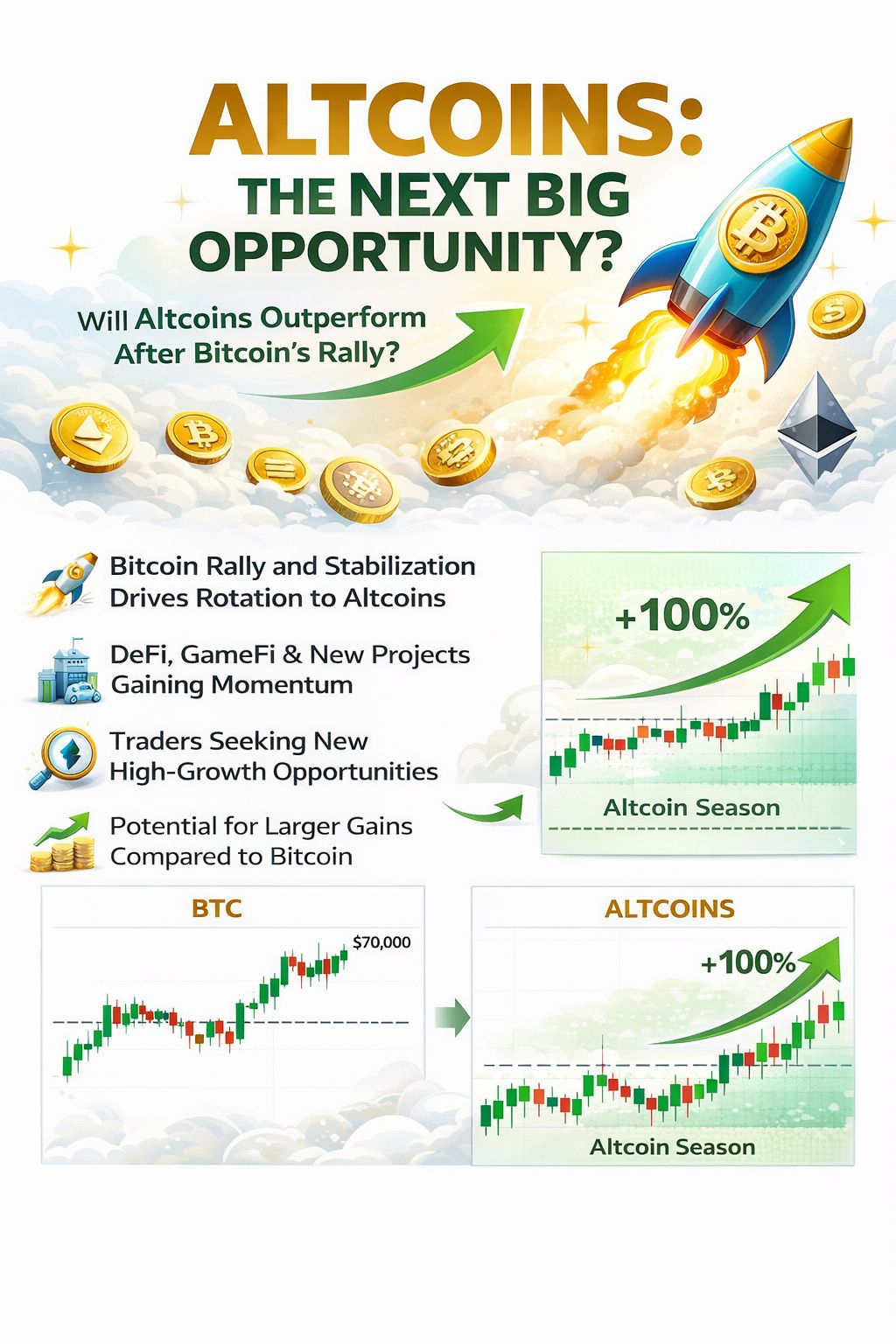
The cryptocurrency market often moves in cycles, and many traders have noticed a common pattern over the years. First, Bitcoin attracts the majority of attention and investment. As the largest cryptocurrency, it usually leads the market and sets the overall direction. When Bitcoin begins to stabilize after a strong rally, investors start looking for new opportunities with higher potential returns. This is the moment when altcoins begin to shine. Many analysts believe that the next phase of the market could bring strong momentum for altcoins as traders shift their focus from Bitcoin to other promising projects.
Bitcoin remains the foundation of the crypto market. Institutions, long-term investors, and large funds generally prefer Bitcoin because it is the most established digital asset and has the highest level of security and adoption. When Bitcoin rises significantly, it increases confidence across the entire market. This confidence encourages investors to explore other cryptocurrencies that may still be undervalued. Historically, after a strong Bitcoin rally, the market often experiences what traders call an “altcoin season,” where smaller coins outperform Bitcoin in percentage gains.
Altcoins offer different types of innovation that make the crypto ecosystem more diverse. Some projects focus on decentralized finance, allowing users to borrow, lend, or earn interest without traditional banks. Others concentrate on faster payment networks, gaming platforms, or blockchain infrastructure that supports decentralized applications. These innovations attract developers, investors, and communities that believe in the long-term growth of blockchain technology. As adoption grows, the value of these projects can increase significantly, especially during bullish market conditions.
Another important factor driving interest in altcoins is accessibility. Many traders feel that Bitcoin has already reached a very high price level, which can psychologically discourage new investors from buying large amounts. In contrast, altcoins often trade at lower prices, which gives the impression of greater growth potential. While the price of a coin alone does not determine its value, the perception of affordability often encourages retail traders to explore altcoin markets. When enough investors enter these markets, demand increases and prices can rise rapidly.
The role of social media and online communities is also significant in the growth of altcoins. Platforms like Binance and crypto discussion spaces allow traders to share ideas, research, and market updates instantly. When a particular project begins trending in the community, it can attract attention from thousands of traders within a short period of time. This rapid flow of information can sometimes create powerful momentum for certain tokens, pushing them into the spotlight and increasing their trading volume dramatically.
However, investing in altcoins also carries higher risk compared to Bitcoin. Many projects are still in early development stages and may face technical challenges, regulatory issues, or strong competition from other blockchain networks. Some tokens may experience rapid price increases followed by equally fast declines. Because of this volatility, experienced traders often recommend careful research before investing in any project. Understanding the technology, the development team, and the real-world use case behind a cryptocurrency can help investors make more informed decisions.
Diversification is another strategy that many traders use when exploring altcoin opportunities. Instead of placing all funds into a single project, investors spread their investments across several different cryptocurrencies. This approach reduces the impact of potential losses if one project fails to perform as expected. At the same time, it increases the chances of benefiting from the success of other projects that may experience strong growth.
Market timing also plays an important role in altcoin trading. Many analysts watch the Bitcoin dominance index, which measures Bitcoin’s share of the total crypto market capitalization. When Bitcoin dominance begins to decline, it often indicates that capital is flowing from Bitcoin into altcoins. This shift can signal the beginning of a period where altcoins start outperforming the leading cryptocurrency. Traders who closely monitor these indicators may identify opportunities before large price movements occur.
Another reason altcoins may gain momentum is the continuous development of blockchain technology. New upgrades, partnerships, and ecosystem expansions frequently attract investor attention. When a project announces a major technological improvement or collaboration with a well-known company, market sentiment around that coin can improve quickly. Positive news often leads to increased trading activity, which can drive prices upward if demand becomes strong enough.
In the long term, the future of altcoins depends on real adoption and technological progress. Projects that solve practical problems or create useful applications are more likely to survive market cycles and continue growing. As the global financial system gradually integrates blockchain technology, some altcoins may evolve into major platforms that support payments, decentralized finance, digital identity, and many other services.
In conclusion, altcoins represent an exciting and dynamic part of the cryptocurrency market. While Bitcoin remains the dominant asset and the primary driver of market sentiment, altcoins often provide opportunities for higher growth during certain phases of the market cycle. Investors who approach the market with research, patience, and proper risk management may find valuable opportunities among emerging blockchain projects. As the crypto industry continues to expand, the role of altcoins in shaping the future of digital finance could become increasingly signal.


Share